Why Would Anyone Want an All-Powerful Ruler?
The War That Made a Philosopher
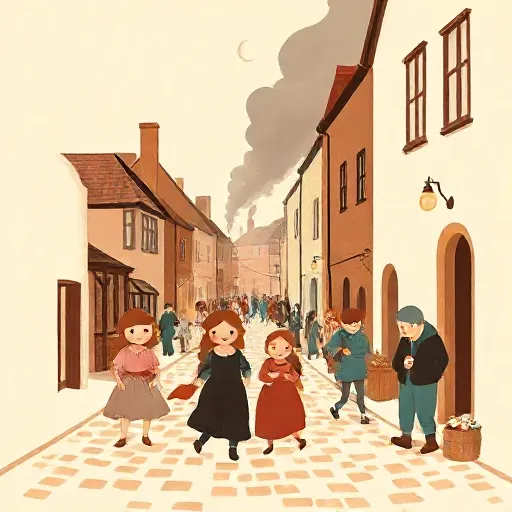
In the 1640s, England tore itself apart. Neighbors fought neighbors. A king was tried and executed. While the country burned, a middle-aged scholar named Thomas Hobbes (1588–1679) fled to Paris and started writing. He wanted to answer a terrifying question: how can any government avoid destroying itself from the inside?
Hobbes had lived through the chaos, and it marked him forever. He became convinced that the worst imaginable government is still better than a civil war. In his most famous book, Leviathan (1651), he set out to prove that peace and obedience go hand in hand. If people want safety, he argued, they must accept an absolute sovereign — a ruler whose power has no limits.
Imagine a World With No Rules: The State of Nature
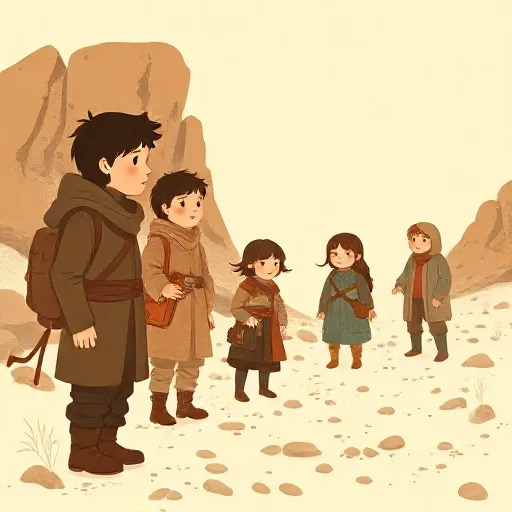
To make his case, Hobbes asked his readers to play a mental game. Erase all laws, police, courts, and governments. What is life like? He called this the state of nature, a condition where every person is their own judge, jury, and enforcer. At first, it might sound like total freedom. But Hobbes thought it was a nightmare.
He started from real human traits. People are similar enough in strength and smarts that no one is invulnerable. We all desperately want to stay alive. We care about our own circle, but our kindness is limited — we are easily biased toward ourselves. We bristle at insults. We use words like “good” and “bad,” but we often mean “I like it” or “I don’t.” And because we are uneasy about the future, we tend to grab for whatever seems needed to protect ourselves.
Each person, Hobbes said, has a right of nature: the liberty to do whatever she sincerely believes is necessary for her own survival. Since you can imagine almost anything being necessary, this right expands into a right to everything. If two people both need the same field, the same spring, or the same treasure, there is no judge to settle the dispute — so they fight.
Fear makes it worse. If I suspect you might strike first, I have good reason to strike preemptively. And some people simply enjoy lording power over others; their pride triggers defensive responses from everyone else. The state of nature, Hobbes concluded, becomes a war of all against all. Not necessarily constant battle, but constant readiness to fight. In such a life, he wrote, there is no farming, no trade, no comfortable homes, no art, no science — only “continual fear and danger of violent death.” Human existence would be “solitary, poor, nasty, brutish, and short.”
Hobbes did not claim this was some ancient historical stage that all mankind passed through. But he pointed to examples: kings among themselves live in the state of nature with no world government above them. Some societies, he thought, still lived that way, such as “the savage people in many places of America.” And most chillingly, any peaceful country that slides into civil war catches a terrible glimpse of that condition again.
Escaping the Nightmare: The Laws of Nature
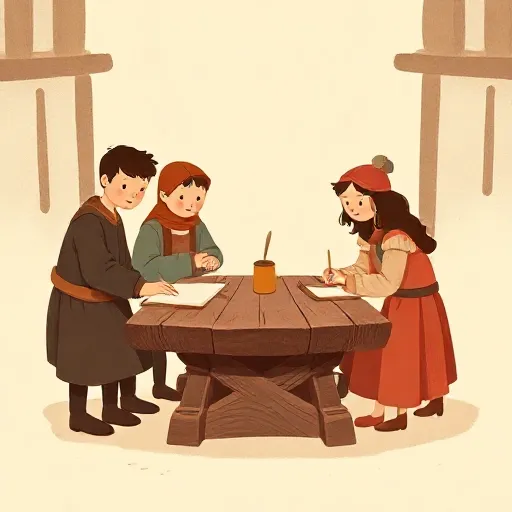
The good news, Hobbes argued, is that reason gives us a way out. If the state of nature is a misery, then peace is worth pursuing. He called the rules that reason reveals laws of nature. The first law: seek peace and follow it. The second: be willing to give up your unlimited right to everything, as long as others are willing too — and agree to set up a common power that can enforce the rules.
These laws are not like the laws of physics; they are instructions we can choose to ignore. But Hobbes insisted they are eternally true. Their summary sounds a lot like a familiar golden rule: do not treat others as you would not want them to treat you.
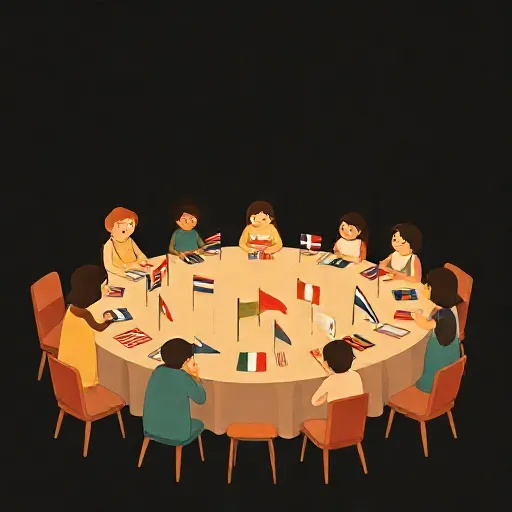
The way people leave the state of nature is by making a covenant, a mutual promise. Each person says to the others: “I will obey this ruler, if you will too.” Hobbes called this sovereignty by institution. There is also sovereignty by acquisition: if a conqueror threatens to destroy you but offers protection in exchange for obedience, that agreement counts too. Both are built on fear — in the first case, fear of each other; in the second, fear of the conqueror. What matters for Hobbes is not how a government starts, but whether it can actually protect the people who have agreed to obey it.
Why the Sovereign Must Be Absolute
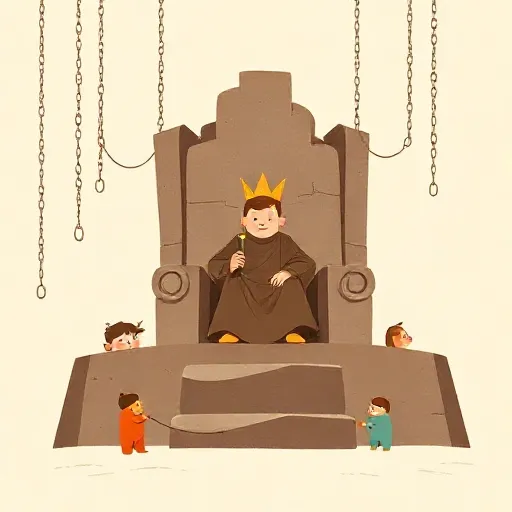
Hobbes’s most controversial claim is that the sovereign must have absolute authority. You cannot chop up government power, he argued, without inviting disaster. The ability to make laws, judge disputes, enforce decisions, collect taxes, and wage war are all connected. Hand one piece to a separate body, and the two bodies will eventually disagree. With no higher judge to settle the argument, the state collapses into paralysis — or civil war.
The same logic rules out putting limits on the sovereign. If every citizen gets to decide whether the ruler has overstepped, you are right back in the state of nature, where each person is the final judge. Appointing a judge to rule on the ruler’s limits just creates a new sovereign — the authority moves, but it remains absolute. For Hobbes, a government that is not absolute is not really a government.
He did not care much whether the absolute ruler was a monarch or an assembly; what mattered was that sovereignty was undivided and undeniable. Without that, he thought, the fragile peace would shatter.
“A Rebel’s Catechism”: When You Can Say No
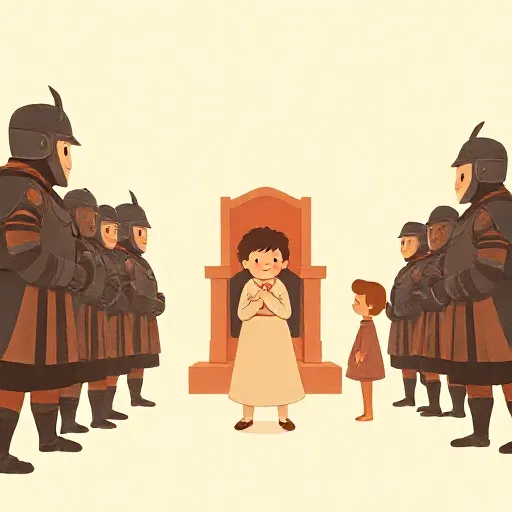
If the sovereign’s power is supposed to be absolute, can you ever disobey? Strangely, Hobbes says yes — sometimes. He insists that every subject keeps the right to defend their own body. If the sovereign tries to kill you, you can fight back. The same might go for defending your family or even your honor. Critics pounced on this. One called Leviathan a “Rebell’s Catechism,” a handbook for rebels.
There is a deeper puzzle. Hobbes says your duty to obey lasts only as long as the sovereign can protect you. If the protection fails, the deal is off — and each person gets to judge when that has happened. But if everyone can privately decide the sovereign is no longer protecting them, haven’t we all slipped back into the state of nature? This tension has been called the Achilles’ heel of Hobbes’s whole system. It is still hotly debated.
Hobbes tried to soften the worry with a clever move about responsibility. When you follow an order you privately think is wrong, he argued, the act belongs to the sovereign, not to you. You are like a tool in the ruler’s hand. This was partly aimed at Christians who feared divine punishment for obeying a sinful command. Hobbes wanted them to know they could obey without risking their souls.
The Amazons and the Patriarchs
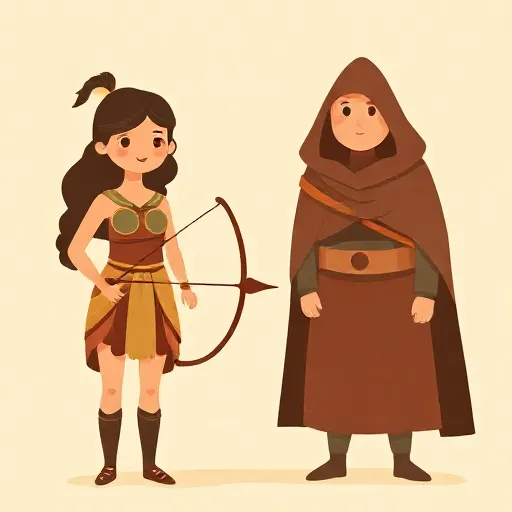
In a time when almost everyone believed men were born to rule over women, Hobbes said something startling: people are naturally equal, and that includes women. No one, he pointed out, is so strong that they cannot be overpowered by others — a person can be attacked in their sleep. So women are equally free in the state of nature, and their consent is needed before anyone holds authority over them.
He even argued that in the state of nature, dominion over children naturally belongs to the mother, not the father. As evidence, he pointed to the legendary Amazons, a nation of warrior women. It is a remarkably egalitarian foundation. Yet when Hobbes described civil society, he suddenly started talking about “fathers” and “sons,” as if mothers disappeared. Scholars still argue about whether his theory is secretly feminist or ultimately just as patriarchal as the views he rejected.
Hobbes also wrestled uneasily with what we now call race. On one hand, he used Native Americans as an example of people living in the brutish state of nature. On the other hand, he flatly denied any innate difference between peoples. If advanced societies lost their leisure time to develop science and arts, he asked, “what do we differ from the wildest of the Indians?” The tensions are real, and they are part of his legacy.
Why This Still Matters
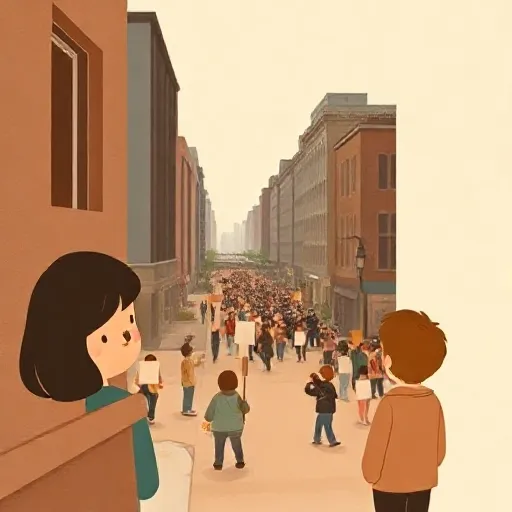
Hobbes forces us to stare at an uncomfortable trade-off: we give up personal freedom to gain security, and the government that can protect us best might also be the one we least want to argue with. Every debate about surveillance, emergency powers, or when it is right to protest is a descendant of his argument.
In your own life, you face smaller versions of the same problem. A school rule feels unfair — do you break it? A group project has no clear leader — does chaos follow? Hobbes would urge caution: without rules that everyone takes seriously, things can get ugly fast. But he also admitted that even the most powerful authority cannot take away your right to stand up when your own survival is on the line.
The sore spot Hobbes poked — how much obedience we owe, and when we may stop giving it — is not going away. It is the question of every citizen, in every generation.
Think about it
- If a government makes a law you believe is deeply wrong, would you obey it anyway? Where would you draw the line?
- Hobbes thought any government is better than civil war. Can you think of a situation where living under a terrible government might be worse than risking chaos?
- Imagine you and a group of friends are stranded on an island with no authority. How would you decide the rules? Would someone need to have total power to keep the peace?