
Why Should You Obey Laws You Never Voted For?
The Hat Rule That Nobody Voted For
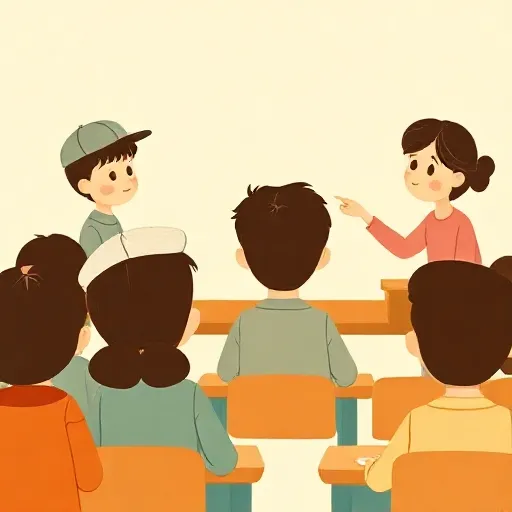
Last week your school posted a new rule: no hats in the hallway. You grumbled, “Who decided that? I never agreed.” Your teacher said, “Rules keep things orderly. You benefit, so you should follow them.” But a quiet voice in your head still wonders: if I never gave my consent, why am I bound by their decision?
That question is the same one that has driven political philosophy for centuries. Why should anyone obey a government’s laws? The answer that changed everything was the idea of a social contract — an imaginary agreement that shows what rules free people would accept if they thought clearly about it. The contract isn’t printed on parchment; it lives in our reasons. This article traces that idea from desperate anarchy to the blindfold of fairness, and shows how it became a test you can use every day.
Hobbes and Locke: Trading Chaos for a King
The seventeenth century was full of war and instability. Thomas Hobbes (1588–1679) lived through England’s brutal civil war, and it gave him a dark view. He asked: what if there were no government at all — a “state of nature”? He argued that people would constantly fight over resources and safety, making life miserable and short. To escape that nightmare, rational people would make a social contract: they would hand over their power to a ruler in exchange for peace and order. Even an absolute monarch was better than chaos, so obedience was justified because everyone would accept that deal.
John Locke (1632–1704) softened the picture. He also thought government needed the consent of the governed, but he believed people had natural rights to life, liberty, and property even before any government existed. A social contract, for Locke, didn’t give a ruler unlimited power — it created a limited government with the job of protecting those rights. If the ruler broke the trust, people could resist. Both thinkers used a fictional agreement to show that political authority isn’t just a matter of force or tradition; it has to make sense to the people who live under it.
But here’s the snag: no one actually signed a contract. The “consent” was imaginary. So the big question shifted from “Did you agree?” to “Would you have reasons to agree if you were thinking clearly?” This is where the social contract becomes a powerful thought experiment rather than a piece of paper.
Rawls’s Big Curtain: The Veil of Ignorance
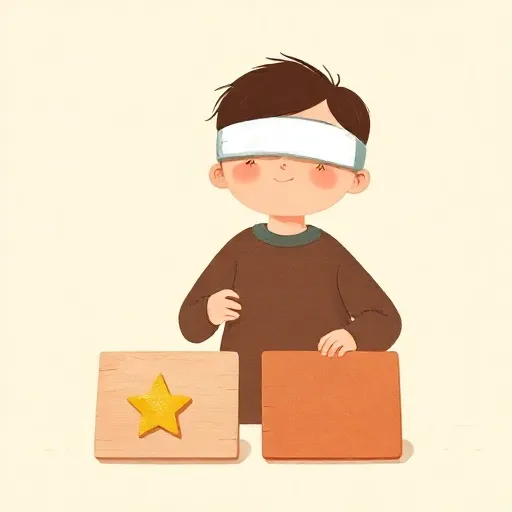
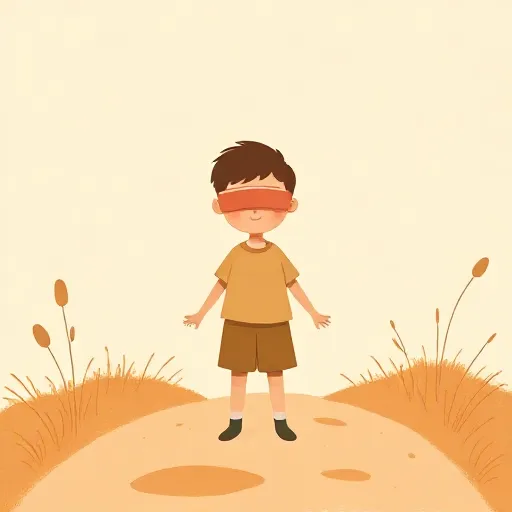
The philosopher who revived the social contract for our age was John Rawls (1921–2002). He knew that modern societies are filled with people who disagree deeply about religion, values, and what makes a good life. How can we find rules that everyone can accept? Rawls asked you to imagine stepping into an original position behind a veil of ignorance. In this imaginary situation, you know nothing about yourself — not your talents, your family’s wealth, your race, your gender, or even your personality. You are a blank slate chosing the basic structure of society: the fundamental rules for government, the economy, and rights.
Because you could turn out to be anybody once the veil lifts, you’ll choose principles that are fair even to the weakest members of society. A selfish person behind the veil would still pick rules that protect the worst-off, because that could be you. This turns the contract into a test of fairness. Unlike Hobbes’s scheme, where choosers rely only on self-interest, Rawls’s parties are modeled with a moral sense — they don’t just grab the most stuff; they care about treating all as free and equal. That’s a contractualist approach, meaning the justification comes from moral ideas inside the contract, not just from bare self-interest. Rawls argued that his two principles of justice — guaranteeing equal basic liberties and letting inequalities work only when they help the least advantaged — would be the unanimous choice.
The veil of ignorance is an idealization. Real you gets confused by bias and self-interest, so the thought experiment strips those away and asks what you’d pick if you reasoned perfectly. That lets us see what’s really just.
Even a Selfish Person Would Agree: The Stag Hunt

Not everyone was convinced that we need to build fairness into the contract. Some thinkers — sometimes called contractarians — wanted to show that even purely self-interested people would end up with moral-like rules, because it’s in their rational best interest. The philosopher David Gauthier (a 20th-century figure) argued that morality itself could be treated as a bargain: we agree to constrain our selfish impulses because cooperation yields bigger rewards over time.
Game theory helps explain this. Imagine you and a friend each have a bow, and you’re facing two hunts. If you both cooperate on a stag, you get a magnificent feast (the best outcome for both). If you each go after a hare, you each get a small meal but don’t risk anything. If one goes for the stag while the other hunts hare alone, the stag-hunter fails and gets nothing, while the hare-hunter gets a small meal. This is called the Stag Hunt. The stag outcome is best for everyone, but it requires trust. If you’re afraid your partner will chicken out and grab a hare, you might grab one too, ending up with a mediocre dinner. The social contract, in this view, provides insurance: it creates rules that make cooperation stable, so even knaves — people who would cheat if they could — have a reason to play fair because it pays off in the long run.
James Buchanan, another 20th-century thinker, applied this to politics. He argued that constitutional rules should be designed to work even with a population that includes some purely self-interested people. Like Gresham’s law in economics — where bad money drives out good — bad behavior can spread if the system doesn’t restrain cheaters. So a social contract must be resilient, or robust, even if people aren’t angels. This is a reductionist approach, because it derives moral rules from non‑moral, self-interested reasoning.
The Stag Hunt shows that even when people think only about their own benefit, they can find reasons to agree on rules.
From Signing a Paper to Sharing Reasons
When Hobbes and Locke wrote, the idea of consent seemed real — as if each person literally handed over some personal power. But actual consent has disappeared from most modern social contract theories. Doing a real survey of every citizen would be impossible, and plenty of people would reject existing arrangements. So the question is not “Did you raise your hand?” but “Would the rules be the object of agreement if your better‑informed, fair‑minded self were asked?”
This is a hypothetical agreement. It’s doubly imaginary: we imagine the choosers are idealized versions of ourselves (more impartial, better informed), and we ask what those ideal choosers would pick. The result isn’t a legally binding contract; it’s a justification — evidence that a rule rests on reasons everyone can share. The agreement “reveals” our reasons. So when Rawls says his principles would be chosen behind the veil, he’s showing that they meet the test of public justification.
The object of agreement matters too. We’re not debating every tiny rule (like the hat policy); we’re picking the basic structure — the core institutions that shape how power, rights, and opportunities are distributed. For some theorists, this can happen layer by layer: first a constitutional contract to prevent predation and war, then a later contract to produce public goods. Narrowing the focus to fundamentals avoids the trap where we bicker endlessly over details and miss the big picture.
Because the contract is a model, not a real vote, the goal is not to bind you but to help you see what you already have reason to accept.
Why This Still Matters: Testing the Rules You Live By
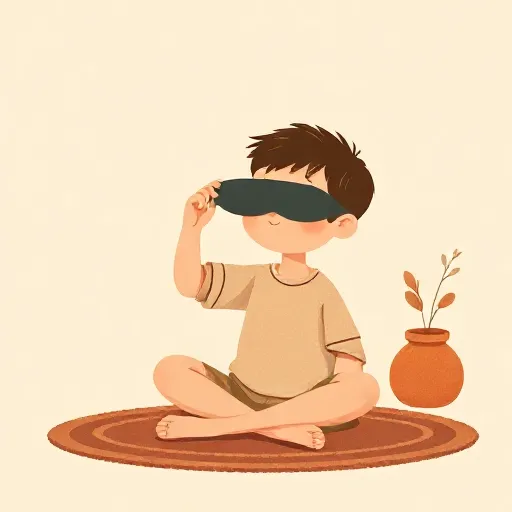
You still have that hat rule at school. Now you have a new way to think about it. Imagine stepping behind a veil of ignorance: you don’t know if you’ll be the student who loves wearing hats as self-expression, or the teacher who finds them distracting during announcements. You don’t even know if you’ll be the quiet kid who just wants a calm hallway. What rule would you pick? Maybe a narrow ban only in certain zones, or a “hats off when speaking” rule, or a free‑hats policy with an understanding about respect.
The social contract isn’t just for large governments. Families, classrooms, sports teams, and friend groups all confront the same question: how do we justify rules to everyone they affect? When you ask “Is this fair?” you’re doing political philosophy. The veil of ignorance and the stag hunt are not dusty textbook relics — they are tools you carry in your mind. They push you to look beyond your own position and ask what others could reasonably accept.
That is the real power of the social contract. It transforms obedience out of fear into rules you can own, because you can see the reasons behind them.
Think about it
- Think of a rule at your school or home that you don’t like. If you had to design that rule from behind a veil of ignorance — not knowing your own role — what rule would you create, and would it be different?
- The stag hunt shows that fear of being taken advantage of can keep everyone from cooperating. Can you think of a real-life situation where you wanted to cooperate but held back because you weren’t sure others would? What could make it safer to trust?
- If a law passed the social contract test — everyone’s idealized self would agree — should you always obey it, even if your real self would rather not? Why or why not?