After War, Do You Punish or Move On? The Peace vs. Justice Dilemma
A Courtroom in Ruins: The Promise and the Problem

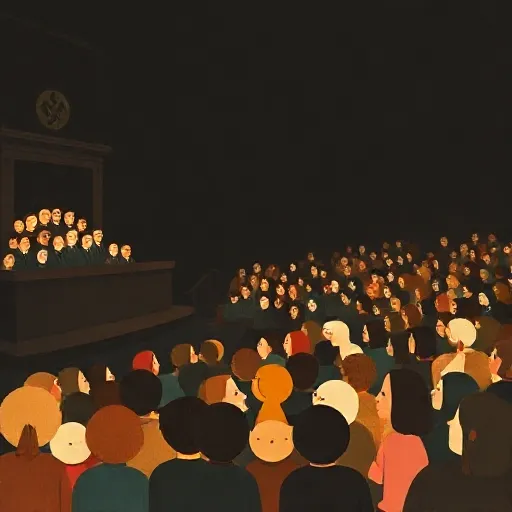
On November 21, 1945, American lawyer Robert H. Jackson stood in a bombed-out courtroom in Nuremberg, Germany. The men in the dock were some of the highest-ranking Nazis left alive after World War II. Jackson opened the case with words that still echo: “The privilege of opening the first trial in history for crimes against the peace of the world imposes a grave responsibility.” Instead of simply executing the defeated enemy, the Allies had chosen to put them on trial — an astonishing move that changed international law forever.
That moment captures the heart of transitional justice: what a society does with the horrible abuses of its past while trying to build a decent, stable future. After war or dictatorship, leaders want to punish wrongdoers, create a true record of what happened, help victims heal, and get a working government running again. But these goals often clash. Putting senior officials on trial can anger their armed followers and spark new violence. Thoroughly cleaning out the old civil service can leave nobody skilled enough to keep the lights on. And broadcasting victims’ painful stories can feel like justice — but not if the killers walk free.
The central tension is often called the peace versus justice dilemma. It is not a simple debate where one side wins. Instead, it is a paradox: two powerful moral intuitions that can’t be fully satisfied at the same time. You believe that to build a legitimate country you must punish those who did terrible things, but you also believe that to secure peace you may sometimes need to leave past criminals alone. As the philosopher Michael Walzer (1935–) has argued, politics involves dirty hands — moments when doing what is best for the community means compromising moral purity. Spain after Franco chose to bury its past for thirty years before reopening wounds. Rwanda used traditional village courts that did not meet strict legal standards, but cleared the jails and allowed some truth to emerge. The choice is agonizing because both values are real.
Trials: Nuremberg and Its Critics
War crime trials, like those at Nuremberg, aim to hold individuals accountable. They produce a lasting historical record and send the message that terrible crimes will be answered. Yet critics point to three deep worries.
First is victor’s justice. The accusation is simple: the winners put the losers on trial. As one of the Nazi defendants, Hermann Göring, cynically put it, “the victor will always be the judge, and the vanquished the accused.” Yet even if the circumstances of a trial are tainted by victory, the fairness of the actual procedure matters enormously. A trial conducted by Americans, even if flawed, would judge you for things that really were crimes, not for invented offenses based on twisted ideology.
Second is retroactivity. All legal systems honor the idea that you can’t be punished for an act that wasn’t illegal when you committed it (in Latin: nullum crimen, nulla poena sine lege). At Nuremberg, the defendants argued that no existing law clearly banned their wartime acts. Prosecutors scrambled to find earlier treaties that outlawed aggressive war and linked the atrocities to that crime. The British chief prosecutor shot back with a memorable challenge: “I suppose the first person ever charged with murder might have said: ‘Now see here. You can’t do that. Murder hasn’t been made a crime yet.’” The deep idea is that some deeds are so obviously wrong that punishing them doesn’t depend on a prior written rule.
Third is selectivity. Courts often end up prosecuting low-level soldiers while the top leaders, who gave the orders but kept their hands clean, escape. To fix this, lawyers developed command responsibility: a military or political leader can be convicted for the crimes of their troops if they didn’t prevent or investigate them. But this doctrine creates a new tension. Ordinary criminal law requires direct proof that the defendant personally intended a crime. Command responsibility relaxes that link, convicting a person for what others did under their watch. Can an ideal of the rule of law survive such a philosophical stretch?
Truth Instead of Trials: South Africa’s Brave Experiment
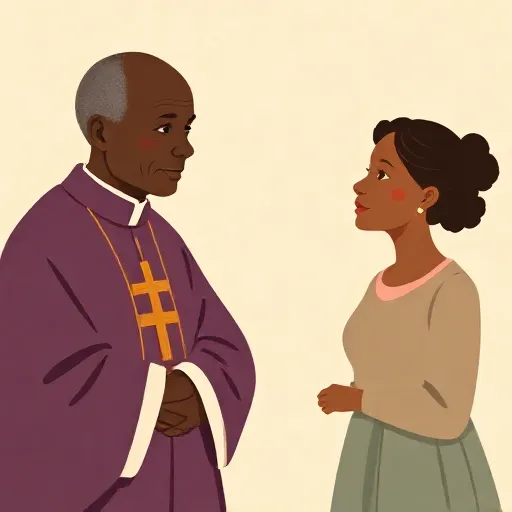
Partly because of the weaknesses of trials, countries have tried a different tool: the truth commission. These are official bodies that investigate past abuses, take testimony from victims, and issue public reports — but they cannot punish anyone. The most famous example is South Africa’s Truth and Reconciliation Commission (TRC), which began its work in 1996 under Archbishop Desmond Tutu.
The TRC faced an impossible bind. The African National Congress wanted apartheid-era crimes punished, but the outgoing white government threatened civil war if trials went ahead. The compromise: amnesty. Perpetrators who fully disclosed their politically motivated crimes would walk free, even for murder. This amnesty-for-truth mechanism outraged many victims who wanted to see their tormentors behind bars. One notorious killer described burning an activist’s body on a bonfire while drinking beer with his men — and then simply left the hearing a free man.
Defenders of truth commissions offer powerful arguments. One is recognition: when victims tell their stories to a respectful, public audience, their dignity as human beings is affirmed in a way that a cold criminal trial might never achieve. Another is more truth: freed from strict rules of evidence, commissions can gather a far fuller picture of what happened, and the amnesty carrot encourages perpetrators to come forward and reveal details that would otherwise stay hidden. Yet neither argument was perfect. Many victims felt recognition without punishment rang hollow. And the TRC’s focus on dramatic personal suffering sometimes obscured the role of businesses and media that quietly supported apartheid. The promise of full truth remained just out of reach.
The Danger of Forgetting

Some countries have tried to simply bury the past. After its long civil war, Mozambique’s leaders actively avoided discussing atrocities, afraid that reopening wounds would destroy the fragile peace. On the surface, forgetting seems practical. But it nearly always fails.
When a nation locks away its traumas, individual victims are forced to endure daily humiliation — watching their torturers hold public office, run businesses, or live next door without ever being held to account. A Cambodian woman whose husband was executed by the Khmer Rouge, for example, must pass the murderer’s noodle shop every day. There is no procedure to sue him, no trial to acknowledge her loss. On a national level, forced amnesia poisons any chance of a shared identity. The French thinker Ernest Renan once said a nation is built on a “rich legacy of memories” and a desire to live together. Forgetting destroys both: it erases part of the common history and feeds an underground river of resentment that can one day burst. As Spain discovered decades after its “pact of forgetting,” groups whose pain is ignored do not forget. Their silence is not peace — it is a pause.
So even when all sides say they want to move on, the international community may have a stake in insisting on some reckoning. Atrocities in one place can embolden dictators elsewhere, and ignoring them weakens the global fabric of human rights. But insisting on justice when it might reignite violence risks everything. That tightrope is the permanent reality of transitional justice.
What Would You Choose?

You may never face a war tribunal or design a truth commission. But the same tension between justice and peace runs through everyday life. If a friend betrays your trust, do you demand an apology and a consequence, or do you swallow your hurt so the group doesn’t fall apart? When a sibling breaks something precious, do you insist on a fair punishment, or let it go to keep family harmony? These smaller dilemmas feed from the same uneasy spring.
Looking at how nations have wrestled with this — courts versus commissions, accusation versus amnesty, remembering versus forgetting — doesn’t give you a tidy answer. But it shows why the question is so hard. Justice and stability are both precious, and they tug against each other like two people holding opposite ends of a blanket you can’t tear in half. The best we can do is understand the pull, choose a policy somewhere on the continuum, and stay ready to re‑evaluate. Whatever you decide, you’ll get your hands a little dirty.
Think about it
- If you became the leader of a country after a brutal civil war, would you offer amnesty to former fighters if it was the only way to stop more killing? What makes that choice feel right or wrong to you?
- Can telling the truth about painful events ever really make up for not getting justice? Or is truth just a consolation prize?
- When you’ve been hurt by someone, is it more important that others know what happened or that the person faces a real penalty? Why do you lean one way?