Who Can You Kill in a War? The Fight Over Just War
A Soldier’s Dilemma
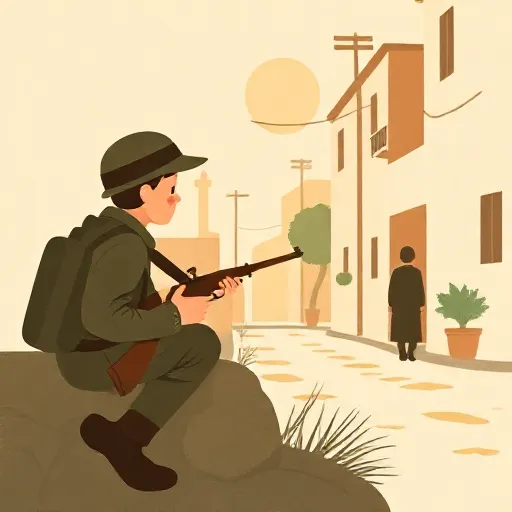
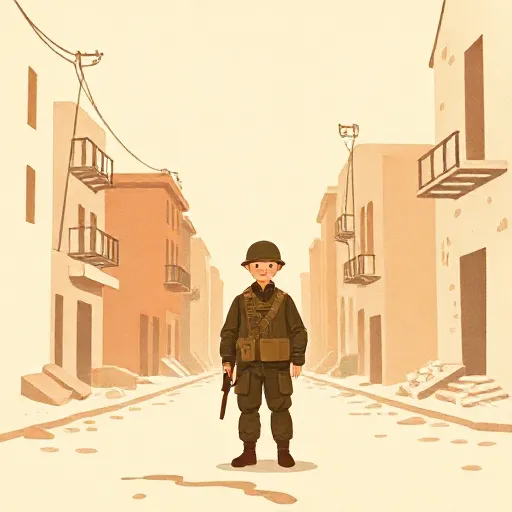
It is 2003, and an American soldier in Iraq raises his rifle. Down the street, a blur of movement — someone in civilian clothes, maybe harmless, maybe not. If the soldier shoots, he might kill an innocent person. If he holds fire, he might die himself. Does it matter whether his country’s invasion is just, or whether the war itself is right? And if he does everything the rulebook says, is his action automatically okay?
For centuries, people who think about the ethics of war have tried to answer questions like these. They have built systems of rules — a kind of moral architecture — to decide when war can be fought and what you can do inside one. In the last fifty years, two big camps have formed, and they disagree about almost everything. One side takes its lead from international law; the other thinks that every single soldier must be judged by the same standards of right and wrong we use in everyday life. Their arguments are fierce, and the stakes are nothing less than life and death.
The Traditionalists: Law as a Moral Compass
The first camp, the traditionalists, start from a simple idea: the laws of war are also their moral guide. The most famous traditionalist, Michael Walzer (born 1935), wrote a hugely influential book called Just and Unjust Wars in 1977, the same year key parts of modern international war law were finalized. He argued that those laws are actually built on deep moral logic.
Traditionalists say only states — countries — can go to war, and only for a few reasons: defending your own country, defending another country from attack, or stopping horrors so terrible they “shock the moral conscience of mankind.” Once a war starts, the rules of fighting — what philosophers call jus in bello — kick in. The central rule is discrimination: you may never aim directly at civilians (also called noncombatants). You can only target combatants — soldiers or others who are actively fighting. And here’s the big twist: all combatants, no matter which side they’re on, are morally allowed to kill each other. This is combatant equality. An unjust invader and a just defender are equally permitted to shoot at each other, as long as they follow the rules and don’t intentionally harm civilians.
Why would that be? Walzer’s answer is that, simply by fighting, a soldier gives up his right not to be killed. He takes on the role of a dangerous person, and in doing so, he loses the protection other people normally have. Civilians don’t take this step, so they keep their rights. That’s why targeting them is always wrong, except in a rare supreme emergency — the kind of catastrophe where an enemy victory would be so monstrous (like a Nazi takeover) that even civilian lives might have to be weighed in the balance.
The Revisionists: A Challenge from Everyday Morality
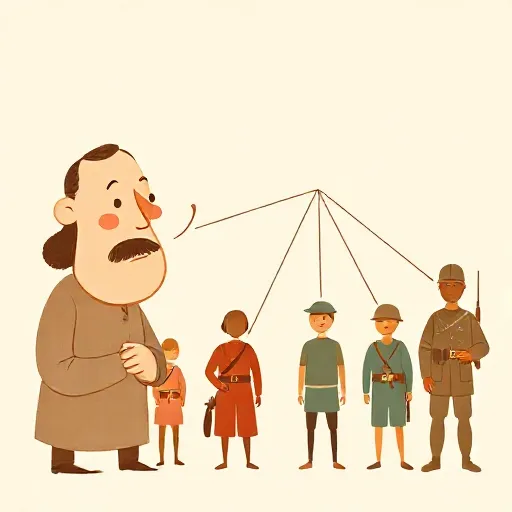
Then came the revisionists. Their central claim is that the morality of war is not a special separate thing; it should follow the same moral logic we use if someone attacks you on the street. The most influential revisionist, Jeff McMahan (born 1954), and others like David Rodin (born 1970) and David Luban (born 1952), attacked Walzer’s picture from all sides.
First, they questioned whether countries even have a deep right to defend themselves the way individual people do. Imagine a “bloodless invasion,” where an attacking army would take over your country but not kill anyone unless you fight back. If the right to national defense is really just about protecting individual lives, then fighting back — and causing deaths — might be morally worse than surrendering quietly. That feels off to many people, but it exposed cracks in Walzer’s argument.
The biggest attack was on combatant equality. Revisionists say your right not to be killed — your liability to being killed — depends on your individual responsibility for an unjust threat. If you’re a soldier fighting to defend your family from a brutal invader, you haven’t done anything to lose your right to life. According to the revisionists, an unjust combatant shooting at you is committing a moral wrong, not acting with permission. So combatant equality collapses: soldiers on the unjust side cannot permissibly kill anyone at all, except perhaps by laying down their weapons.
This raised an explosive new problem. If liability comes from responsibility, then what about civilians? In modern wars, many ordinary people pay taxes, vote for warmakers, or work in war-related industries. They contribute to the unjust threat, too. If we set the bar of responsibility low enough, many civilians become liable to attack, which guts the rule against killing them. But if we set it high enough to protect civilians, then a lot of soldiers — those who are ineffective, scared, or morally opposed to the war — would also not be liable, and killing them would also be wrong. This is the responsibility dilemma.
The Tightrope: Saving Discrimination without Abandoning War
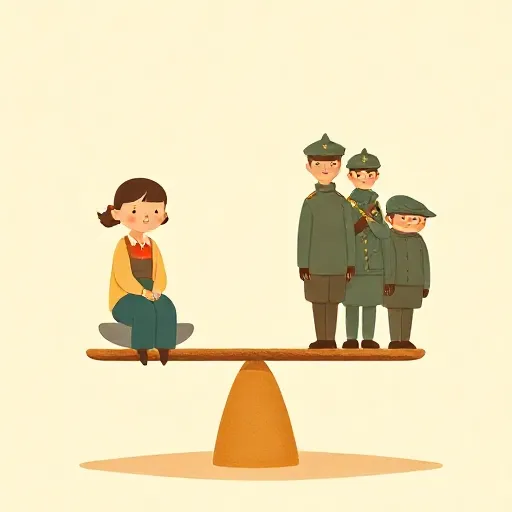
Are we stuck? Not necessarily. A middle path has emerged among philosophers who want to keep the important insight that killing civilians is worse, while still making war morally possible. The key is the principle of moral distinction: killing civilians is worse than killing soldiers, even when neither is liable to be killed.
Why would that be? Several reasons add up. Civilians are usually more defenseless and vulnerable than soldiers. Soldiers step forward knowing the risks, often to shield civilians behind them — they implicitly say, “if you must fight, fight us instead.” Soldiers also usually kill each other to remove a direct threat (eliminatively), while killing civilians is often a way to pressure their government (opportunistically) — and using people as a tool is especially awful. When you kill a civilian, you usually have much stronger reasons to think you’re doing something wrong. A soldier at least might reasonably believe their cause is just. None of these reasons alone is a magic argument, but together they form a heavy bundle.
This bundle allows a moderate form of combatant equality. If killing an innocent soldier is not the worst kind of killing, then a soldier on the unjust side might sometimes fight permissibly — say, to protect their own comrades or homeland — without needing a supreme emergency. Their actions still violate the rights of just soldiers, but those rights can sometimes be overridden. This isn’t a full license, but it explains why international law’s rule that all combatants can fight is not crazy; it’s a rough but useful approximation of a messy moral reality.
Necessity and Proportionality: The Real Gatekeepers
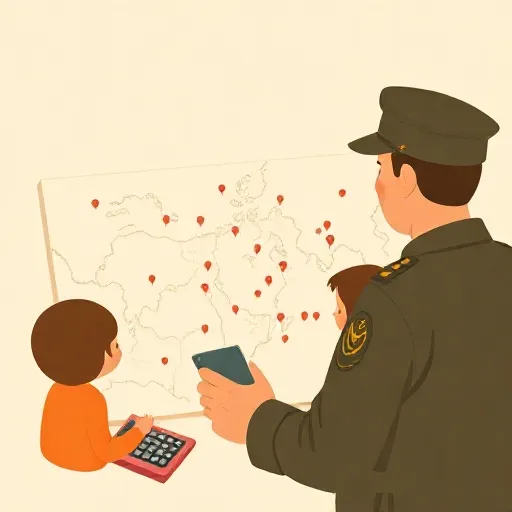
Beneath all these arguments are two concepts that do the real work in the ethics of war: necessity and proportionality. They appear in every major code of just war thinking, for both when you start a war (jus ad bellum) and how you fight it.
Proportionality asks whether the good you achieve by fighting outweighs the harm you cause, counting every broken life and every destroyed home. Necessity asks whether there is any less harmful way to achieve the same goal. Imagine someone threatens your life. Killing them might be proportionate, but if you could safely knock them out instead, then killing would be unnecessary — and therefore wrong. War constantly demands that same reasoning, multiplied by thousands of lives.
These judgments have to be made with terrible uncertainty, before anyone knows how things will turn out. A war or a battle might be the only way to avoid a larger disaster, but predicting that is excruciatingly hard. That is why soldiers are morally required to take extra risks on themselves in order to protect innocent people, rather than always choosing the path that’s safest for their own side. The law says you must take “all feasible precautions” to avoid killing noncombatants. In real wars, that often doesn’t happen — but the philosophical standard is clear and demanding.
Why This Fight Still Matters to You

Right now, war is not just for soldiers on a distant battlefield. Your own government might be deciding whether to launch a drone strike, whether to send aid to a resistance movement, or whether to stay out of a conflict that is killing civilians by the tens of thousands. The news shows pictures of destroyed hospitals and fleeing families, and you have to decide what you think.
The same question that froze that soldier in Iraq in 2003 freezes you now: What makes killing in war right, and what makes it murder? The traditionalist and revisionist philosophers don’t have a neat final answer you can memorize. They give you a map of the arguments, the tensions, and the costs. They show you that even the most basic rule — don’t kill civilians — is harder to lock in place than we hope, and that war is a moral fog from start to finish. Understanding how reasonable people can disagree so deeply doesn’t make the choices easy. But it does mean you can face them with open eyes, knowing what is truly at stake.
Think about it
- If two countries go to war and you are drafted to fight, would you want to know whether your country’s cause is just before you pull the trigger? Or is your duty just to follow orders and fight?
- Can you think of a conflict — in history, in a book, or in a video game — where both sides believed they were right? Could they both be right? Or must one side be wrong?
- Suppose a drone could end a war by targeting a single powerful person, but doing so would also kill a few innocent bystanders who happen to be nearby. How would you decide if that strike is worth it? What details would you need to know?