
Can You Be Stuck Between Right and Right?
When Right Collides with Right
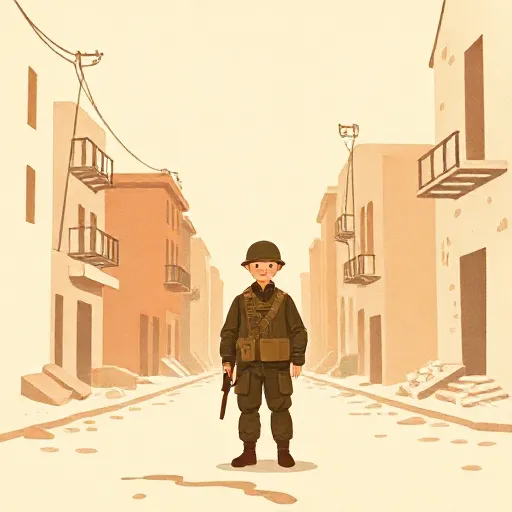
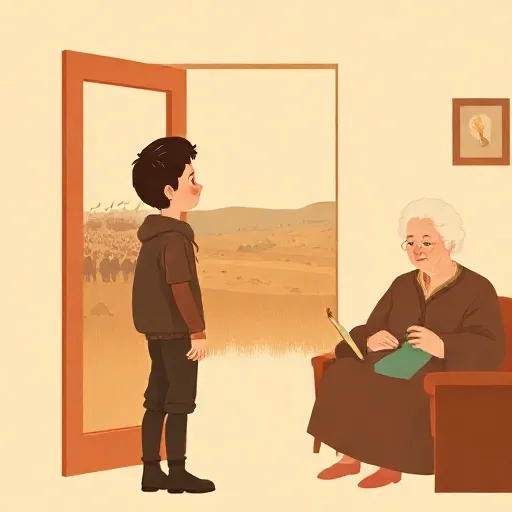
In 1940, a French student faced an agonizing choice. His brother had been killed in the war. He desperately wanted to join the Free French forces and fight against a brutal enemy. But his mother was now completely alone, and he was her only comfort. Staying to care for her felt deeply right. Leaving to fight for justice also felt deeply right. He could not do both.
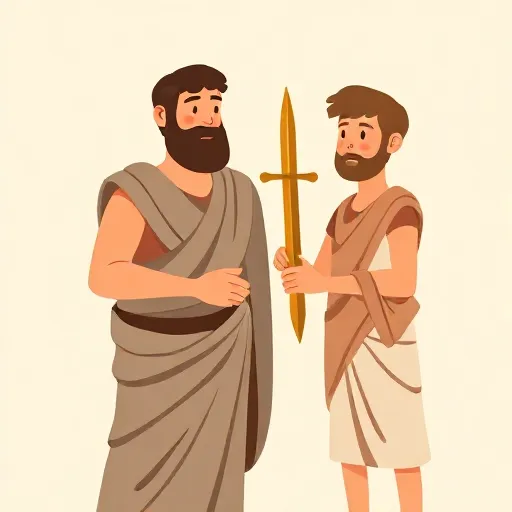
This is a moral dilemma—a situation where a person has strong moral reasons to take two different actions, but doing both is impossible. Moral dilemmas pop up in stories from ancient Greece to modern novels. In Plato’s Republic, the character Cephalus (speaking with Socrates around 380 BCE) defines justice as telling the truth and paying your debts. Socrates (c. 470–399 BCE) immediately asks: what if you borrowed a weapon from a friend, and now that friend is out of his mind and might hurt someone? Returning the weapon is paying your debt, but protecting people from harm is also a moral demand.
In that case, most of us quickly see which duty wins: safety beats a loan. Socrates says the duty to prevent harm overrides the duty to return the weapon. When one obligation clearly outweighs the other, we have a conflict, but not a genuine moral dilemma. A genuine dilemma needs something more: the two requirements must be equally strong, with neither overriding the other.
What Makes a Dilemma “Genuine”?
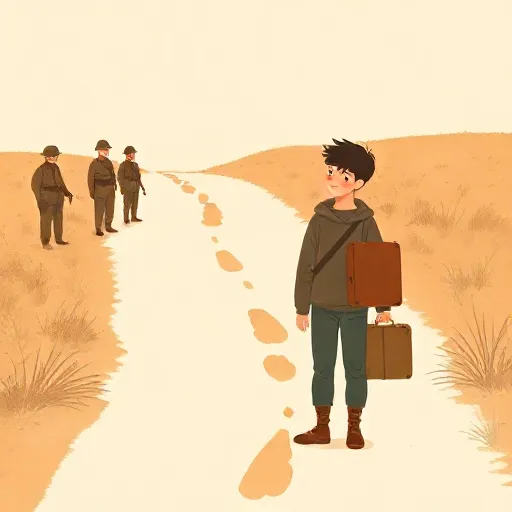
In the French student’s case—told by the philosopher Jean-Paul Sartre (1905–1980)—it is not obvious that one duty overrides the other. If you were certain he could make a real difference in defeating the Germans, maybe the military obligation would win. But if his contribution would be tiny, his duty to his mother might take priority. Some philosophers say the uncertainty is the problem: we just don’t know enough. Others say the obligations are simply of equal weight, and no amount of thinking will make one defeat the other.
For a long time, big names in ethics—like Immanuel Kant (1724–1804), John Stuart Mill (1806–1873), and W. D. Ross (1877–1971)—assumed that a proper moral theory should never allow genuine dilemmas. They wanted morality to be uniquely action-guiding: for any situation, the theory should tell you exactly what is required, forbidden, or permitted. If more than one incompatible action is labeled “obligatory,” the theory gives contradictory advice. That would be like a GPS telling you to turn left and turn right at the same time.
Can Two Duties Truly Be Equal?
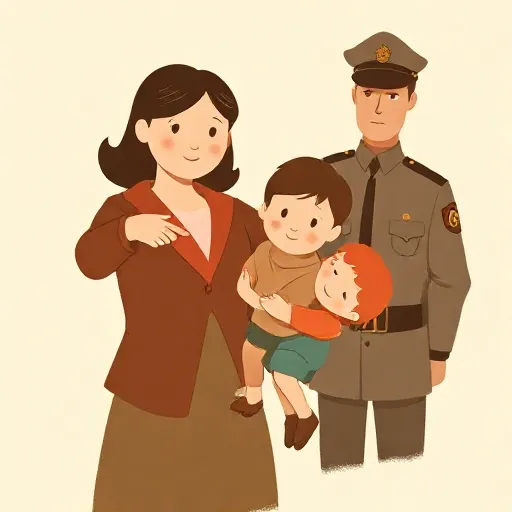
Defenders of genuine dilemmas point to symmetrical cases—situations where the same moral rule generates both obligations. The most famous comes from William Styron’s novel Sophie’s Choice. Sophie and her two children arrive at a concentration camp. A guard tells her that one child will live, one will be killed—and she must decide which. If she refuses to choose, both die. For each child, Sophie has an equally powerful reason to save that child’s life. The same precept—protect your children—creates conflicting requirements. Here, it seems absurd to say one obligation overrides the other. They are identical in strength.
This is not like Cephalus’s borrowed weapon, where one rule clearly trumps another. In symmetrical cases, a rule collides with itself. Supporters of dilemmas say this shows that some conflicts are impossible to resolve without moral failure. No matter what Sophie does, she will fail to save a child she ought to save.
Opponents of dilemmas have a reply. They say that in such cases, the real requirement is disjunctive: Sophie ought to save one child or the other. That is the best she can do. If a lifeguard can save only one of two drowning swimmers, we don’t say she does something wrong by saving one. She is required to save at least one, not both. By re-describing the obligation, the conflict disappears. The agent is never required to do both incompatible actions; she is required to do one of them. This move works, they argue, for many apparent dilemmas.
Why Many Philosophers Doubt True Dilemmas
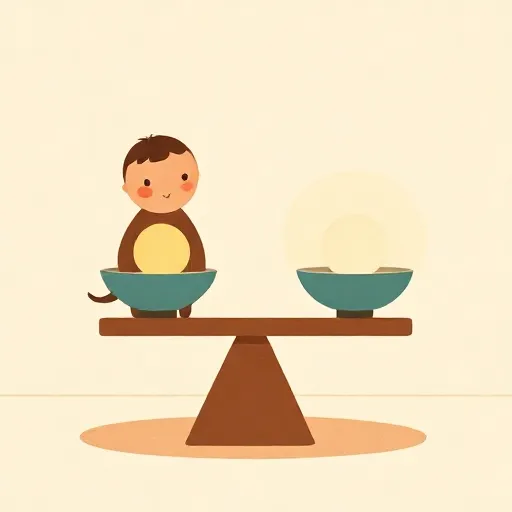
Beyond examples, there are deeper logical reasons to be suspicious of genuine dilemmas. Two arguments in particular show that accepting real dilemmas forces you to give up some very basic principles about how “ought” works.
The first argument uses the principle that the same action cannot be both obligatory and forbidden. Start with a dilemma: you ought to do A, you ought to do B, but you cannot do both. If you also accept that when doing one action prevents you from doing another (since you can’t do both), then being obligated to do A would make A’s necessary outcome obligated too. Since doing A means not doing B, you would end up obligated not to do B—but you are also obligated to do B. Contradiction.
The second argument uses the familiar idea that “ought” implies “can.” If you are required to do something, it must be possible for you to do it. In a dilemma, you ought to do A, you ought to do B, but doing both together is impossible. If you add the agglomeration principle—if you ought to do each, then you ought to do both—you get that you ought to do the impossible combination, which violates “ought implies can.” So something has to give: either the dilemma isn’t real, or one of those deeply plausible principles must be rejected.
Defenders of dilemmas often respond by questioning these principles. Some say “ought” does not always imply “can.” Others reject agglomeration: just because you ought to do each individually doesn’t mean you ought to do both together, especially when they clash. But these principles feel fundamental to many thinkers, which is why the debate remains so lively.
Guilt and Regret: Do They Prove You Did Wrong?

One of the strongest arguments for dilemmas appeals to the emotions people feel after choosing. If Sartre’s student leaves to fight, he will likely feel remorse or guilt for abandoning his mother. Had he stayed, he would feel guilt for not fighting. Supporters of dilemmas say this moral residue—the guilt that lingers—only makes sense if he really did something wrong. If one option was clearly right, why would a good person feel guilty?
Opponents reply that guilt and regret are different. Regret is a negative feeling about a bad outcome, even when you are not at fault. A medic who amputates a soldier’s leg with no anesthetic to save his life will feel intense regret about the pain caused, but no guilt—she did the right thing. In dilemma cases, the bad feeling might just be regret that harm occurred, not guilt over wrongdoing.
To make this vivid, imagine a man named Bill driving safely on a snowy day. A child on a sled suddenly shoots into the road and is killed. Bill did nothing wrong—he was careful, had the right of way, and could not have seen the child coming. Yet Bill feels crushing guilt. Is his guilt “appropriate”? In a sense, we understand it. Humans are wired to feel awful when their actions cause harm, even without moral fault. So the presence of strong negative feelings doesn’t automatically prove a genuine dilemma. Both sides can explain why conflicted agents feel bad.
Why This Still Matters

You may never face a choice as terrible as Sophie’s, but smaller moral conflicts happen all the time. You promised to help a friend study, but your sibling really needs your support that same afternoon. You want to be a loyal friend and a caring family member. Is one duty always stronger? Can you be genuinely stuck?
The debate over moral dilemmas isn’t just for philosophy classrooms. If genuine dilemmas exist, then even doing your absolute best can sometimes leave you with a moral stain. That’s a heavy thought. If they don’t exist, then morality is always able to guide you clearly—even when you feel torn, there is a right answer to be found. Philosophers are still hard at work, weighing logic, examples, and everyday feelings to figure out which picture is true. The question remains: can you be trapped between right and right? Your own tough choices give you a small window into this enormous puzzle.
Think about it
- If you made a promise to a friend, but then you found out that keeping it would hurt someone else, how would you decide what to do? What would you tell your friend?
- Imagine you could save only one of two people from a burning building, and both are strangers. Would you feel guilty no matter who you save? Why or why not?
- Think of a time when you had to choose between two things you felt you should do. Did it feel like one choice was clearly right, or were you stuck? What does that tell you about how morality works?