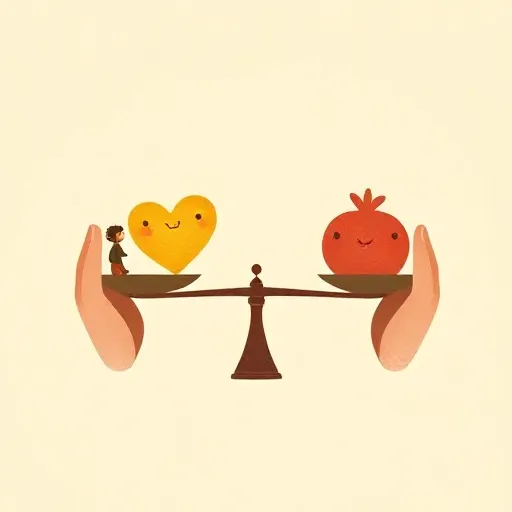

When Your Mom and Your Country Both Need You — How Do You Decide?
One Student, Two Duties, No Easy Answer

In 1940s Paris, a young man knocked on the door of philosopher Jean-Paul Sartre (1905–1980). He had a problem that made his stomach twist. His mother was alone and needed him to stay. But the Free French forces in England were gathering to fight the Nazi occupation, and he desperately wanted to join them. Both choices felt deeply moral. Both would leave someone or something abandoned. He asked Sartre what he should do.
Sartre didn’t give a tidy answer. Instead, he used the case to ask whether we can even reason about such a decision. The student was facing what we now call a moral dilemma — a situation where two duties pull equally hard, and you can’t fulfill both.
That question has rippled through philosophy for centuries. When we try to decide what we ought to do, morally, what kind of thinking are we doing? That kind of thinking is moral reasoning — the responsible, deliberate process of trying to answer a practical moral question. It’s not just having a hunch or reacting instinctually; it’s actively working through the competing claims on you and aiming to reach a well-supported choice. The puzzle is how — or even whether — that can succeed.
Do We Need Fixed Rules to Think Straight?

When you face a moral decision, do you reach for a general rule? “Keep your promises.” “Help those in need.” “Stand by your family.” Many philosophers have argued that moral principles — general statements that apply across many situations — are essential for moral reasoning. Without them, they say, our thinking would be a mess of gut reactions.
But not everyone agrees. Some philosophers, called moral particularists, think that no moral rule works in every case. A feature that counts as a good reason in one situation might be irrelevant or even a bad reason in another. For example, while telling a lie is usually wrong, bluffing is the whole point of the game “liar’s poker” — and there, lying isn’t a moral failing. The particular facts of each scenario are what matter, not a fixed list of principles.
A middle position came from W. D. Ross (1877–1971). He suggested we think in terms of prima facie duties — duties that are real but not absolute. A duty to keep a promise, for instance, is a genuine moral claim on you. But if a much weightier duty — like preventing a serious accident — conflicts with it, the promise-keeping duty can be overridden. Your actual duty is what remains after the clash. Ross’s idea helps explain why we can both respect rules and sometimes break them without feeling we’ve done anything wrong.
When Duties Collide: Can You Weigh Them?
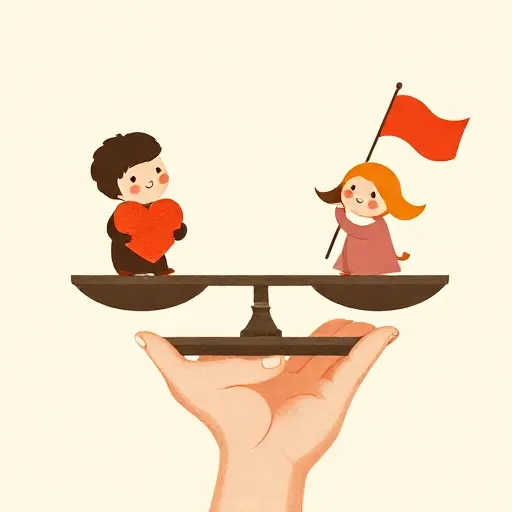
Sartre’s student felt the pull of filial loyalty and patriotic duty. Even if we accept that both are prima facie duties, how do we decide which one wins? Ross himself admitted that “for the estimation of the comparative stringency of these prima facie obligations no general rules can, so far as I can see, be laid down.” That’s a big problem.
Imagine you’re a referee in a sport with multiple rules. Two players collide, each citing a different rule. If the rulebook has no priority ranking, how do you call it? Some philosophers, like John Stuart Mill (1806–1873), argued there must be a single ultimate principle — for him, the greatest happiness — that works as a supreme umpire. You’d feed in the facts, and the principle would output the right answer. That idea assumes moral considerations are commensurable: measurable on one common scale, like weights.
But what if values aren’t like that? Is loyalty to a parent “heavier” or “lighter” than a duty to fight a just war? There may be no single dimension for comparison. They might be incommensurable — like asking whether a poem is louder than a painting. In our everyday thinking, we often face such clashes and still manage to decide. So maybe moral reasoning isn’t about computing weights at all.
Reflective Equilibrium: Tuning Your Moral Instrument

If there’s no ultimate umpire principle, how can we reason responsibly through a moral dilemma? The philosopher John Rawls (1921–2002) offered a picture that many find realistic and powerful. He called it reflective equilibrium.
Here’s the idea. You start with your firmest moral convictions about specific cases — for instance, that it’s wrong to torment a small animal for fun. You also have some general principles you believe in — like “minimize suffering.” Sometimes a principle hits a case that doesn’t sit right; sometimes a new case makes you rethink your principle. Reflective equilibrium is the back-and-forth process of adjusting both ends until they fit together. You don’t bow down to a single superior rule. Instead, you seek coherence among your considered judgments, much as you might adjust individual sentences and the overall argument in an essay until the whole thing makes sense. As Rawls wrote, justification is a matter of “the mutual support of many considerations, of everything fitting together into one coherent view.”
This doesn’t promise a crisp answer every time. But it describes how we often do reason — and how we can reason honestly — when neat formulas fail. It means moral reasoning is a skill, not a calculation.
Why Your Messy Decisions Still Matter

You’ve probably never had to choose between staying with a parent or joining a resistance army. But you’ve likely faced a smaller version: help a friend move on a Saturday or honor a family commitment you’d promised to keep? Tell a hard truth that might hurt someone or stay silent to protect their feelings? These are moments when moral reasoning kicks in, even if you don’t call it that.
The debates about principles, weighing duties, and seeking reflective equilibrium aren’t just armchair puzzles. They shape how we listen to each other, how we argue, and how we live with our decisions. Some moral psychologists note that when people try to explain their moral intuitions, they often get “dumbfounded” — unable to offer reasons. Yet we keep trying, revising, and learning. That’s exactly the work of moral reasoning. It’s not about having a flawless machine but about becoming someone who thinks carefully and can explain why you believe what you believe.
Think about it
- Think of a time you had to pick between helping two friends who both really needed you. Did you follow a rule, or did something else guide you?
- If someone says “always tell the truth” but a white lie might spare someone deep embarrassment, how would you start to think through that conflict without simply dismissing one side?
- Imagine a device that could measure the moral “weight” of any action, like a scale for values. Would that make moral choices easier? What might still be hard?