
When Is It Okay to Hurt Someone to Defend Yourself?
The Playground Problem: When Does Pushing Back Become Okay?

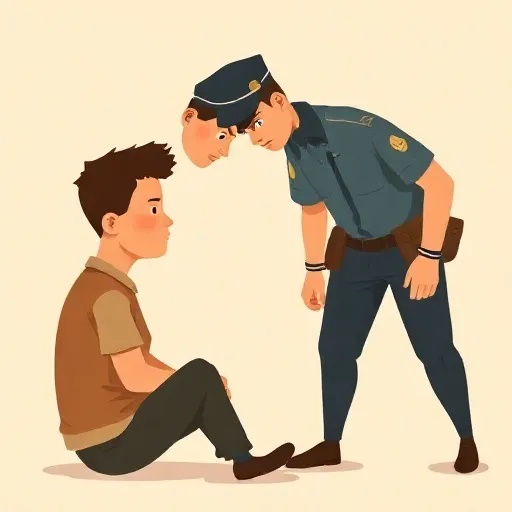
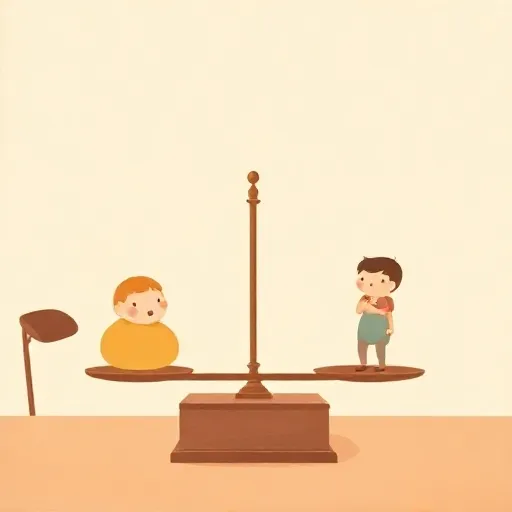
Imagine you’re on the playground. Your friend is about to be punched. The only way to stop it is to shove the attacker. You push, and the shove hurts them. Did you do the right thing? What if the attacker didn’t mean any harm at all — they just tripped, and now their fist is heading toward your friend’s face? Could you still use force? These are the kinds of questions philosophers study under the label defensive harm: when is it morally justified to hurt one person in order to protect another — or to protect yourself?
Most of us believe each person has a basic right not to be harmed. So if you harm someone, you need a special reason that overrides that right. Philosophers usually group those reasons into two big kinds.
Two Kinds of Permission: Trading Costs and Losing Rights
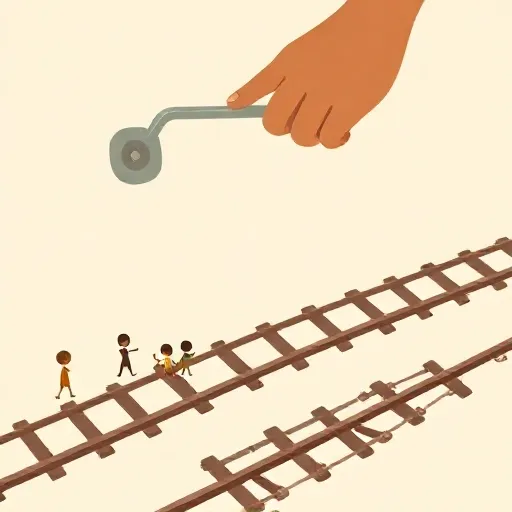
The first is a lesser-evil justification. It says that a right not to be harmed is strong, but not unbreakable. If harming one person is the only way to prevent something far worse, it may be okay. The classic example is Trolley: a runaway trolley is about to kill five people unless you pull a lever that sends it down a side track, where it will kill one. Many people feel that pulling the lever is allowed. The one person still has a right not to die — but the emergency makes overriding that right acceptable. Because the right remains, the harmed person (or their family) is usually owed compensation, and many philosophers say they could even fight back to save their own life.
The second kind is a liability justification. Here, a person doesn’t just have their right overridden — they lose the right entirely under the circumstances. Think of a case philosophers call Murder: an attacker is trying to kill an innocent victim. The victim cannot escape and hits back, killing the attacker. No extra lives are saved — there’s no “greater good.” Instead, we think the attacker has become liable to that harm. They no longer have a right to complain, they have no claim to compensation, and usually they may not fight back. The key question then becomes: what makes someone liable? That battle splits philosophers into rival camps.
Who Deserves to Be Harmed? Three Views
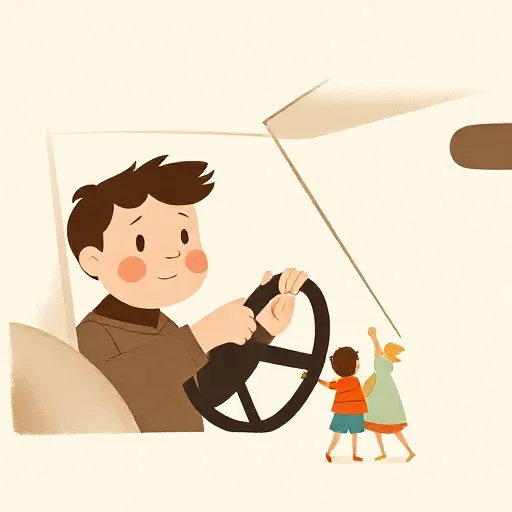
One idea is the culpability account: you’re liable only if you are blameworthy — you knew you were doing wrong and did it anyway. A cold-blooded attacker clearly qualifies. But consider Conscientious Driver: a careful person whose brakes fail without warning and who is about to hit a pedestrian. She has done nothing blameworthy. Yet many people think the pedestrian should still be allowed to defend themselves, even if that means severely injuring the driver. If the culpability view says otherwise, it strikes many as too strict.
Judith Jarvis Thomson (1929–2020) offered a sharply different causal account. She argued that anyone who will cause harm to another — even someone completely innocent — can be liable. What matters is the causal chain, not your state of mind. Picture Falling Person: a gust of wind blows somebody down a well, and they are about to crush a person trapped at the bottom. The falling person is morally innocent, but Thomson says the trapped victim may still fight back, because the falling person would otherwise violate the victim’s right not to be killed. Critics point out that this seems to treat people like falling rocks. A rock falling down a well doesn’t violate rights, because it has no duties. If merely causing harm makes you liable, why can’t you harm an innocent person who innocently blocks your escape from a fire? Thomson herself didn’t want to allow that, but her critics say her theory can’t explain why not.
A middle path is the responsibility account, defended by Jeff McMahan (born 1954) and Michael Otsuka (born in the early 1960s). They say you become liable only if you are morally responsible for posing a threat — even if you aren’t blameworthy. You are morally responsible if you were aware of a risk and chose to act anyway. The careful driver knew that driving carries risks; when bad luck strikes, she must bear the harm rather than the innocent pedestrian, because she took the chance. In a case called Mistake, a homeowner sees a news report about an escaped murderer. Later, she mistakes an innocent identical twin for the killer and aims a gun. She isn’t blameworthy — her evidence made her belief reasonable — but she still gambled with someone’s life. The responsibility view says this makes her liable, so the innocent twin can fight back.
Yet this view also raises tough questions. McMahan says the driver is liable, but a Cell Phone Caller (whose phone, unknown to him, has been rigged by a terrorist to trigger a bomb) is not liable, because the caller had no reason to expect danger. Critics say that’s just a tiny difference in foreseeability — why should such a small gap decide who may live or die? The responsibility view may rest on shaky judgments about how much risk we each owe to strangers.
Even When It’s Fair, How Far Can You Go?

Even if someone is liable, you can’t do just anything. Suppose an angry classmate is about to slap you. You could stop them with a flamethrower. That’s clearly wrong — the harm would be disproportionate. The proportionality rule says the harm you cause in defense must not be wildly out of balance with the threat you are stopping. If a gang of killers attacks, you might justifiably harm many of them, because each poses a lethal danger. Still, some philosophers worry that even against guilty attackers, there should be an upper limit, because killing many people is a tragedy no matter what.
There’s also a necessity rule: you must use the least harmful way to stop the threat that’s actually available to you. If you could simply duck out of the way or break the attacker’s arm rather than kill them, you must. But what if you could avoid the harm entirely by jumping off a ledge, breaking your own arm, instead of breaking the attacker’s leg? Because the attacker is liable, their interests count for less in the comparison — so breaking their leg can still be “necessary” even if it’s more harmful than your broken arm would be. The necessity rule doesn’t force you to sacrifice yourself; it just demands you pick the least costly fair option.
Defending a Friend: Do You Get Special Permission?

So far, the rules for self-defense and defending others look similar. But some philosophers, including Jonathan Quong (born in the 1970s), argue that defending family or close friends comes with extra permissions. This idea is called an agent-relative prerogative: you’re allowed to give extra weight to your own life and the lives of those you care about. In some views, this even lets you harm a non-liable innocent person if that’s the only way to save a loved one. Most thinkers find this alarming — it seems to open the door to sacrificing innocent bystanders just because you feel a strong attachment. So they add strict limits, saying this permission only works when the harm is not disproportionate and no safer option exists.
From the Playground to Your Life: Why This Debate Won’t Go Away

These puzzles aren’t just for professors. Every time you see bullying or a fight, you make snap judgments about who is at fault, how much force is fair, and whether the victim even wants help. Should you step in if a kid is being mean but was clearly provoked? What if the person being threatened shouts, “Stay out of it, I don’t want your help”? Some philosophers argue you can only defend someone if they consent; others say we have a duty to stop wrongful attacks even when the victim says no. When a group is threatened, does every victim need to agree before you act, or does one “yes” make it okay? These questions shape laws about self-defense, “stand your ground” rules, and even international rules about war.
The problem of defensive harm shows that even a simple playground shove connects to deep ideas about rights, fairness, and what we owe each other. There’s no single answer everyone accepts, but thinking clearly about it makes us more thoughtful protectors — and more careful about when we decide to use force ourselves.
Think about it
- If someone accidentally trips and is about to knock you into a busy street, and you have time to push them away (which would break their arm), is it fair to do it? Why or why not?
- You see a bully about to punch a kid who keeps yelling, “Stop, I don’t want you to fight for me!” Should you step in anyway?
- If the person you defended later becomes a bully themselves, does that change how you feel about having pushed their original attacker? Why?