Is Torture Ever the Right Thing to Do?
A Stolen Car, a Sleeping Baby, and a Heated Question

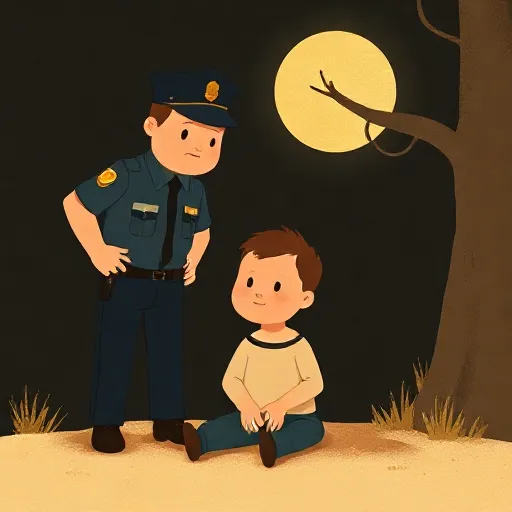
It is the middle of summer. A three‑year‑old sleeps in the back seat while his mother stops for petrol. She steps out, keys dangling in the ignition. A man jumps into the car and drives away. Ten minutes later he leaves the car in a parking lot and runs, but the police catch him. The problem? The child is still inside somewhere, and the sun is turning that car into an oven.
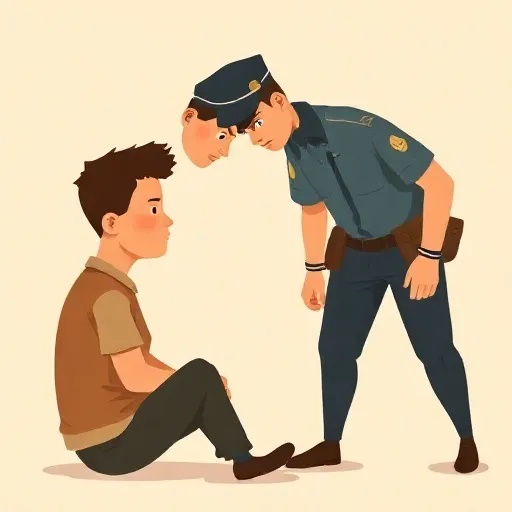
The arrested man keeps saying “It wasn’t me.” He will not give the car’s location. The officers try reason, then warnings. The clock is ticking. Eventually one officer clips him across the ear and lands a hard punch to his body. The man falls to the floor and, in pain he has never felt before, finally tells them where the car is. When the police find the car, the boy is limp, dehydrated, barely alive. He survives.
Was beating the thief the right thing to do? Most people feel torn. To answer, we first need a clear picture of what the police actually did: they tortured the man. Understanding what torture is, why it is so wrong, and when – if ever – it might be justified is one of the hardest questions in ethics.
What Exactly Is Torture?

Torture happens when one person deliberately causes extreme physical suffering to another person who cannot fight back and has not agreed to it. The person being hurt is defenceless: they are tied up, locked in a cell, or held down, so they have no way to stop what is happening.
Real‑world examples go far beyond a punch. Waterboarding makes someone feel they are drowning, over and over. Sleep deprivation keeps a person awake for days until their mind cracks. Electric shocks, burning, or cutting are used in some places. All these methods share a single purpose: to break the victim’s will, to make them so helpless that they will obey anything the torturer demands, whether that is confessing to a crime, revealing information, or simply submitting.
Torture does not need to break a person’s mind forever. Even a few hours of uncontrollable agony can temporarily destroy someone’s ability to make their own choices. That is why philosophers say torture is an attack on a person’s autonomy – their power to direct their own life. When you are being tortured, your world shrinks to nothing but pain and the voice of the person inflicting it. For that period, you are not living your life; the torturer is living it for you.
Why Torture Seems So Wrong
Torture is wrong for two reasons that grab you right in the gut. First, it hurts terribly. Any act that deliberately causes severe pain – without consent – is already morally ugly. Second, it strips away autonomy. Think about what it feels like to have someone else control every second of your experience, with no way to say “Stop.” That total loss of control is a deep harm, even if afterwards you go back to normal.
How does that harm compare to other great evils, like killing? Many philosophers have argued that being tortured is actually worse than being killed, because it forces you to live through absolute horror while you are still alive. Others point out that, unlike death, torture might be brief and you might recover fully. If a person is tortured for ten minutes and then goes on to live a happy, free life, was that worse than being killed? Probably not. So torture is a very great evil, but it is not automatically the worst thing in the world. That matters when we turn to emergencies where lives hang in the balance.
The Ticking Bomb: Could Torture Ever Be Justified?

Imagine a nuclear bomb hidden in a city. It will detonate in hours, killing thousands. The police capture one of the terrorists who planted it. He knows where it is, but he refuses to say. There is no time to evacuate everyone, and every other lead has dried up. The only way to save those lives seems to be to torture the information out of him.
This is the famous “ticking bomb” scenario. Some thinkers, like Henry Shue (b. 1940) and Michael Davis, believe torture can never be justified. For them, the act is so utterly degrading that no amount of good consequences can erase its wrongness. It tramples a person’s humanity in a way that must always be resisted.
Other philosophers, such as Michael Walzer (b. 1935), reply that in extreme situations, the all‑things‑considered right thing to do might be the lesser evil. Torturing a guilty terrorist who is actively murdering thousands by refusing to talk looks very different from torturing an innocent bystander. If you do nothing, you allow the murder of masses of innocent people. In this view, the police who beat the car thief were not doing something good – but they were doing something less terrible than letting a child die. Notice that this justification depends on special conditions: the person tortured is known to be guilty, the threat is imminent, and there is no other way.
Is this just a thought experiment? Not entirely. The real‑life case of the car thief happened. German police once threatened a kidnapper with force to save a child, and it worked. So the question is not purely imaginary. Even so, many who accept that a one‑off act of torture might be the least bad option still think we should keep torture illegal. Why? That is the next twist.
Why We Don’t Just Make It Legal
Imagine a school with a strict rule: no pushing, ever. One day you see a classmate about to be hit by a falling board, and the only way to save them is to shove them aside. You break the rule, and maybe nobody punishes you. Now suppose the school changes the rule to “no pushing, unless you think it’s an emergency.” Soon, pushing in the hallway becomes common – after all, someone always thinks they have a good reason. The rule that protected everyone gets shredded.
Something very like that happens with torture. Laws are blunt tools. They must work for everyday life, not just rare emergencies. History shows that when governments make torture legal – even with strict limits – a torture culture grows inside police stations and prisons. Officers start using it more and more, not only on the guilty but on anyone who looks suspicious. It happened in many countries, including democracies. The slide from “only in extreme emergencies” to routine brutality happens frighteningly fast.
So even if there are moments when an individual act of torture might be the morally least bad thing to do, many philosophers, like David Luban and Jeremy Waldron, argue that it must remain illegal. A police officer who tortures a terrorist to stop a catastrophe ought to save the city – and then face trial, lose their job, and perhaps receive a very light sentence. That may sound strange: punish someone for doing the right thing? The point is that we protect the rule against torture. We make it clear that this is the kind of society we want to be: one that never turns torture into a normal tool, even when the world outside is terrifying. The moral dilemma stays real, but the law stays firm. That tension is exactly where philosophy lives.
Think about it
- If you knew for sure that hurting one guilty person would save a hundred innocent lives, would it be okay? Why or why not?
- Imagine a school rule says you must never push anyone. But one day you see someone about to be hit by a falling board, and the only way to save them is to push them out of the way. Should the rule have exceptions? How is that similar to or different from the torture debate?
- If a country makes torture legal under strict rules, what might happen over time to how police treat people? Why might good rules still go wrong?