What Does 'Beautiful' Mean? Wittgenstein's Surprising Answer
A Question That Sounds Simple but Isn’t

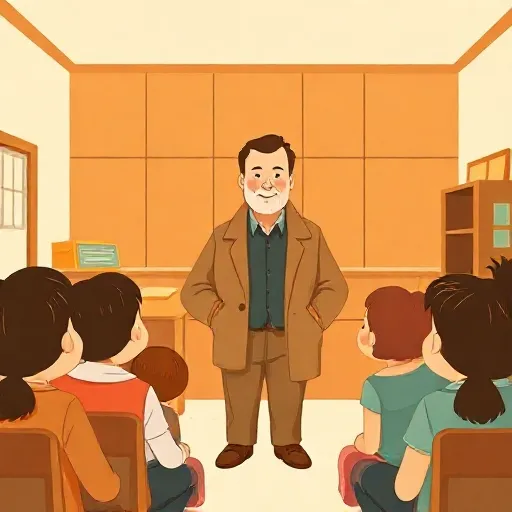
In a small Cambridge lecture hall in 1938, the philosopher Ludwig Wittgenstein (1889–1951) paces in front of a chalkboard. He stops, mutters to himself, then turns to his students and asks about a few bars of music. He does not want a quick theory. He wants them to sit with the puzzle. That moment sets the tone for a completely different way of thinking about art, music, poetry, and everything that moves us.
Wittgenstein opens his lectures by claiming that the whole field of aesthetics is both “very big and entirely misunderstood.” By “very big” he means that aesthetics is not just about paintings in museums. It includes the scent of a flower, the cut of a coat, the height of a door, the rhythm of a conversation — the many ways we find things striking, right, or wrong. By “entirely misunderstood” he means that philosophers have been asking the wrong question. They keep hunting for the one hidden property that all beautiful things share, an essence of beauty.
When we say “That song is beautiful,” the word beautiful works as an adjective. That grammar tricks us into thinking there must be a single named property — beauty — just as we might think “red” names one colour. Wittgenstein says this is a trap. Words do not all work like labels. In a toolbox you find a hammer, glue, a chisel, and matches. They do not share one “tool‑essence”; they serve totally different purposes. For Wittgenstein, words are tools too. So instead of asking “What is beauty?” we should look at how the word “beautiful” is actually used in particular situations, within a whole language‑game — a shared human activity where words make sense only inside that practice.
Aesthetic Words Are More Like Gestures
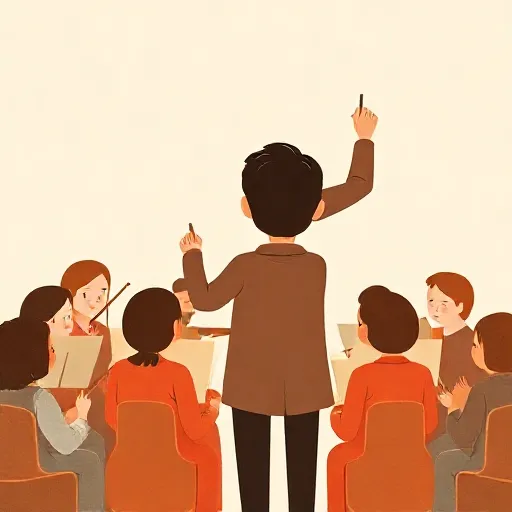
Imagine you are in an orchestra. The conductor wants you to play the opening of Beethoven’s Fifth with a certain power. She does not say “Make it forceful.” She leans forward, tightens her fist, and moves the baton with a sharp, sudden cut. You understand perfectly. The meaning was a gesture, not a descriptive label.
Wittgenstein shows that much of our aesthetic language works like that gesture. When a tailor is proud of a suit, he shows his approval by wearing it. When a friend hears a new beat, she might bob her head and raise her eyebrows — you grasp that she thinks it is cool without any words at all. Aesthetic expressions are often face‑giving, body‑moving actions. They do not report a hidden inner state; they are part of responding to the music, the clothes, the building.
This is why Wittgenstein insists that to understand an aesthetic word, you must understand the culture that surrounds it. He says, “To describe a set of aesthetic rules fully means really to describe the culture of a period.” The word “graceful” meant one thing in 18th‑century Vienna and something different in a 14th‑century Japanese garden. The word is not a sealed packet of meaning that travels unchanged. It lives inside a whole way of living.
So when you say “That poem is beautiful,” you are not simply naming a property. You are taking part in a cultural practice — pointing, inviting someone to see it the way you do. The words are secondary. The shared activity comes first.
Why the “Click” of Understanding Needs Comparisons
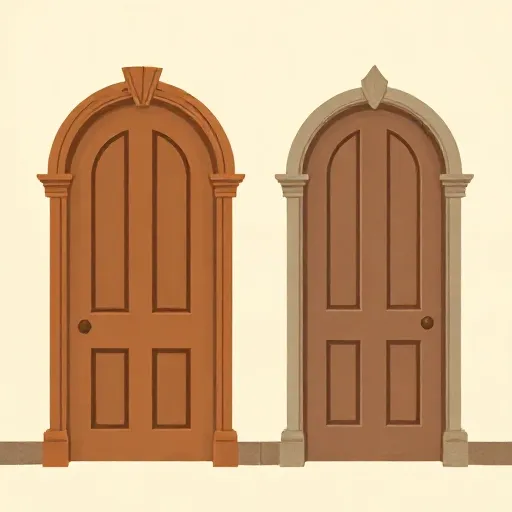
Wittgenstein is fascinated by the moment when a piece of art suddenly feels right. A dissonant chord resolves, a poem’s rhythm locks into place, a smile in a painting looks genuine rather than ironic. He calls this the “click” — everything falls into place.
But the click is not like a scientific cause and effect. It would be odd to say, “The minor‑ninth chord caused my satisfaction.” Instead, you hear the chord in relation to what came before and what follows. The satisfaction comes from seeing connections. For this reason, Wittgenstein urges us to stop analysing a single work in isolation. We need to compare it to other works, to notice how a melody echoes an earlier one, how a poet’s image recalls a line from a different poem. This is the comparative approach.
Think of watching two superhero movies. One grips you; the other feels flat. You cannot find a single “grip‑ness” atom inside the good film. The power emerges from how it plays with the rules of the genre, how it surprises you given your experience of other superhero stories. Artistic meaning is relational. It lives between works, not sealed inside any one of them.
Rules matter here too. A composer learns rules of harmony, but she does not follow a checklist. Her judgment becomes refined through practice, just as a cook learns when a stew needs more salt — often without being able to state the rule in words. The rules are embodied in the doing. And when we appreciate art, we are not running a silent checklist either. We respond with a whole sensibility that has been shaped by our listening, reading, looking, and comparing.
Science Can’t Catch Beauty in a Test Tube
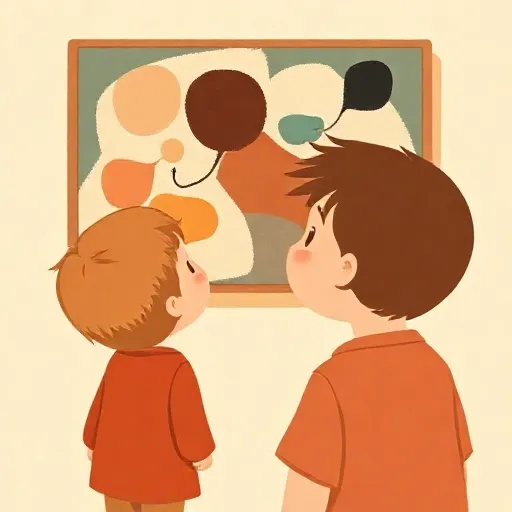
Some people dream of a scientific aesthetics. They imagine an experiment: show artworks to volunteers, measure their eye movements, and find the laws of beauty. Wittgenstein has little patience for that dream. He argues that aesthetic puzzlement is of a different kind. When a line of poetry gives you a peculiar feeling, the question “Why do these words do that?” is not an empirical question. You are not looking for statistics about how many people felt the same way.
He later wrote in his Philosophical Investigations, “The existence of the experimental method makes us think we have the means of solving the problems which trouble us; though problem and method pass one another by.” The method of science is brilliant for tracing mechanisms, but it misses what we actually care about in art. If you tell me that 64% of listeners reported chills at a certain phrase, that does not help me understand why that phrase works — what it connects to, how it reshapes the melody I already heard.
Wittgenstein uses a sharp analogy. Imagine boiling a whole human being down to a pile of ashes and then saying, “This is all Redpath really is.” The ashes do contain some physical elements, but the reduction misses absolutely everything that makes a person a person. A scientific cause‑effect model of aesthetic experience is like that reduction. It might have a certain charm — a tidy, compact explanation — but it falsifies the richness of what actually happens when you are moved by a song or a painting.
The real work is conceptual: making comparisons, tracing connections, noticing the role a gesture plays in a culture. That work will never be done in a laboratory.
How Wittgenstein’s Ideas Change the Way You Experience Art
So why does any of this matter for you, when you are just listening to a favourite song or watching a film that gets under your skin? Wittgenstein’s approach gives you a new pair of ears and eyes.
When you feel that shiver, the usual reaction is to ask, “What is the secret ingredient that makes this beautiful?” Wittgenstein would gently redirect you. He would ask: What does this moment remind you of? How does it play with what came before? What other stories, songs, or images does it connect to in your memory? Placing the work inside a web of comparisons does not destroy the magic; it deepens it. You start hearing a melody as a variation of an earlier theme — a seeing‑as or double‑hearing that enriches the experience.
He also believed that artists think in their materials, not before them. Mozart did not first design a complete symphony inside his mind and then just copy it down. Original scores show him crossing out a measure written earlier only after he noticed a connection to a much later measure. The creative thinking happened right there on the page, inside the notes. That insight invites you to pay close attention to the details — the particular brushstroke, the exact word, the slight reshaping of a musical phrase — because that is where meaning lives.
Wittgenstein wanted to cure us of the craving for generality — the itching desire to find one neat formula that explains everything beautiful. Instead, he hands us back the particular moments, the irreducible variety of human practices, the local culture that gives words their life. He is not offering a new theory. He is offering a way of seeing that is tuned to differences rather than sameness.
Next time a film, a photograph, or a piece of music gets under your skin, try a Wittgensteinian move. Do not ask “Is it beautiful?” Ask “What does it connect to? How does it make me look differently? What gesture is it making?” You may find that the question opens up more than any answer ever could.
Think about it
- Think of a piece of music or a photo that you find moving. Can you describe what grabs you without using words like “beautiful” or “amazing”? How do you point someone else’s attention toward what you notice?
- If a scientist could perfectly predict what kind of art you will like by scanning your brain, would that explanation help you understand the art better, or would something be missing?
- A friend shows you a painting and says, “I like it because it’s beautiful.” Does that tell you why they like it, or does it just repeat the feeling? How could you get them to say more, maybe by making comparisons or using gestures?