
Is Beauty Just a Feeling, or Is It Something More?
Why Do You Expect Everyone to Agree on Beauty?
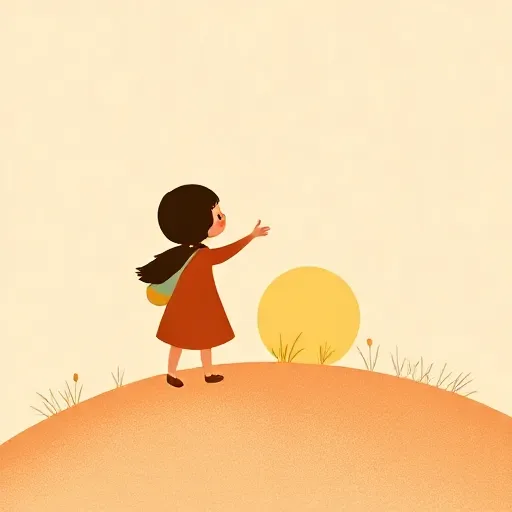
You’re watching a sunset. The sky glows orange and pink. You say, “That’s beautiful.” Your friend shrugs. “It’s nice, I guess.”
You feel annoyed. Not just because they disagree, but because you think they should see it’s beautiful. You believe your feeling isn’t just a private thing—it’s somehow right, and anyone who looks should feel the same.
The philosopher Immanuel Kant (1724–1804) noticed this too. He called it an aesthetic judgment—a judgment based on a feeling of pleasure or displeasure, not on logic or facts. But unlike liking ice cream, which is just your own taste, judging something beautiful comes with a demand: you expect everyone else to agree. How is that possible? This puzzle drove Kant’s entire philosophy of art and nature.
The Secret: Your Mind Is Playing Without Rules
Kant argued that beauty isn’t a property of objects, like shape or color. It’s a special kind of feeling. But that feeling comes from a unique mental activity he called the free play of the imagination and the understanding.
Here’s what he meant. Normally, when you recognize something—say, a red apple—your imagination gathers the sensory bits (red, round, smooth) and your understanding applies a concept (the idea “apple”). They work together under a rule. In a beautiful experience, however, imagination and understanding are still active, but they aren’t following any particular rule. They’re playing, exploring the object’s form, harmonizing freely. This harmony produces a distinctive, disinterested pleasure—you enjoy the object just for itself, not because you want to own it or eat it.
The object seems to have a purpose, but no actual purpose you can name. Kant called this purposiveness without a purpose. Because this free play mirrors the basic conditions needed for any thinking at all, Kant thought we’re entitled to claim everyone’s mind should work the same way when facing the same object. That’s why you feel justified saying everyone ought to find the sunset beautiful.
But there’s a catch. If free play is part of all perception, wouldn’t everything be beautiful? Kant’s answer is tricky, and philosophers still argue about whether he solved this. Maybe the free play happens only when the object’s form is especially suited to it. Or maybe everything could be beautiful if we looked at it in the right way—you just have to let your mind play.
When Mountains Make You Feel Tiny and Powerful

Kant also explored a different kind of aesthetic experience: the sublime. You feel it when something is vast or powerful—a starry sky, a crashing ocean, a massive storm. Instead of pleasure alone, the sublime brings a mix of awe and even a touch of fear.
He described two types. The mathematically sublime happens when something is so huge that your imagination can’t grasp it as a whole. Yet your reason can think the idea of infinity. That contrast reveals your mind’s ability to reach beyond what the senses can handle. The dynamically sublime occurs when you face nature’s might (like a volcano) while knowing you’re safe. You feel your physical weakness, but also recognize your inner freedom—as a moral being, you’re not just a part of nature.
The sublime, Kant thought, connects beauty to morality. It shows us that we have a reason that can rise above the natural world. This link helps unite our scientific understanding of nature with our sense of right and wrong.
Why a Tree Is Not a Watch
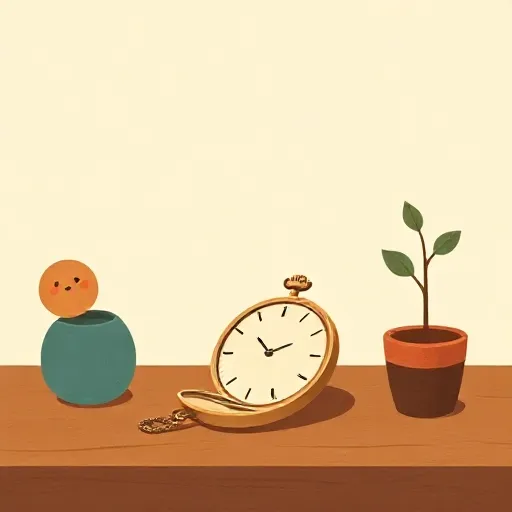
Kant’s thoughts didn’t stop at art. He was fascinated by living things—what he called organisms. He argued that we have to think of a tree or a fox as a natural purpose, something that seems designed but comes from nature, not a human inventor.
Compare a watch and a tree. A watch’s parts are arranged so the whole can tell time. Each part is there for the sake of the whole. But those parts don’t produce one another. A gear doesn’t grow another gear; an external maker assembled them. A tree, however, is “both cause and effect of itself.” Its leaves are produced by the tree, and the leaves help nourish the tree. A tree can repair itself, regenerate lost parts, and produce offspring. Its parts exist because of one another, not just for the whole.
Kant set two conditions for a natural purpose. First, the parts are possible only through their relation to the whole (this is true of watches too). Second, the parts are reciprocally cause and effect of their form—each part makes the others possible (this never happens in a watch). This doesn’t mean a designer planted the tree. We must regard it as if it were designed, because we can’t understand its self-producing unity otherwise. This idea is a regulative principle for our thinking, not a proof about how the tree actually came to be.
The Puzzle That Science Still Chews On
Kant saw a deep conflict here. Science demands that we explain everything in nature using mechanical laws—part pushing part, cause and effect. Yet organisms seem to need a different kind of explanation, one that talks about purposes (the heart is for pumping blood). This is the antinomy of teleological judgment.
Kant’s solution: both demands are rules for how we humans must investigate, not statements about how nature ultimately is. Our limited, discursive understanding can’t grasp how a living thing could arise without a purpose. A different kind of mind might see it all mechanically. So we must keep seeking mechanical explanations for organisms, while still using purposive thinking as a guide. Kant famously said it would be absurd to hope for a Newton who could make understandable so much as a blade of grass by laws that no intention has ordered.
This idea still echoes in biology. Biologists constantly use functional language—“the function of the heart is circulation”—even though they don’t think hearts were designed. Kant’s challenge frames the question: what does it mean to say a part has a purpose in a world of blind physical laws?
Why You Still Argue About Sunsets

So why does an old philosopher’s obsession with beauty and life matter to you? Next time you say a song is amazing and a friend rolls their eyes, remember: you’re not just reporting a private taste. You’re making a claim that others should feel the same pleasure. Without that claim, all art criticism, all arguments about films or fashion, would be pointless.
And the puzzle of life hasn’t gone away. When engineers build robots that can heal themselves or computers that learn, we still sense a gap between a machine and a living creature. The tree’s self-making wholeness feels different from any artifact. Kant’s idea that organisms require a special kind of thinking might help you articulate why you doubt that a perfect simulation of a dog is actually alive.
The debate is wide open. Maybe beauty really does have a kind of rightness. Maybe life isn’t just complicated chemistry. Or maybe Kant was wrong, and it’s all just feelings and gears. Either way, the next sunset you share—with a friend who might shrug—is a moment full of philosophy.
Think about it
- If everyone in your class said a painting was ugly, but you found it beautiful, could you still be right? What would make your feeling count?
- Think of something you’d call ugly. Can you imagine someone feeling the free play Kant describes when looking at it? What would have to change in them or in the object?
- Modern robots can repair themselves and learn. Does that mean they’re alive in the way a tree is? What, if anything, would still be missing?