
Why Do We Treat Beauty Like a Fact When It’s Only a Feeling?
A Fight Over a Song: When Taste Isn’t Just “Your Opinion”

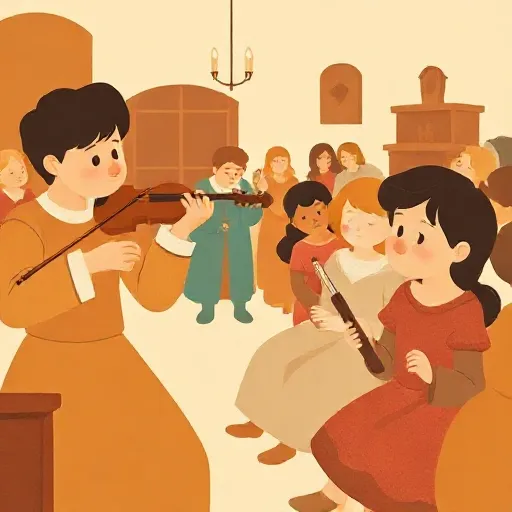
Eliza pulls out her phone and plays a song she loves — a track that makes her chest feel full and her thoughts go quiet. Her friend Leo listens for ten seconds and shrugs. “It’s okay, I guess.”
Eliza doesn’t just feel disappointed. She feels something sharper: she thinks Leo is wrong. Not just different — wrong. But can you ever be wrong about whether a song is beautiful? Isn’t beauty just a matter of taste?
The 18th‑century philosopher Immanuel Kant (1724–1804) noticed this exact situation and thought it held a huge puzzle. When we make a judgment of taste — when we call a painting, a piece of music, or a landscape beautiful — we behave as though we are stating a fact, not just reporting a personal preference. We argue, we cringe, we try to convince. And yet the judgment is based on nothing more than a feeling of pleasure or displeasure. How can a feeling claim to be something everyone else ought to share?
Kant called this the problem of “subjective universality,” and he wasn’t the first to wrestle with it. The Scottish thinker David Hume (1711–1776) had already argued that taste is a special kind of sentiment — a feeling — but one that could be educated and refined. Both men saw that our ordinary talk about beauty is full of a tension that isn’t there when we talk about which ice‑cream flavor is nicest.
Two Worlds: Judgments of Taste vs. Just “Yum”
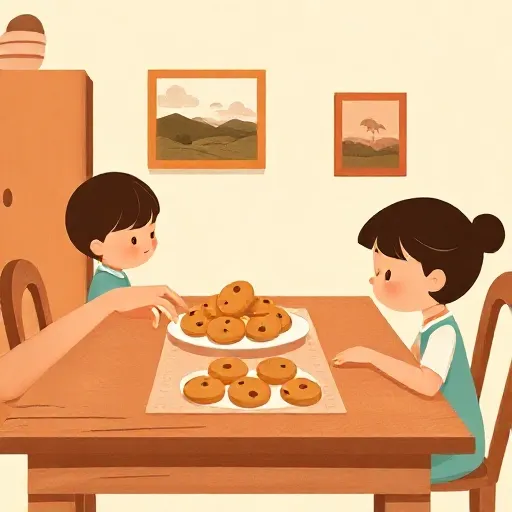
To see why the tension matters, imagine two situations. In the first, you bite into a warm chocolate‑chip cookie and say, “This is so good.” Your cousin tries one and says, “Meh, I don’t like sweets.” You might be surprised, but you wouldn’t accuse your cousin of making a mistake. You’d shrug and think, “More for me.”
Kant calls this a judgment of the agreeable. It is a purely personal report about what gives you pleasure. No one claims that everybody should feel the same way, and there’s no sense that one person’s reaction is more correct than another’s. Kant gave his own example: Canary‑wine, a sweet wine from the Canary Islands. Some people find it delicious; others can’t stand it. Neither side is right or wrong.
Now consider a different case. You stand in front of a painting — say, a glowing sunset over a harbor — and you feel a quiet, absorbed pleasure. You say, “This is beautiful.” When a friend says, “I don’t see the big deal; it’s just a bunch of orange smudges,” something different happens inside you. You may still think your friend is allowed to have an opinion, but you also sense that their reaction is defective. You think yours is better — more appropriate to what the painting actually is.
This second case is what Kant meant by a genuine judgment of taste. Such judgments have two necessary features. First, they are subjective: they are based on a feeling of pleasure or displeasure, not on a measurement or a logical proof. Second, they have normativity, or what Kant called “universal validity.” They aim at being correct, and they imply that a contrary judgment would be incorrect.
We can put the normativity this way: some judgments of beauty are better than others. Even if we can’t always decide which is right, we act as though right and wrong answers exist. People who say “everyone has their own taste” rarely live by that slogan. Catch them cringing at a friend’s playlist or redecorating a room, and you’ll see them behaving as if some things really are more beautiful — and as if someone who disagrees is missing something.
The King of Puzzles: How Can a Feeling Claim to Be Right for Everyone?

Here, then, is the question that drives much of the philosophy of beauty: How can a judgment be both subjective (grounded in a private feeling) and yet also make a claim that everyone ought to share it? Kant called it the “Big Question” in aesthetics (the study of beauty and art). If the pleasure were just like the pleasure of a cookie, the claim to correctness would make no sense. But if the judgment were like a scientific measurement — “this rock weighs 3 kilograms” — we wouldn’t need a feeling at all. Judgments of taste seem to sit in a strange middle territory.
Kant thought the answer had to do with the special nature of the pleasure we take in beauty. He noted that pleasure in the beautiful is disinterested, which in his eighteenth‑century German meant a pleasure that is not tied to desire. You don’t find a rose beautiful because you want to own it, eat it, or use it for anything. The pleasure just sits there, calmly, as a response to the way the rose looks. And because it isn’t tangled up with your particular wants — which vary from person to person — it can, Kant argued, be expected from everyone.
That’s a clever move, but Kant went further. His “deep account” said that pleasure in beauty arises when two of our mental faculties — imagination and understanding — enter a free, harmonious play. Because all human beings share these faculties, the pleasure they produce can ground a judgment that makes a universal demand. Many philosophers today find that deep account unconvincing. It seems too speculative, and it doesn’t actually explain how the feeling manages to claim correctness. Even if we accept that the faculties are shared, why does that give my feeling authority over yours?
Hume took a different path. He thought that some sentiments are better than others — not because they connect to universal faculties, but because they are trained. A person who has seen many paintings, read many poems, and compared works with care develops a delicate sensitivity. Their pleasures and displeasures are more reliable, more instructive. For Hume, the normativity of taste wasn’t a mysterious demand built into the feeling itself; it was something we construct by agreeing to trust certain kinds of people in certain conditions. The problem with this view is that it seems to make expert opinion just a popularity contest among the well‑educated. It doesn’t give a deep reason why the minority of experts is actually right.
Kant’s Answer: Beauty Has No Strings Attached
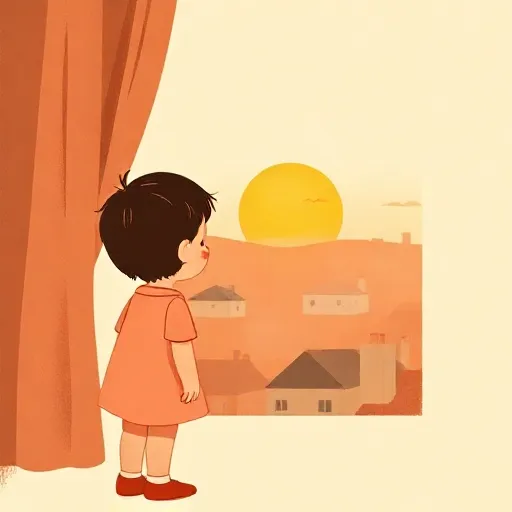
Let’s unpack Kant’s idea of disinterestedness a little more. He claimed two things: first, that pleasure in the beautiful is disinterested, and second, that only pleasure in the beautiful is disinterested. The first claim is already bold. Think about watching a sunset. You aren’t hoping the sunset will do anything for you. You aren’t even wishing it would last longer in order to own the moment. The pleasure has no hidden string attached to a desire. Now contrast that with the pleasure of a warm bath after a cold day — that pleasure is clearly interested: it satisfies a desire, and it produces more desire (“I want to stay here forever”).
Kant believed that if pleasure in beauty were based on desire, the judgment could never be valid for everyone, because desires differ wildly. Some people crave excitement; others prefer calm. If beauty had to serve a desire, we would live in what Kant called a state of “aesthetic luck,” where only people with the right desires could appreciate great art or nature. The claim to universal validity would collapse.
This is where the German thinker Friedrich Nietzsche (1844–1900) pushed back. Nietzsche thought Kant’s separation of beauty from desire was unrealistic — and maybe even undesirable. Real people fall in love with particular art, music, and landscapes because those things speak to their individual passions, histories, and quirks. Isn’t that messy, embodied response what makes beauty meaningful? Nietzsche worried that Kant’s view turned beauty into something cold and democratic, scrubbed clean of the intense, personal fire that makes us care. On the other hand, Kant could reply: if beauty is just whatever your personal history happens to make you feel, then we lose any right to say someone else’s judgment is worse. And if we can’t say anyone is ever wrong, the very idea of good taste evaporates.
The friction here is real. Do we want a picture of beauty that makes it fair and available to all, or one that lets it be wild, exclusive, and inseparable from who you uniquely are? Neither side wins easily, and the argument shows why the Big Question refuses to go away.
Beauty’s Secret Rules: It Depends on What’s Really There

There is another feature of our thinking about beauty that deepens the mystery. We tend to believe that whether something is beautiful depends on its nonaesthetic features — the shape of its lines, the arrangement of its colors, the rhythm of its sounds. This is called the dependence thesis. It goes hand in hand with mind‑independence: thinking something is beautiful doesn’t make it so. If you once thought a scribble was gorgeous but later realized it was a mess, you probably believe your earlier judgment was a mistake — and the scribble was never beautiful at all. Its beauty or ugliness depends on the lines themselves, not on your past or present opinion.
Yet there is a catch. Hardly anyone believes there are strict laws of beauty — rules like “anything with exactly seven curves is beautiful,” or “all paintings with blue and yellow are good.” The English philosopher Frank Sibley (1923–1996) noticed that aesthetic concepts are not “condition‑governed.” You can’t program a machine to detect elegance by checking off a list of nonaesthetic properties. Beauty is anomalous in that way. A graceful curve and a clumsy curve may differ by a tiny fraction of a millimeter, but no fixed formula predicts which is which.
This combination — beauty depends on what something is like, yet no simple rules connect those features to beauty — makes the puzzle even sharper. It is as though beauty is anchored to the world, but in a way that refuses to be captured by a manual. We can improve our ability to see it, but we cannot reduce it to a checklist. That is why having “good taste” feels more like developing a skill than memorizing facts.
Why It Still Matters: Your Art Project, Your Playlist, Your World

Perhaps you will never settle the Big Question of aesthetics. But the puzzle lives inside almost every choice you make when you arrange your room, pick a new wallpaper, argue over a video game’s art style, or cringe at a friend’s favorite sweater. Every time you feel that a song is not just “not for you” but actually bad, you are staking a normative claim — a claim that would need some explanation if anyone challenged it.
Recognizing this changes how you can think about your own taste. It lets you say, “I might be wrong,” without giving up on the idea that some things really are more beautiful than others. It also nudges you to listen carefully when someone else’s pleasure differs from yours. They might be missing something — or you might be. The only way to find out is to look again, listen again, and talk about what you see and hear.
The argument between Kant and Hume, and later voices like Nietzsche, isn’t a dusty museum piece. It’s a live conversation about why we care so much about beauty — and whether that caring can ever be justified. The question is still open. And that’s exactly what makes the question worth living with.
Think about it
- When you and a friend disagree about whether a song is good, do you ever truly think, “I’m right and they’re wrong”? If so, what gives you that confidence? If not, what does that say about how you actually treat your own judgments?
- Imagine a cookie that is both sweet and salty. Most people love it, but you don’t. Is it a “good cookie”? What’s the difference between calling a cookie good and calling a painting beautiful?
- If a scientist could predict exactly which photographs you would find beautiful just by scanning your brain, would that prove beauty is nothing but a feeling in your head? Or would something important still be missing?