Is 'That Is Beautiful' a Fact or Just a Feeling?
A Sunset, a Painting, and a Question
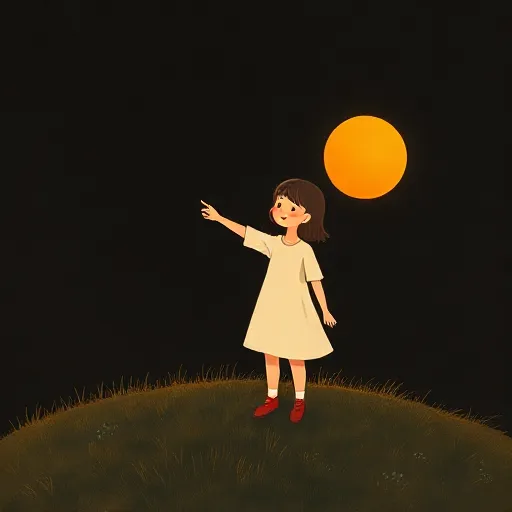
You are sitting on a hill with a friend, watching the sky shift from blue to orange and pink. Your friend turns and says, “Isn’t that beautiful?” You agree — but then you wonder: Is the beauty actually up there in the sky, or is it only a feeling inside you?
That puzzle is not just for kids. For centuries, most philosophers said beauty was purely a matter of personal taste. Immanuel Kant (1724–1804) argued that calling something beautiful expresses a special kind of pleasure, not a fact about the object. But in 1905, a German philosopher named Florence Landmann-Kalischer (1877–1951) published an essay that flipped that idea on its head. She claimed that beauty is a real property of things, like color or shape, and that aesthetic judgments — statements like “That is beautiful” — are what philosophers call cognitive judgments: judgments that claim something about the world, not just about your private feelings. If she was right, then arguing about whether a song is good might be more like arguing about whether the sky is blue than most people think.
The Great Analogy: Beauty Like Color

Landmann-Kalischer’s strategy was to compare our sense of beauty to our senses like sight and hearing. When you look at a tomato, your eyes detect properties — red, round, shiny. You do not doubt that the tomato is red, even though a colorblind person might not see it. Your visual system gathers information about the object out in the world.
She argued that feelings work similarly. A feeling of pleasure or displeasure, she said, can be a kind of “organ” for detecting value. Just as your eye picks up on redness, your feeling of being moved by a melody picks up on its beauty. So when you say “This song is beautiful,” you are not just reporting that you enjoy it; you are making an objective claim about the song, based on information your feelings are giving you — just as “This tomato is red” is based on your sight.
But wait: senses sometimes trick us, like an optical illusion that makes a stick look bent in water. Does that mean we should distrust them entirely? No. We learn to correct sensory errors. Landmann-Kalischer said the same goes for aesthetic feelings. We can be deceived by biases, bad lighting, or our own emotions, but we can gradually learn to spot and remove those errors. She even sorted aesthetic illusions into types: psychological (being distracted by a musician’s fame instead of the music itself), physiological (judging a painting when you are grumpy), and physical (a sculpture viewed in shadow that hides its true form).
To test whether a sensory judgment is right, we compare it to other judgments: Does it agree with what other people see? With our other senses? With scientific measurements? Landmann-Kalischer proposed that aesthetic judgments could be tested similarly — by checking agreement with your own judgments at different times, with judgments of others, and with what we learn from studying art. It is not easy, but it shows that beauty can be investigated, not just felt.
Can Art Tell the Truth?
A year later, in 1906, Landmann-Kalischer took her thinking further. She asked: If beauty is real, can artworks be true or false? Her answer was yes — but in a surprising way.
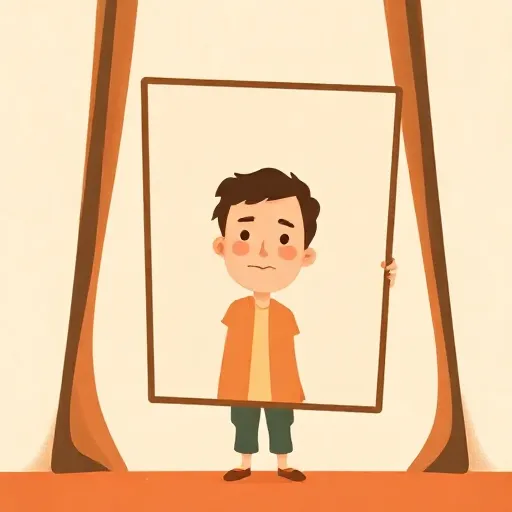
She said art does not try to copy physical reality like a photograph. Instead, art mirrors the reality of the mind: our perceptions, memories, fantasies, and feelings. She explained it with a striking image: “Just as we would never see our face were it not for a mirror, so, too, we would never see our own inner life opposite us — were it not for the mirror of art.”
That means a painting can be true to how we see, even if it does not look realistic. A painter might show a stick bent in water exactly as your eye perceives it before you think, “Wait, it is actually straight.” That is truth about perception, not physics. A memory-representation in art, like in a Shakespeare history play, might be true to the way people remember an event — selective, colored by feelings — even if it bends the facts. A fairytale mirrors the logic of wishes: everything goes the way we want it to, and that is true to mental life, even though it is physically impossible.
For Landmann-Kalischer, art satisfies a deep need by expressing the inner world faithfully. So a piece of music can be true if it exactly captures a feeling of hope or sorrow, and a viewer can judge that artistic truth just as they can judge the truth of a weather report.
But People Disagree All the Time!

You might object: If beauty is an objective property, how come people argue about it so much? Your grandmother loves a singer you cannot stand. A film that makes your friend cry bores you to tears. That sure seems like proof that beauty is just in the eye of the beholder.
Landmann-Kalischer had a ready reply. Think about color again. Some people are colorblind; they do not agree with most of us about which apple is red and which is green. Lighting can change how a color looks. Yet we do not throw up our hands and say, “Red is just a personal taste.” We investigate the causes of disagreement, improve our conditions, and trust that there is a real answer out there. She argued beauty is no different: the fact that we disagree now does not mean there is no correct judgment — it means we have work to do.
That work involves eliminating the “deceptions” she catalogued and training our aesthetic sense. Over time, she believed, some judgments will prove more reliable. She even said that the objectively valid values are “not given, but have to be won.” So beauty’s objectivity is a task, not a ready-made fact.
Why It Still Matters: The Next Time You Say “That’s Awesome”

When you tell a friend that a video game is stunning, or a comic’s art is gorgeous, you might be doing more than sharing a private mood. Under Landmann-Kalischer’s view, you are making a statement about the game or the comic itself — a statement that could be right or wrong. And if you want to defend it, you would need to point to features of the object that your feeling picks up on, and test that judgment against other views, other times, and what you learn from experience. In other words, you would be doing something a lot like science — but for beauty.
This idea matters because it takes art and aesthetic experience seriously as a way of knowing. If a movie can portray the world of a character’s mind truthfully, it is not just entertainment; it is a source of insight into how humans feel, remember, and wish. And if beautiful things really are beautiful, then working to see that beauty better is a valuable skill, not just a hobby.
Landmann-Kalischer died in 1951, but her challenge lives on. The next time you pause a game just to look at the sky in it, or re-read a poem because it makes something click inside you, you might be touching the same mystery she tried to solve: whether beauty is something we discover in the world, or just something we project onto it. Her answer — bold, careful, and still debated — insists that it is out there, waiting to be seen.
Think about it
- If everyone in your class says a song is terrible but you think it is great, could you be right and they be wrong about its beauty? What kind of evidence could settle the disagreement?
- Imagine you and a friend look at a rainbow and both say “That’s beautiful.” Are you both describing the same thing, or just sharing a feeling? How could you test your answer?
- If a sad movie about a unicorn makes you cry, can it be “true” even though unicorns are not real? What would the movie be true about?