Is That Song Really Beautiful, or Do You Just Like It?
Who’s Right About That Song?

You and your friend are arguing again. This time it’s about a new song. You think it’s amazing. Your friend says it’s just noise. Each of you digs in. You shout examples. You tell your friend they have terrible taste. But who’s really right?
Nearly three hundred years ago, the Scottish philosopher David Hume (1711–1776) wondered the very same thing. He didn’t ask about pop songs, of course. He asked about poetry, painting, and music. But his answer was just as bold as your argument: if you’re fighting over whether something is beautiful, you’re not really fighting about a fact. You’re fighting about a feeling.
That answer sounds like a recipe for chaos. If beauty is just a feeling, then isn’t everyone’s taste equal? Hume didn’t think so. He believed that some tastes really are better than others — and he spent years trying to explain how such a thing could be true.
Beauty Is a Feeling, Not a Fact
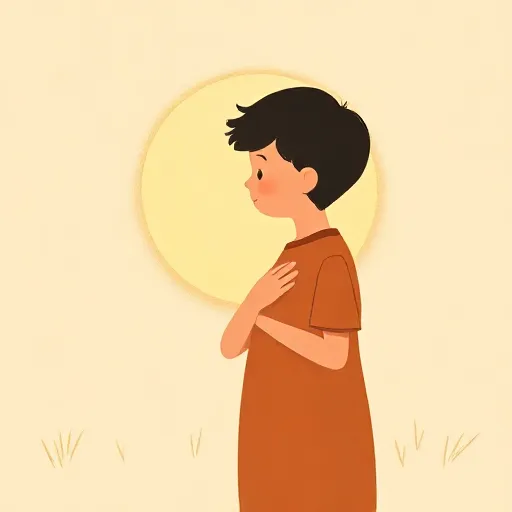
Take a sunset. You look at the orange and pink sky and you feel a rush of pleasure. You might say, “That sunset is beautiful.” But for Hume, the word beautiful doesn’t describe the sunset itself. It reports something inside you. The beauty is the feeling.
Hume called that feeling a sentiment. More specifically, it’s a sentiment of approbation — a special kind of delight that pops up when you encounter something you find lovely. When you feel the opposite — disgust or discomfort — you’re experiencing a sentiment of disapprobation. Together, these reactions are what Hume calls taste. Taste is your inner sense for beauty and ugliness, just as your tongue has a sense for sweet and bitter.
This idea is called subjectivism: beauty exists in the subject (you), not in the object (the painting, the song, the sunset). Hume wasn’t the first to say this, but he gave it a strong foundation. He pointed out that you can’t prove a song is good the way you can prove that 2+2=4. In geometry, you can demonstrate a truth. In music, Hume wrote, “the harmony of verse, the tenderness of passion … must give immediate pleasure.” You don’t reason your way to liking a tune. The feeling just comes.
Still, if beauty is a private feeling, why do we talk about it as if it’s something everyone should see? That puzzle leads straight to Hume’s most famous essay on taste.
The Judges of Taste
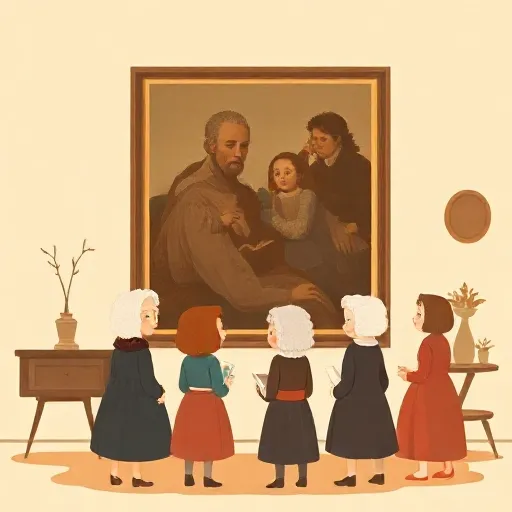
In 1757 Hume published an essay called “Of the Standard of Taste.” His opening problem is simple: we all know tastes differ, yet we also treat some opinions as absurd. No one thinks a clumsy school play is as good as a Shakespeare tragedy. But if all taste is just sentiment, how can any verdict be better than another?
Hume’s answer is that there is a standard of taste, but it doesn’t come from a rulebook written in the sky. It comes from the agreement of true critics. These are people who are especially good at responding to art. And they’re good because they have five things:
- Strong sense: They’re sharp thinkers.
- Delicacy of sentiment: They can notice tiny details that others miss.
- Practice: They’ve spent lots of time with the kind of art they judge.
- Comparison: They’ve seen enough examples to know what’s genuinely excellent.
- Freedom from prejudice: They set aside personal bias and look from a general point of view.
When critics with these qualities agree over time and across cultures, their shared verdict tells us which works are truly great. This is why the plays of Shakespeare survive centuries while forgotten potboilers disappear. The test of time works because refined taste, slowly, finds its way.
But are these critics perfect? Not quite. Hume admits that even the best critics have “blameless” differences. Your natural personality might make you prefer comedy over tragedy. Your culture might make Italian music sound strange to you. Those differences don’t make one taste wrong. They’re just part of being human.
The Secret Iron Key
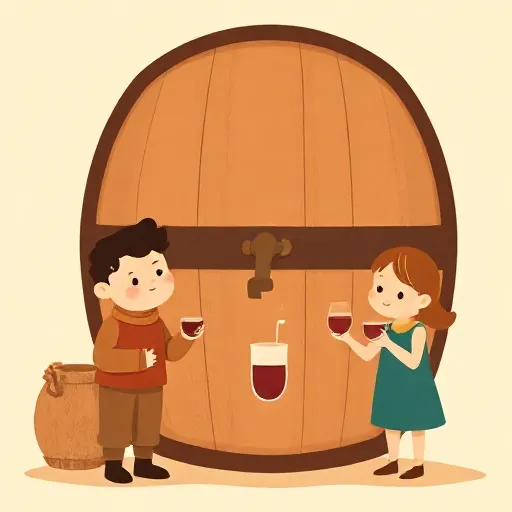
Hume loved a story about two wine tasters that proves taste can be trained. A character named Sancho Panza tells it in the novel Don Quixote. Two of Sancho’s kinsmen are asked to taste wine from a hogshead barrel. The first sips and says the wine is good, but he catches a faint taste of leather. The second agrees it’s excellent, except for a hint of iron. Everyone laughs at them. But when the barrel is emptied, a rusty old key with a leather thong is found at the bottom.
The tasters were right, even though nobody else could sense what they did. That’s what Hume means by delicacy of taste — the ability to pick up on tiny features that most people miss. It’s a skill that grows with practice. You can’t get it from a textbook, but the fact that both tasters agreed shows there are real patterns causing their responses. In art, too, sometimes a single wrong note or a clumsy line can spoil a beautiful whole, but only a delicate critic will feel it.
This story also hints at something important: good taste isn’t about having a “right” feeling that everyone must copy. It’s about being sensitive to what’s actually there, so your sentiment is a response to the object, not just to your own mood.
Sad Movies, Happy Hearts
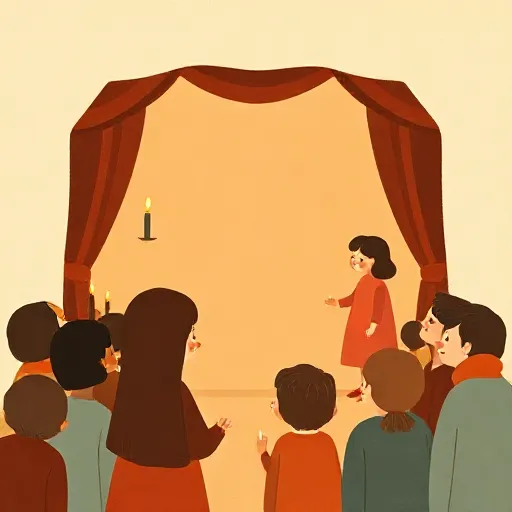
If taste aims at pleasure, why do we enjoy stories that make us cry? Hume tackled this puzzle in another essay, “Of Tragedy.” A well-written tragedy fills us with sorrow, terror, and anxiety. Yet we walk out of the theater feeling satisfied.
Hume’s idea was that the pleasure of beautiful storytelling — the delight in imitation, language, and design — is so strong that it “converts” the unpleasant emotions into a richer, more intense experience. The sadness doesn’t vanish. It gets swept up into a bigger wave of appreciation. Think of a movie that makes you weep: you might say it was one of the best films you’ve ever seen. The tears and the awe aren’t in conflict; they’re part of the same response.
But Hume warned that the balance can tip. When a play or film drowns you in gory violence without enough art to balance it, the shock overwhelms your pleasure and ruins the experience. A refined critic feels that tipping point exactly — and that’s another way a trained taste tells more than an untrained one.
Why We Still Argue About Art
So the next time you’re in a fight over a song, think about Hume. You’re not fighting about a hidden fact inside the music. But that doesn’t mean both opinions are equal. You can train your taste. You can listen to hundreds of songs, compare them, notice details, and step outside your own prejudices. You can become a better listener, a better watcher, a better reader.
Hume’s world didn’t have headphones or streaming. But his questions are still ours. Can a video game be a work of art? Can a dance challenge be beautiful? How do you know if the thing you love today will still be loved in twenty years? Hume’s answer isn’t to stop arguing. It’s to argue better — with more practice, more comparisons, and an honest effort to see from someone else’s point of view.
The standard of taste isn’t a scoreboard. It’s the slow, careful work of paying attention.
Think about it
- If you and a friend disagree about whether a movie is good, how could you decide whose taste is more reliable — without just saying “I’m right because I like it”?
- Could a person who has only ever listened to one kind of music ever be a fair judge of a completely different style? Why or why not?
- If beauty is a feeling inside you, why do art museums spend millions of dollars on certain paintings? What does that say about the difference between personal taste and shared judgments?