Is Beauty a Hidden Truth, or Is It Just Your Mind at Play?
The Clockmaker’s Question

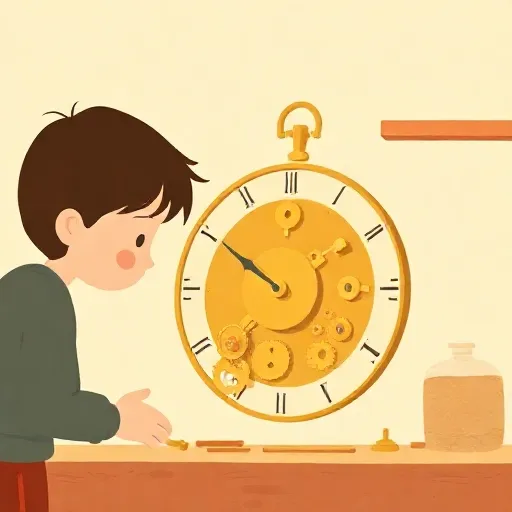
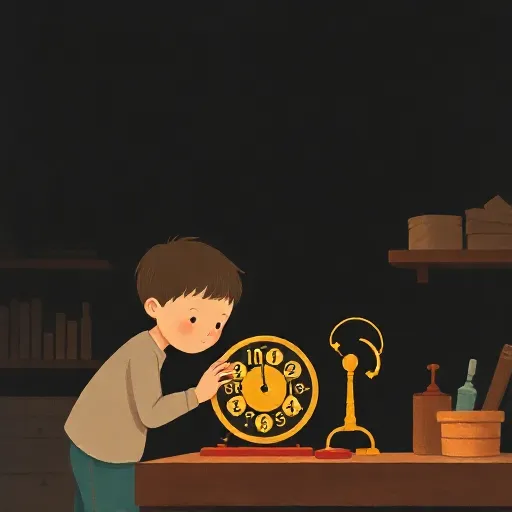
Imagine picking up an old watch — every tiny gear fits together, nothing wobbles, and the hands glide in a silent, steady circle. It just looks right. But why? Is it because the watch tells the truth about time, or because something in your mind simply enjoys watching order hum along?
That’s the riddle that kicked off one of philosophy’s longest arguments about beauty — and it started with a German professor who loved clocks more than paintings.
Christian Wolff (1679–1754) was a mathematician and philosopher who built a gigantic system of ideas, covering everything from logic to ethics. He never wrote a separate book on beauty, but his thoughts on it shaped a century of thinking. He took two key ideas from his hero Gottfried Wilhelm Leibniz (1646–1716) and turned them into a theory that felt as solid as a machine.
First, Leibniz said that when we see something beautiful, we perceive it clearly, but we can’t quite list all the marks that make it beautiful. A painter might say a canvas “lacks something — I know not what.” That’s clear but confused perception: you recognize the thing perfectly well, but you can’t sort out all the reasons why. Second, Leibniz claimed that pleasure is simply the feeling of perfection in an object.
Wolff fastened those two ideas together. He defined perfection as the harmony of a manifold — a whole made of many parts that all agree with one another. A clock displays perfection when all its pieces work together to show the right time. Truth, Wolff said, is just order in the world, and beauty is that same perfection, as far as it can be sensed. So a beautiful painting or building gives you pleasure because your senses are dimly registering truth.
The Poet Who Packed in Images

If beauty were only about recognizing truth, a poem would just be a neatly packaged fact. Alexander Gottlieb Baumgarten (1714–1762) saw something more exciting. In 1735, as a student, he gave aesthetics its name, defining it as the science of sensible cognition — knowledge that comes through the senses, not through pure reasoning.
Baumgarten still worked within Wolff’s framework, but he twisted one knob. A poem, he said, is a perfect sensible discourse: it arouses a dense, lively swarm of images rather than separating ideas with sharp lines. Scientific knowledge wants what he called intensive clarity — a few ideas, each crystal clear. A poem wants extensive clarity — many ideas packed together, each vague but powerful, like a crowd of faces in torchlight.
That means poetry’s job is not to hand you a clear thought but to make you feel more — to flood your mind with pictures of particular, concrete things. The more an image is individual and vivid, the more it is poetic. And because emotions themselves are intense, confused states, Baumgarten argued that a poem should stir your feelings; that’s part of what makes it work.
His most daring move was to introduce the phrase analogon rationis — the “analogue of reason.” Our senses and imagination don’t just trip over themselves; they form a kind of parallel thinking, a sensible version of logic. Beauty, he now said, is not just the sensible recognition of perfection in the object, but the perfection of sensible cognition itself. In other words, a work of art can please you because the form and imagery give your lower mental powers a beautiful, harmonious workout — not because it mirrors some external truth.
Why Sad Stories Feel Good

Moses Mendelssohn (1729–1786) picked up Baumgarten’s baton but ran in a slightly different direction. A meticulous thinker who worked by day in the silk trade in Berlin, Mendelssohn wanted to know why we seek out art that makes us sad. If pleasure comes only from perceiving perfection, why enjoy a tragedy?
His answer split the experience of art into several layers of perfection. First, there is the perfection in the object — the order, symmetry, and coherence of what is depicted, whether a noble character or a stormy seascape. Second, there is the perfection of your own mental activity while you perceive. Representing something — even something painful — is a lively, affirmative act of your mind. You enjoy being active, and art stirs that activity.
Third, Mendelssohn highlighted the perfection of the artist’s skill, which we admire as we would admire a master craftsperson. Finally, the body shares in the pleasure: a harmonious mental state sends a ripple of well‑being through your nerves.
But he also spotted a danger. If a sad stage scene feels too real, the pain would overwhelm the pleasure. Imitation gives us a precious distance. Knowing it’s a play, a painting, a story — not reality — lets us enjoy the mental play without collapsing into real misery. This explained why the most terrifying myths or operas could leave audiences feeling strangely elated. Mendelssohn even extended this picture to the sublime — the dizzy awe we feel before vast mountains or violent seas — as a blend of fear and admiration for something immense, yet held at a safe distance.
The Playground of the Mind

Then came Immanuel Kant (1724–1804), who fused the old “truth” tradition with the new “play” tradition and changed the game forever. In his Critique of the Power of Judgment (1790), Kant argued that when you call something beautiful, you’re not just reporting a private tingle. You’re demanding that others agree — but without any rule they could be forced to follow.
How is that possible? Kant’s answer: a beautiful object sets off a free play between your imagination and your understanding. Normally, understanding locks imagination onto a concept: “That’s a chair,” and imagination stops. In beauty, the two faculties dance without a fixed destination. The object hangs together as if it were designed, yet no purpose ties it down. This feeling of harmony-without-a-rule is inherently pleasant, a feeling of life itself flowing more freely.
Crucially, Kant insisted that this pleasure is disinterested — you don’t crave to own the beautiful thing or use it. And because the mental machinery is the same in everyone, you can legitimately ask others to feel the same spark.
Kant didn’t stop at pleasure. He argued that the experience of beauty secretly points toward morality. When your mind plays freely yet lawfully, it mirrors what moral freedom feels like: you give yourself your own law, just as a beautiful form seems to give itself its own order. The sublime — especially the dynamical sublime — makes you feel both tiny and indestructible, as if your reason can stand up to any storm. Through these aesthetic feelings, Kant thought, nature seems to nod at our deepest human project: to be free and good.
Your Taste, Your Freedom

So who won? Neither side really vanished. When you say a song is beautiful because the lyrics tell a hard truth, you’re echoing Wolff. When you say a film is beautiful just because it makes your mind race and dance in a thousand directions, you sound like Baumgarten and Kant. The tension between truth and free play lives inside every “It’s good — but why?” moment you’ve ever had with friends.
And that’s more than a schoolyard spat. If Kant is right, arguing about taste is a tiny rehearsal for arguing about justice — learning to speak with a universal voice while respecting each person’s free response. The old German debate over a clock’s perfection, a poem’s imagery, and a storm’s grandeur ends up right in your living room, every time you press play.
Think about it
- Think of something you find beautiful that doesn’t have any obvious “truth” in it — maybe a splash of color or a pattern. What would Wolff say? What would Kant say?
- If your best friend hates a movie you loved, can you demand they agree with your judgment? Why or why not?
- Could a computer program ever decide whether a painting is beautiful, or does beauty require the free, human play of mind? Explain.