If You Didn’t Build It, You Don’t Really Know It
A Boy Who Learned to Teach Himself
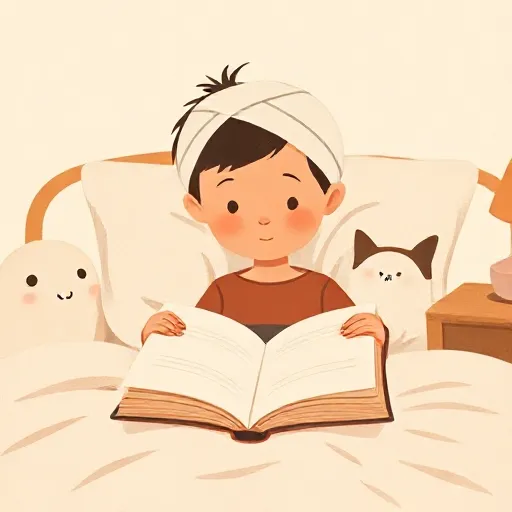
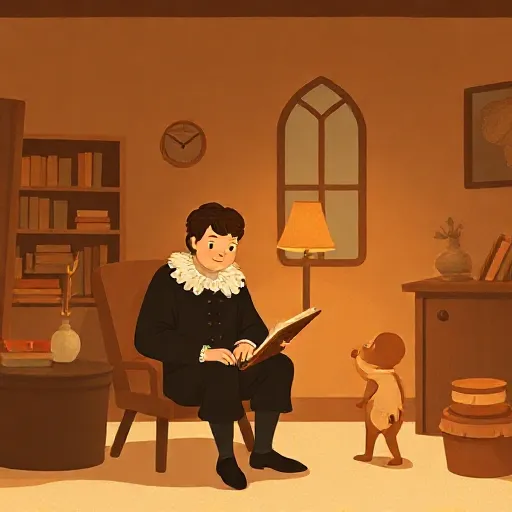
In 1675, a seven-year-old boy in Naples fell and hit his head so badly that doctors said he might not survive. He did survive, but he was too weak to go to school for three years. The boy’s name was Giovanni Battista Vico (1668–1744), and later he called himself “teacher of himself.” Left alone with his father’s books, he read whatever he could find: poetry, law, ancient history, and Latin. He grew into a melancholy, irritable young man who thought deeply. That childhood accident shaped his whole outlook: formal lessons could only take you so far; real understanding had to come from your own mind building something.
Vico became a professor of rhetoric at the University of Naples, a poorly paid job he never managed to leave for a grander position. In his first major work, On the Study Methods of Our Time (1709), he noticed a problem with modern education. The schools praised the mathematical and logical systems of René Descartes (1596–1650), which treated clear and distinct ideas, arranged like a geometry proof, as the only sure path to truth. Vico worried that this method “benumbs the imagination and stupefies the memory.” Students were learning to calculate but forgetting how to speak persuasively, remember a poem, or understand the messy, tangled world of human beings. He argued that we need both the razor-sharp logic of the moderns and the story-telling wisdom of the ancients.
If You Didn’t Make It, You Don’t Really Know It
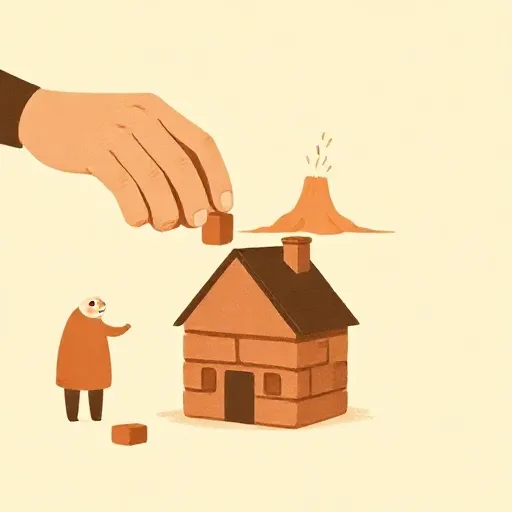
Vico kept circling back to a bold idea that his earlier work had touched on: verum ipsum factum, Latin for “the true is precisely what is made.” In his book On the Most Ancient Wisdom of the Italians (1710), he challenged the most fashionable philosophy in Europe. Descartes had begun with “I think, therefore I am” and claimed that whatever you perceive clearly and distinctly must be true. For Vico, that missed the point. Truth, he said, is not something you find lying around, like a shiny coin on the floor. It is something you achieve by making a thing and then understanding the process that produced it.
Think of it this way. When you build a clock out of gears and springs, you know every piece because you assembled it. You could take it apart and rebuild it in your sleep. But if you stare at a thunderstorm, you can describe its shape and color, yet you cannot know it in the same intimate way because you didn’t create the lightning or move the clouds. For Vico, the same rule applies to your own mind. Descartes said we have clear ideas of our own thinking. Vico replied, “But the mind does not make itself as it gets to know itself.” You didn’t assemble your own consciousness, so you cannot claim the kind of maker’s knowledge of it that a craftsperson has of a table.
This verum-factum principle led Vico to split knowledge into two big realms. Nature and everything in it were made by God, so only God can fully understand the physical world. Human beings will always be outsiders there, squinting through experiments and equations. But there is another world—the world of nations, customs, laws, stories, languages—that human beings did make. That world, Vico believed, we can know completely, in a proper scienza (science), if we learn to retrace exactly how our ancestors built it.
The New Science: A Map of All Human History
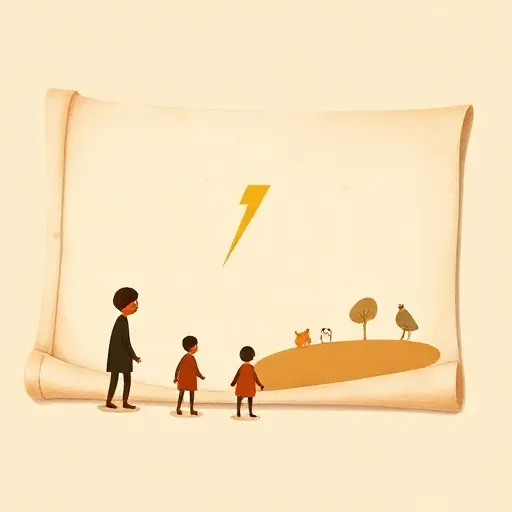
In 1725, Vico published the book that would occupy the rest of his life, The New Science. He wanted nothing less than a single science that would explain the rise, development, and decline of every human society. To do that, he had to marry two fields that until then had ignored each other: philosophy and philology.
Philosophy, by itself, deals in universal truths that float free of particular facts. Philology, in Vico’s day, meant the close study of languages, texts, and historical records—messy, particular details about what real people actually wrote, sang, and carved into stone. Vico called philosophy the search for il vero (the true) and philology the awareness of il certo (the certain). A philosopher spinning theories without evidence is empty; a philologist piling up facts without a big picture is blind. Only when you weave them together, he argued, does a genuine science of human history appear.
Vico looked at the evidence—ancient myths, the earliest laws, fragments of Latin, Greek customs—and found a universal pattern. All nations, he claimed, run through the same three ages. In the age of gods, people felt the world as a terrifying, living mystery. They invented thunder-gods and fire-gods, explained everything through stories, and were ruled by priest-kings. This was the time of poetic wisdom, when human beings experienced reality through raw imagination and passion rather than reflective thought. Then came the age of heroes, when aristocratic warriors seized power. They saw themselves as descendants of those gods, built harsh codes of honor, and told epics celebrating their own strength. Finally, an age of men arrives, the era Vico believed Europe had reached in his own century. Reason, law, and public debate slowly replace brute force and myth. Governments become popular commonwealths or monarchies, and philosophers rather than poets try to explain the world.
Vico called this pattern an “ideal eternal history” that all particular nations travel, though never perfectly and never at the same speed. Yet he also noticed a darker rhythm: corsi e ricorsi, cycles and returns. A civilization can grow refined to the point of decay. The refined age of men, he warned, can slide back into a “second barbarism,” where self-interest unravels shared bonds. From that wreckage, a new cycle begins, climbing upward from a higher starting point. Vico saw a ricorso in his own time, a new age of men built on Christian religion and stable monarchies.
The Poets Who Invented the World
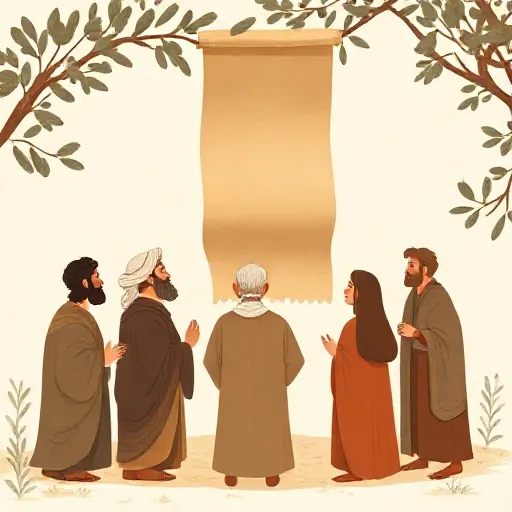
If the age of gods was built out of poetry rather than logic, how could Vico prove it? He found his proof in the biggest poet of all: Homer. For centuries, scholars had treated Homer as a gifted individual author. Vico looked at the Iliad and Odyssey and saw something stranger. These poems, he argued, were not the sophisticated philosophy of a single genius. They were imaginative universals: the shared, poetic way an entire early culture made sense of its world.
People in the age of heroes, Vico explained, didn’t think with tidy concepts like “courage” or “justice.” Instead, they created larger-than-life characters—Achilles, Odysseus—who embodied an entire quality or a whole group’s memory. Each hero was a kind of living costume into which the community poured its understanding of war, cunning, grief, or homecoming. So when the Greeks sang about Homer’s heroes, they were really singing themselves, passing down their own laws, geography, and moral rules in the only form their minds could handle.
Vico’s conclusion was shocking but rigorously argued. The “true Homer” never existed as a real person at all. He was, Vico wrote, an “idea or a heroic character of Grecian men insofar as they told their histories in song.” The Iliad and Odyssey are not the works of one poet but the slow crystallisation of an entire people’s poetic wisdom. That discovery let Vico treat ancient myths and language as historical evidence—a mental dictionary or sensus communis (common sense) shared by a whole nation, which a careful researcher can decode and trace back to its origins.
Why the Past Belongs to You
Vico’s own century paid him little attention. He died in 1744, describing himself as a stranger in his own city. But his core idea—that the human world can be the object of a special, rigorous science precisely because humans made it—travelled quietly underground and then resurfaced everywhere. The German thinker Karl Marx (1818–1883) wrestled with Vico’s claim that history moves through stages driven by human action. The Irish writer James Joyce (1882–1941) used Vico’s cycle of corsi e ricorsi to structure his colossal novel Finnegans Wake. Scholars in anthropology, literary criticism, and sociology still borrow Vico’s tools when they study how stories and customs shape whole civilizations.
For you, Vico’s challenge lands closer to home. When you try to understand why a friend acted a certain way or why your town celebrates a particular holiday, you are not looking at something built by nature. You are looking at something built by earlier people—real, imaginative, rule-making human beings. Vico’s “new science” says you can know these things from the inside, by recovering the poetry and the logic that created them. It turns history from a list of dusty facts into something you can make sense of, because it was made by people just like you.
Think about it
- If you wrote a story and then lost your memory, could you ever know it as perfectly as you did when you were writing it? What does that say about Vico’s idea of maker’s knowledge?
- Vico thought nations grow up like human beings—from childhood imagination to adult reason. Is it fair to compare the whole society where you live to a single person growing up?
- If poets and myths invented the first laws and gods, can we still say those laws and gods were “real” to the people who lived by them? What makes something real in the world of human things?