Why Thomas Hobbes Thought You Can't Know a Thing Unless You Built It
The Question That Made Hobbes Stop and Think

Imagine you are playing a fast-paced video game. You dodge obstacles, find hidden coins, and beat the final boss. You feel like you really know the game. But now imagine your friend built that whole game himself — every line of code, every level design. Who understands the game more deeply? You, who have experienced every corner of it, or your friend, who made it?
In the 1600s, the English thinker Thomas Hobbes (1588–1679) gave a startling answer: only the maker truly knows. He called this kind of deep knowledge scientia, a Latin word meaning genuine, certain knowledge of a thing’s causes. And he believed that most of what we call “science” isn’t scientia at all.
This idea turned heads in his own time and still nags at us today. If you can only really know what you construct, what does that say about biology, physics, or climate science? Hobbes’s solution was radical: nature will always keep some secrets, but the things we build — from geometric proofs to governments — can be known completely.
Why Nature Keeps Its Secrets
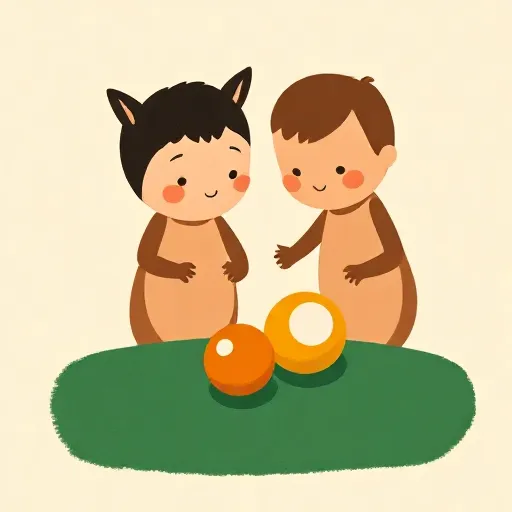
Hobbes believed that everything in the universe is a body — a physical thing — and that bodies are always either moving or at rest. When a body bumps into another, it causes motion, and that motion eventually reaches our sense organs. The motion creates ideas in our mind: colors, sounds, tastes, shapes. In this way, Hobbes was an empiricist: he thought all our ideas start with sense experience.
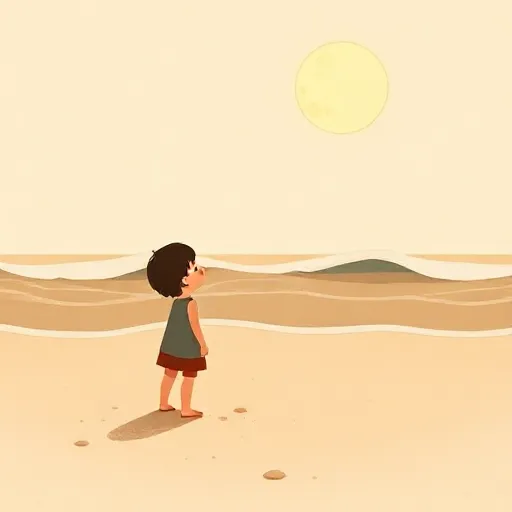
But there was a catch. We don’t get our ideas directly from the outside world. They are like reflections in a mirror. Hobbes pointed out that you can see the image of the sun in a puddle or a mirror, even though the real sun is far away. The color and shape you see aren’t in the object itself; they are effects of motion on your senses. If you look at a billiard ball hitting another, you see one ball move, then the other — but you never see the cause of the second ball’s motion itself. You just see a sequence of events.
This worried Hobbes. Most natural philosophers of his day wanted to discover the real causes of things. But if we only ever see effects, how can we know what actually produced them? Hobbes concluded we can’t — at least not for natural bodies. Because we did not build the natural world, we can only guess at its causes. “Of natural bodies we know not the construction but seek it from the effects,” he wrote, meaning we know only what the causes might be, not what they are.
The Battle Over the Air-Pump: Armchair vs. Lab
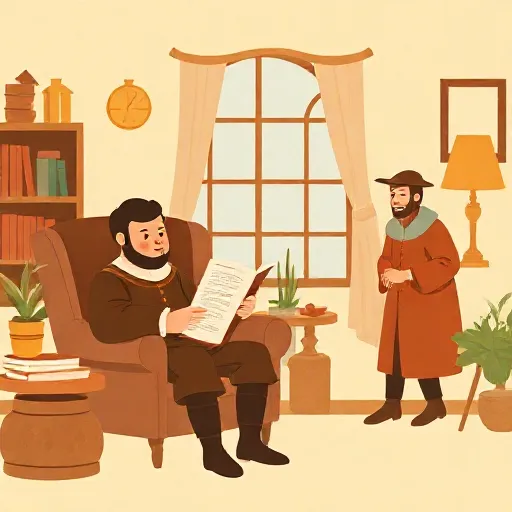
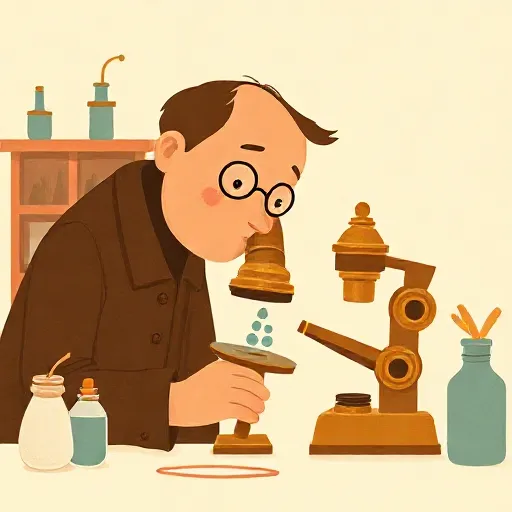
Hobbes’s most famous clash over this idea was with Robert Boyle (1627–1691), the inventor of the air-pump. Boyle’s air-pump was a clever device that could suck most of the air out of a glass jar. He and his fellow experimenters at the Royal Society would place objects inside — bladders, candles, small animals — and observe what happened when the air was removed. Their method was to do careful, repeatable experiments and then propose an explanation.
Hobbes was not impressed. He argued that no matter how many times you repeat an experiment, watching a phenomenon can never reveal its true cause. You can only see that something happens — what he called the that — but not why it happens. To explain the why, you need to bring in principles you already know with certainty, like those from geometry. Hobbes believed that geometry gave us a priori knowledge: knowledge that didn’t depend on any particular experience but was true by the very act of constructing figures in our mind.
So for Hobbes, before you ever touch an air-pump, you ought to have your geometrical principles sorted out. Only then could you rule out impossible explanations. Boyle saw things the other way around: experiment first, theory later. This was a fight about the very order of knowledge — and it still echoes today in debates over whether pure theory or hands-on data should lead science.
Prudence: The Art of Guessing, Not Knowing

Hobbes didn’t think experience was useless. He admired what he called prudence. Imagine a chef who has cooked a thousand meals. From past experience, she can look at a list of ingredients and predict how a dish will taste. If every time she mixed flour, eggs, and milk, a pancake resulted, she expects pancakes this time too. Prudence is the skill of guessing future outcomes by remembering past patterns.
But Hobbes insisted that prudence is not scientia. No matter how many successful pancakes you’ve made, your prediction might still fail if even a tiny detail differs — maybe the milk is slightly sour, or the pan is a different thickness. Prudence rests on the assumption that the future will be like the past, and that assumption is not knowledge; it’s just a guess. “The omission of every little circumstance altering the effect frustrateth the expectation of the most Prudent,” Hobbes warned.
True knowledge — scientia — comes only when you are the maker. If you had designed the recipe yourself, understanding every chemical reaction and why each step mattered, you wouldn’t be guessing. You’d know. For Hobbes, science was about power: knowing the causes lets you bring about effects reliably, like designing a fortification using geometry instead of trial and error.
Building a Country from Scratch: Hobbes’s Science of Politics
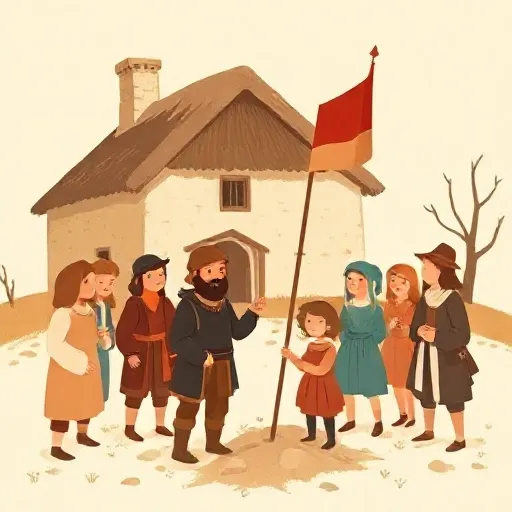
If geometry is the model of scientia because we draw the lines ourselves, is there anything else we can know with such certainty? Hobbes said yes: civil philosophy, the science of how to build a peaceful society. In nature, we didn’t create the bodies we study. But a commonwealth — an organized political community — is something human beings put together themselves.
Hobbes began with human beings as they are in a state of nature, without any government. From that starting point, he reasoned about how they could be moved — like geometric points drawn into lines — to form a society that would avoid constant war. The famous laws of nature in his book Leviathan are not scientific facts about the universe but instructions for making peace: lay down your right to all things, keep your agreements, show gratitude. By following these laws, people literally make a commonwealth, and because they are the makers, they can understand its causes completely.
Civil philosophy, Hobbes boasted, was no older than his own book De Cive. Everything written before about politics was, in his view, just opinion or sophistry. His science of the commonwealth was demonstrable in the same way a geometric proof was: you build the result step by step in front of someone’s eyes.
Why This Still Matters: Are You a Maker or Just a Watcher?
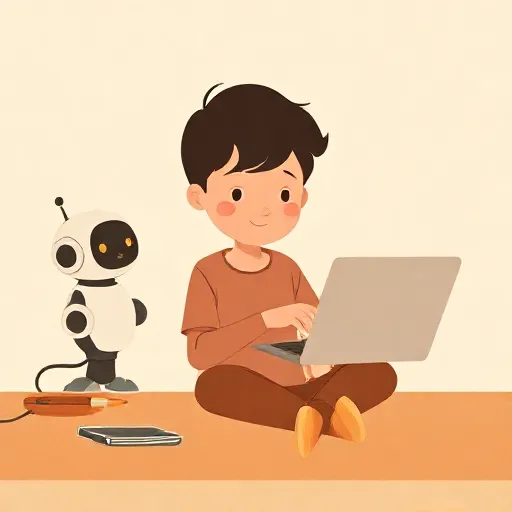
Today we don’t talk much about “scientia.” But Hobbes’s challenge hasn’t gone away. Think about someone who uses a smartphone versus the engineer who designed its circuits. The user knows that tapping the screen makes things happen; the engineer knows why each chip responds. That doesn’t mean the user is ignorant — prudence counts for a lot in daily life — but there’s a difference between functional know-how and deep causal understanding.
This idea also matters in your own choices. When you build a model rocket, program a game in Scratch, or even write a set of rules for a club you’re starting, you gain a kind of knowledge that watching a thousand YouTube videos can’t give you. Hobbes would say you are acting like a true scientist: the maker understanding the made.
And what about the natural world? We can still do experiments, gather data, and make good guesses — prudence has become the engine of modern science. But Hobbes’s voice reminds us that our theories about nature are still hypotheses. We didn’t build the universe, so our knowledge of it will always be a little bit like looking in that puddle to see the sun: a reflection, not the thing itself.
Think about it
- If you build a robot and know exactly how it works, are you more certain about its behavior than a biologist is about a squirrel’s? Why or why not?
- Hobbes thought we can be completely certain about geometry because we invent the figures. Can you think of anything else — apart from math and games — that humans make and therefore might know perfectly?
- In your own life, do you understand something better when you learn by watching, or when you try to build or teach it? Is there a difference?