What's Left When You Take Away All a Thing's Properties?
What’s Left When You Peel Away Every Property?
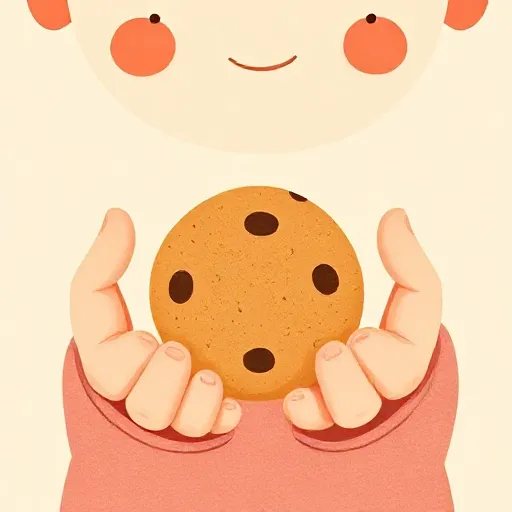
Imagine holding a warm chocolate chip cookie. You notice its sweetness, the crumbly texture, the brown color, the smell of vanilla. Now imagine stripping every quality away—the taste, the smell, the color, even the shape. Is anything left? If you answer “yes, the cookie itself,” you’ve stumbled into one of philosophy’s oldest puzzles: what makes a thing a substance?
For Aristotle (384–322 BCE), the individual cookie—this one right here—is a primary substance. It is a real object that stands under all its properties. You can say “this cookie is sweet,” but you cannot say “sweetness is this cookie.” The individual thing is never a property of something else; it is what properties belong to. Aristotle also distinguished secondary substances, like the kind cookie or the species dog. These tell you what something is, not just how it is. Fido the dog is a primary substance; dog is the secondary substance that reveals his nature.
Aristotle gave several marks of primary substances. They receive opposite properties over time: the same cookie can be warm and then cool. They are necessary for everything else: if no substances existed, there could be no properties at all, because properties need something to be properties of. And they are not said of anything else in the way that “brown” is said of the cookie. Secondary substances, meanwhile, are the terms that best answer “What is it?”—dog tells you more about Fido than brown thing does. But why exactly is that? The question would echo through the centuries.
The Thing That Can Stand Alone: From Aristotle to Descartes
René Descartes (1596–1650) sharpened the idea of substance with a new test: independence. A substance, he argued, is something that can exist by itself—it does not require any other created thing to hang its existence on. A property, like a color or a shape, always needs a substance to belong to. But a substance can be conceived as existing on its own. Strictly speaking, only God is truly independent, but Descartes recognized two kinds of created substance: mental substance, defined by thinking, and material substance, defined by extension in space.
This independence criterion seemed crisp. Yet Gottfried Wilhelm Leibniz (1646–1716) spotted a big problem. Even if we set God aside, a created substance cannot exist without its own properties. Take away all of a mind’s thoughts and what is left? Descartes would say the mind just is a thinking thing, so thought is not a separate property it “needs”—it is identical with the substance. But for ordinary objects, the worry stuck: if a cookie cannot exist without some shape, size, and mass, in what sense is it truly independent? This kicked off a debate that is still alive today: does the independence idea need to be redefined, or should we drop it and look for a different mark of substancehood?
Locke’s “I Know Not What” and the Bundle of Sensations
John Locke (1632–1704) pushed the puzzle further. He agreed that qualities need a support, but what is that support? Locke described an idea of “pure substance in general”—a supposed something, “I know not what,” that upholds the qualities we see. He compared it to the story that the world rests on an elephant, which stands on a tortoise: it is not a satisfying explanation. Yet Locke also thought the real, hidden structure of matter—its minute atomic parts—did the work of holding qualities together. He called that the real essence and believed we could never know it directly, only guess at it from the properties we observe.
David Hume (1711–1776) took a more radical step. He argued that our belief in substance is a trick of the mind. When we see a series of very similar things (say, a flame flickering from moment to moment), the mind glides smoothly from one to the next and invents an unchanging “substance” to explain the flow. In reality, Hume claimed, an object is just a bundle of properties—a collection of sensations, nothing more. The supposed glue that ties them together is an illusion. Later, Immanuel Kant (1724–1804) turned this around: he agreed that substance is a concept our minds must use to make experience intelligible, but he insisted it is a necessary category, not an optional habit. We cannot make sense of a world without stable, enduring objects.
Modern Showdown: Bundles, Substrata, and Thin Particulars
Today’s philosophers still clash over whether substances reduce to their properties. Bundle theories say that an object is nothing more than a collection of property instances. If properties are like individual items (called tropes), two objects can have exactly similar bundles without being the same thing, because the tropes themselves are distinct. The trouble is that if an object just is a bundle, then any change of property would make a different bundle—so how can the same cookie survive cooling down? Some bundle theorists answer by saying essential properties anchor identity, but not everyone finds that convincing.
On the other side, there are substratum theories. These accept that an object includes an extra ingredient—a bare “thin particular” or substratum—that is not itself a property. This thin particular is the hook on which properties hang. One version, inspired by Descartes, treats a single “master property” (like mass or solidity) as the core, with other qualities being modes of it. The independence criterion has also been refined: maybe a substance does not need to exist without any properties at all, but only without any particular property it happens to have. A cookie can exist without being warm, even if it must have some temperature. Still, the debate remains open, and no single definition of substance commands universal agreement.
Why “Dog” Tells You More Than “Brown Thing”: Sortals and Identity
In the late twentieth century, David Wiggins revived an Aristotelian idea: the way we count and track objects over time depends on sortal concepts—kind-terms that answer “What is it?” Sortals like dog, human, or cookie are not interchangeable with any old description. A lump of clay and a statue made from it can be in the same place, but Wiggins denies they are identical. The clay constitutes the statue; they are not the same thing, because the statue can be destroyed by squashing while the lump persists.
Wiggins also insisted that identity is always “sortal-relative.” To say that a is the same as b, you must be able to say the same what. Some sortals, like child or tadpole, are phase sortals—they apply only to a period of a thing’s life. Others, like human being or frog, are ultimate sortals and apply through its entire existence. This challenges the idea that we can just point at “a physical body” and call it a substance without using a richer kind-concept. For Aristotelians, a dog is a deeper unity than a heap of sand, and our language of kinds reflects that.
Why It Matters When You Say “This Is Still My Bike”
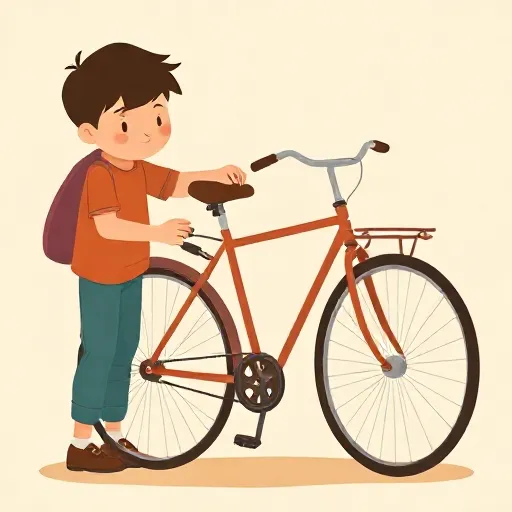
Every time you say “my bike” after swapping the tires, or recognize your friend after a summer growth spurt, you are relying on a concept of substance. Without some notion of an enduring thing that survives change, ordinary talk about the world would fall apart. Science, too, presupposes that there are real, stable objects—whether particles, organisms, or planets—to study.
Yet the central questions are still unsettled. Is an object just a bundle of properties, or is there a non-property “thisness” that makes it the very individual it is? Do our kind-concepts carve nature at its real joints, or are they more like mental shortcuts? And what about purpose—Aristotle himself thought that what something is cannot be separated from what it is for, an idea that keeps resurfacing in biology and the philosophy of mind. The cookie you hold, the dog wagging its tail, and you yourself are all test cases for a mystery that philosophy has not stopped chewing on for over two millennia.
Think about it
- If every atom in a dog were gradually replaced with new atoms but it kept the same personality, would it still be the same dog? What if you replaced all the atoms at once?
- You can describe your best friend by listing their qualities—funny, tall, wears glasses. Is your friend simply a bundle of those qualities, or is there a “someone” that has them, beyond the list?
- Imagine you invent a machine that perfectly copies every atom of a cookie to create a duplicate. Are you holding one cookie that was simply moved, or are there now two distinct substances—and why does your answer matter?