Why You're Not Just a Sack of Bones: Aristotle’s Matter and Form
When Clay Turns into a Face
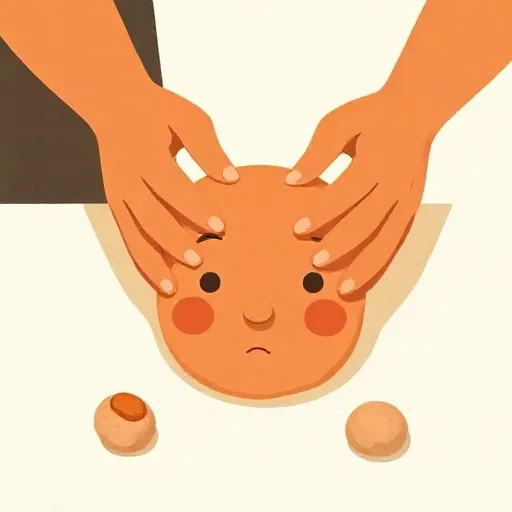
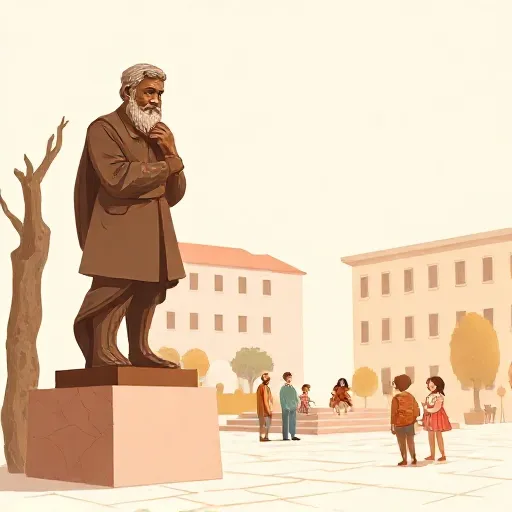
Imagine a sculptor holding a shapeless lump of soft clay. She presses and smooths it, and gradually a face peeks out. Soon a beautiful statue stands where the blob had been. Something new has come into existence, but nothing was added. The clay was there all along. What changed?
The ancient Greek philosopher Aristotle (384–322 BCE) spent a lot of time thinking about changes like this. He noticed that there are two very different kinds of change. One is when a thing stays itself but gains or loses a surface property: Socrates falls into a vat of blue dye and turns blue, or puts on weight after a big feast. Socrates remains Socrates the whole time. Aristotle called this an accidental change—the underlying thing, the substance (in this case Socrates), keeps on being the same person, just with a different accidental property like being blue or heavier.
The other kind of change is far more dramatic. When Socrates is born, or when he dies, he does not just gain or lose a property—Socrates himself comes into or goes out of existence. Aristotle called this substantial change. And to explain how something can genuinely start to be or stop to be, he introduced two forever-linked ideas: matter and form. Together they make up what later thinkers called hylomorphism, from the Greek words hyle (matter) and morphe (form).
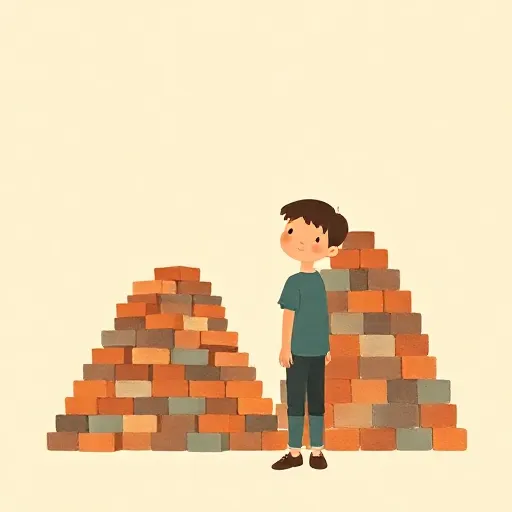
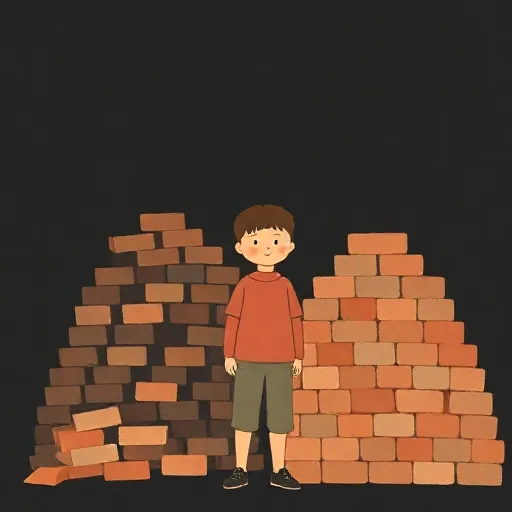
For a substantial change to make sense, Aristotle reasoned, there must be something that stays through the change and something that it acquires or loses. A builder constructs a house. What persists? The bricks. They transition from not-being-a-house to being-a-house. The bricks are the matter, and the arrangement or “houseness” they take on is the form. The same logic holds for living things. An acorn becomes an oak tree; a human body is born. There must be some stuff that was there before and remains through the change. Otherwise you would have something popping out of nothing—and Aristotle agreed with his predecessor Parmenides that that never happens.
The Four “Because” Questions
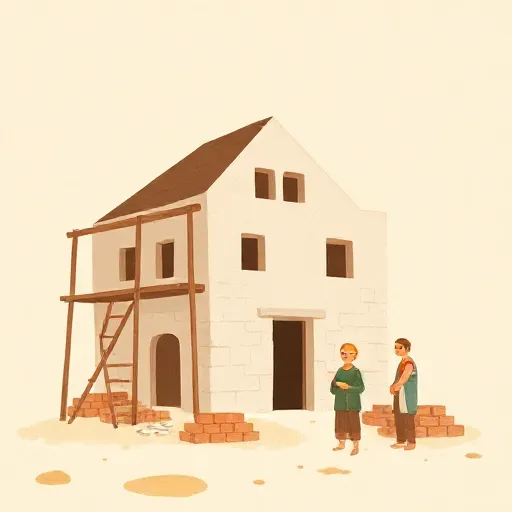
If matter and form explain change, they also help answer the deeper question: what is a thing, really? Aristotle thought that to understand any object fully you need to answer four kinds of “why” questions, which he called the four causes (though “because-factors” might be a better translation). Take a house. First, what is it made of? Bricks and wood—that’s the material cause, or matter. Second, what makes it the kind of thing it is? Its definition or essence: a shelter with walls and a roof—that’s the formal cause, or form. Third, what brought it into existence? The builder—that’s the efficient cause. Fourth, what is it for? Protection from weather—that’s the final cause, its purpose or function.
Aristotle saw a deep link between the formal and final causes, especially in living things. A house is defined by what it does (shelter), not just by its shape. A human being, likewise, is defined by a special way of living: a life guided by reason. On Aristotle’s view, that is what a human is for—to live a rational life. The human form is not just a shape but a capacity for thinking, perceiving, growing, and moving. In fact, Aristotle often treats the form as the soul (the life-principle) and the matter as the body.
So when a lump of clay becomes a statue, the matter takes on a form. But when an acorn becomes an oak, something deeper is happening: the form of “oakness” unfolds over time. The matter is not merely shaped; it is organized and alive. And here a tricky problem starts to show up. Artifacts have matter that can survive independently: you can melt a bronze statue and reuse the very same bronze to make jewelry. But can a living body exist without being alive? Aristotle says no. A dead body, he insists, is called “body” only by a stretch—it cannot do the things a real body does, just as a painted eye cannot see. The matter of a living thing seems to depend on its form to even count as that stuff.
What Lies Beneath Everything? The Prime Matter Debate
If you can break a thing down into matter and form, and that matter can be broken down further (bricks are made of clay, clay of mud, and so on), where does the ladder stop? Aristotle believed that all things below the moon are ultimately made of four elements: earth, air, fire, and water. Each element has a pair of opposite qualities—hot/cold and wet/dry. These elements can change into one another: water (cold and wet) can become air (hot and wet). But if water turns into air, what stays the same? According to Aristotle’s analysis of change, there must be an underlying something that was first wet and cold, then wet and hot.
Many interpreters from late antiquity through the Middle Ages—Augustine, Simplicius, Aquinas—thought Aristotle believed in a mysterious stuff called prime matter. This would be the matter of the elements themselves, a pure potentiality with no essential properties of its own. It would be invisible, eternal, and capable of taking on any form. It sounds a bit like Plato’s “receptacle” from the Timaeus, a kind of space that receives all coming‑to‑be.
Other scholars push back. They point out that Aristotle sometimes uses the phrase “prime matter” loosely to mean the ultimate matter of a particular thing (like water, if everything were made of water). And in some key passages he sounds cautious: he says if there is something that cannot be further described as “that‑en” (made of that), that would be prime matter—but he does not assert it outright. Modern critics argue that positing a stuff with no properties leads to absurdities: how can something be invisible but also become blue when Socrates takes a dip in the dye? And if prime matter underlies all properties, including its own essential ones, doesn’t that start an infinite regress of ever‑deeper matter? Defenders reply that we can give prime matter essential properties (like being capable of receiving forms) without needing yet another layer beneath those.
The debate is alive. Some read Aristotle as committed to a bottom‑level substrate; others think his theory works just fine without it, as long as some lower‑level stuff (the elements) can persist through change. The question whether there is a deepest “stuff‑less stuff” remains a puzzle for hylomorphism.
What Makes You Different from Your Best Friend?

Suppose you and your best friend are both human beings. You share the same form—being a rational animal. Yet you are two different people. What makes you numerically distinct? Is it your matter (your body) or your form? Aristotle’s texts point in two directions.
In one passage he seems to say that matter is the principle of individuation: Socrates and Callias are different “because of their matter, for that is different.” If matter distinguishes them, then when the atoms that make up Socrates drift away and end up in Callias years later (a strange but not impossible scenario), they would have the same matter at different times. And if they both have the same human form, then according to hylomorphism they would be the same compound—an absurd result. To avoid this, some scholars propose that Aristotle believed in particular forms, unique to each individual, so no two people ever have exactly the same form. Others say the individuation job belongs to matter, but we must distinguish between proximate matter (your living body, which is uniquely yours) and remote matter (the elements, which can be shared across time). Yet if remote matter can wander, the problem persists.
An alternative reading suggests the passage is not about metaphysical distinctness at all, but about how we tell people apart: Callias is pale, Socrates is dark, and that visible difference is due to their matter (their skin). The real question then becomes: is there any deeper fact that makes two individuals genuinely separate, or is it just a primitive fact with no further explanation? If explanation has to stop somewhere, why not stop with the individuals themselves rather than with their matter?
Scholars continue to wrestle with this. It’s a puzzle that cuts to the heart of what makes you you and not someone else.
Are Forms a Bit Like Matter? The Snub Nose Puzzle
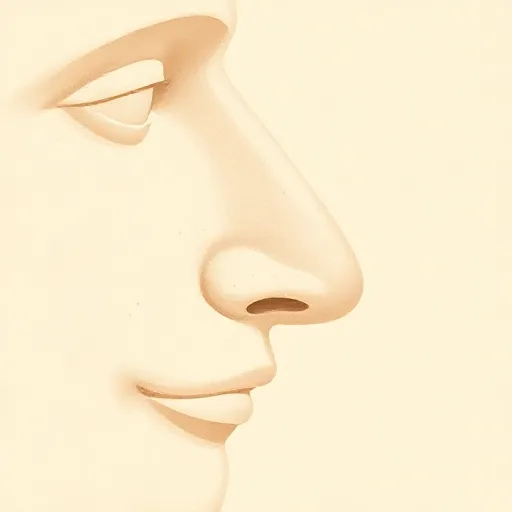
Aristotle introduces matter and form as distinct, even opposite, ingredients. But then he says things that blur the line. He wants to distance himself from his teacher Plato (c. 428–348 BCE), whose Forms exist in a separate, immaterial realm. Aristotle insists his forms are enmeshed in the material world. In his Physics he says that natural forms are like something “snub.” Snubness is not just concavity; it is concavity‑in‑a‑nose. You cannot describe what snub is without mentioning the material part—a nose.
Does the form of a human being work the same way? Must “human” be defined as rationality‑in‑a‑body‑of‑flesh‑and‑bones? Some passages in the Metaphysics seem to say yes. When Aristotle discusses geometric objects like a circle, he says the circle’s form does not include bronze or stone—circle can be realized in many materials. But he then raises doubt about living things. Flesh and bones, he says, might be parts of the form and not just matter, because the human form is never found in other materials. Yet other passages appear to group flesh and bones with bronze and stone as merely matter, not part of the definition. The text is ambiguous, partly because ancient Greek lacked punctuation marks that would settle whether a key sentence is a question or a statement.
The philosophical stakes are high. If forms themselves contain matter, then every compound has a form that is itself a compound of matter and form—and its form, too, would have a further essence, leading to an infinite regress of forms bubble‑wrapping each other. One way to stop the regress is to say that only the thing’s form is matter‑involving, while the form’s own essence is pure. Another is to deny that forms themselves have essences at all, though that runs against Aristotle’s habit of talking about “the essence of the soul.” The debate forces us to ask: is the essence of a human being something that can exist apart from any body, or is our matter part of who we are at the deepest level? Most scholars today lean toward the view that Aristotle thought matter is part of the definition of natural beings, but ancient interpreters disagreed, and it’s not a settled question.
Why Your Form Still Matters

So why should any of this matter to you today? When you look in the mirror, you see a face made of bone, muscle, and skin—matter. But you know that’s not the whole story. There’s something about you that thinks, hopes, and recognizes itself. Aristotle would call that your form: the organizing principle that makes you a human being rather than a heap of ingredients. Your form is what you are.
The puzzles we’ve walked through—what stays the same when water becomes air, what makes you distinct from your best friend, whether your form involves your body—are not dusty museum pieces. They echo in modern science fiction (if you uploaded your mind to a computer, would that still be you?) and in real‑world concerns about personal identity, bioethics, and artificial intelligence. Every time we ask what matters most about a person—the physical stuff they’re made of or the pattern of their life and thinking—we are replaying Aristotle’s old questions.
The sculptor’s clay took on a new form and became a statue. Your body took on the form of a human and became a person. Matter gives you solidity and presence; form gives you what you are. Neither alone would be enough.
Think about it
- If you could swap your entire body for an artificial one that looked and felt the same, but kept your memories and personality alive, would the person who wakes up still be you? Why or why not?
- Imagine two perfect copies of a painting, down to every atom. One is the original, one is the duplicate. Is there a real difference between them, or are they just two instances of the same “artwork form”?
- Suppose you gradually replaced every cell in your body over many years. What, if anything, makes you the same person as the child in your earliest photo?