What Makes Something Alive? Aristotle’s Ancient Guide to the Soul
Imagine Studying Life Itself in Ancient Athens
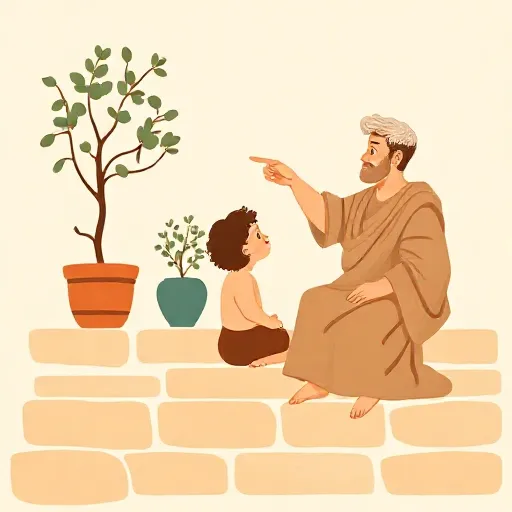
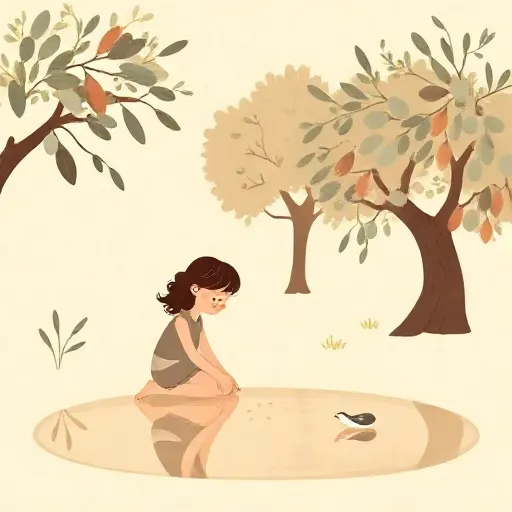
It is a hot afternoon around 350 BCE. You are a student at the Lyceum, Aristotle’s school in Athens. Today Aristotle (384–322 BCE) walks among the olive trees with a question. What makes something alive? A rock just sits there. A tree grows. A dog barks and runs. You breathe and ask questions. All of you are living. But why? For Aristotle, the answer is the soul (he called it psuchê). Not a ghost or a puff of spirit, but something like a hidden shape that turns a body into a living being.
That idea means Aristotle’s psychology is much wider than ours. Today psychology studies the mind. Aristotle’s project studies all life. In his main book on the soul, De Anima, he investigates how plants nourish themselves, how animals sense the world, and how humans think. He even asks whether every mental state is also a physical state of the body. “This,” he says, “it is necessary to grasp, but not easy.” So we are in good company when we wonder about minds and brains. The puzzle is ancient.
The Soul Is Like a Shape, Not a Ghost
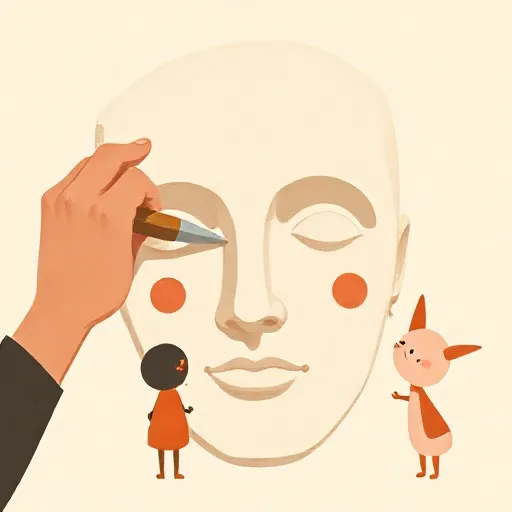
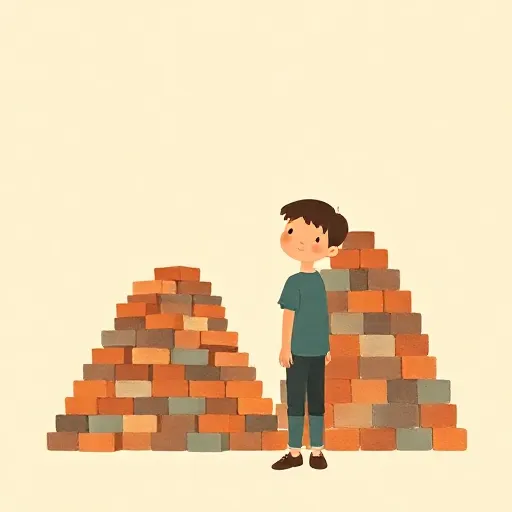
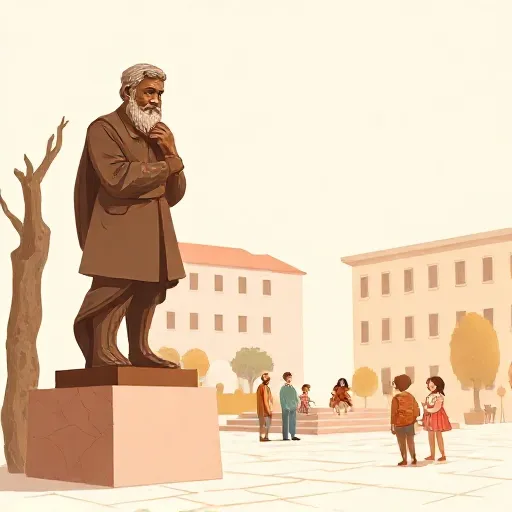
To understand the soul, Aristotle uses a powerful idea called hylomorphism. The word comes from the Greek for “matter” (hulê) and “form” (morphê). Think of a bronze statue. You need two things: a lump of bronze (the matter) and a shape, like the shape of Hermes (the form). The bronze alone is just a blob. It is potentially a statue. When a sculptor gives it the right shape, the bronze becomes an actual statue. The form makes it what it is.
Aristotle says the soul is the form of a living body. The body is the matter. Just as the Hermes-shape makes a specific lump of bronze into a statue of Hermes, the soul makes a specific collection of flesh and bone into a living plant, dog, or human. The soul is the first actuality of a natural organic body—the thing that first makes a body truly alive, capable of growing, sensing, or thinking.
This leads to three surprising points. First, Aristotle thinks the soul and body are not two separate things stuck together. They are two sides of one living thing, like shape and bronze in one statue. Asking whether the soul and body are the same is, he says, like asking whether the wax of a candle and its shape are one. It is not a useful question. Second, because the form depends on the matter, the soul normally cannot exist without the body. If you melt the statue, the shape is gone. If the body dies, the soul departs. Third, however, Aristotle leaves a small door open. He wonders if the mind (nous) might be an exception—a part of the soul that does not belong to any body part. We will return to that.
Plants Have Souls Too (and That Changes Everything)
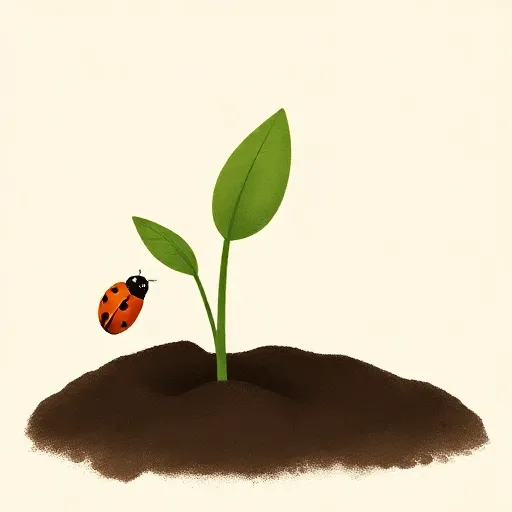
Because the soul is whatever makes a body alive, Aristotle finds souls in all living things, not just in people. He sorts living beings into a hierarchy of three kinds of soul. At the base is the nutritive soul. It belongs to plants, animals, and humans alike. The nutritive soul gives a living thing the power to grow, take in food, and reproduce. Without it, no living thing could develop from a seed or a baby into a mature adult, or keep itself alive.
A step up is the perceptive soul. Animals have this, but plants do not. Perception lets a creature see, hear, smell, taste, and touch. It is what makes an animal an animal. Even the simplest animal has at least touch. Perception helps an animal find food and avoid danger. Finally, only humans have the rational soul, which includes mind and thinking. Every creature with reason also has perception. Every creature with perception also has nutrition. But the reverse does not hold. A daisy does not sense; a dog does not reason.
Aristotle insists that nutrition cannot be explained simply by the stuff a body is made of. Fire, for example, “grows” by burning anything that catches, without stopping, until it runs out of fuel. But a living creature grows in a structured, end-directed way. It follows a plan and stops when it reaches its mature form. That plan, Aristotle says, comes from the soul. And because you cannot define life without using the idea of life itself—you cannot say “life is the ability to take in nourishment” and then define nourishment as “what sustains life”—he suspects that any attempt to explain life entirely in terms of lifeless material will fail. That suspicion is still alive today.
Why a Tofu Block Smells Garlic but Doesn’t Perceive It

How does perception happen? Aristotle treats it as a special kind of change. When you see a blue wall, your eye does not turn blue the way a wall is blue. But in some sense, your sensory organ “becomes like” the object. It receives the object’s sensible form—the color, sound, or smell—without becoming the object itself. This is a hylomorphic change: the form of the object acts on a suitably prepared sense organ, and that organ’s potential to perceive is actualized.
That “suitably prepared” part is crucial. A block of tofu left next to a clove of garlic will take on the garlic odor. But we would not say the tofu perceives the garlic. It is only passively altered. An animal’s sense organ, however, has the active capacity to receive sensible forms in a way that counts as perception. So Aristotle says: “The perceptive faculty is in potentiality such as the object of perception already is in actuality.” When the object acts on it, the faculty becomes like the object—not by becoming a copy of the thing, but by entering a state that represents it.
This model raises tough questions. Does the eye literally become speckled when you look at a robin’s egg? Aristotle probably means something more abstract, like the way a blueprint is structurally similar to the house it represents without being a house. The isomorphism—the matching structure—is real, but it is not literal instantiation. Just how this works remains one of the most debated parts of his theory.
Your Mind Might Not Be Mixed with Your Body
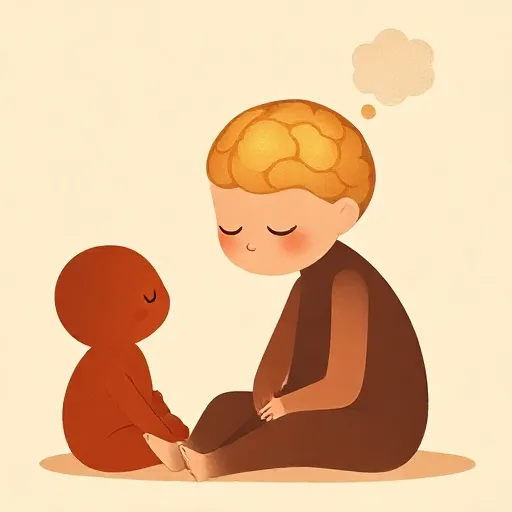
Aristotle treats thinking much like perception, but with a twist. Just as perception receives sensible forms, thinking receives intelligible forms—the structural essences of things. When you think of a stone, your mind becomes one in form with that stone. But, he insists, “it is not the stone which is in the soul, but its form.” You grasp what it is to be a stone without having a rock inside your head.
The twist is that the mind, unlike the senses, has no bodily organ. Aristotle says the mind is “not mixed with the body.” The eye can perceive colors because it is itself transparent and colorless, ready to receive any color. The mind, even more radically, must be “none of the things existing in actuality before thinking.” If it were already something definite—say, a physical structure—it could not think all things. You could not think of both a triangle and a starfish if your mind were permanently shaped like one of them. So the mind is pure potential, a kind of bottomless capacity to take on any intelligible form.
That idea creates a puzzle. If the mind is nothing actual before thinking, how can thinking be a hylomorphic change at all? Normally, change requires something that already exists to be changed—dough before it becomes cookie-shaped. Aristotle suggests that some changes are not destructions but realizations. A builder who already knows how to build becomes actually building by starting to work. Nothing is lost; a capacity simply comes alive. The mind, he thinks, is like that: a capacity to become all things by thinking them. This makes the mind unusually flexible—and, he hints, possibly separable from the body in a way other parts of the soul are not.
Why Do You Chase a Ball? Desire and Practical Reason

There is one more piece of the soul’s puzzle. Plants grow. Animals perceive. Humans think. But what makes an animal move? Why does a dog chase a ball or a person walk to the kitchen? Aristotle sees that nutrition, perception, and even pure thinking cannot fully explain goal-directed motion. Plants have the nutritive soul but sit still. Some animals perceive but never move (he thinks of sponges and oysters). And a person lost in contemplation might not move at all.
The missing piece is desire (orexis). Desire is the faculty that gets an animal moving. But desire alone is not enough. A continent person might feel a strong desire to eat a whole cake and yet refrain. So desire must work together with practical reason. In humans, practical reason pictures an object as good or desirable and then, when combined with desire, sparks action. In non-human animals, something like imagination plays the role of practical reason. So all goal-directed motion involves a partnership: desire sets the target, and a cognitive power presents it as worth pursuing.
Aristotle admits this is messy. The impulses behind action are tangled. He is cautious about carving everything into neat boxes. Still, he concludes that the soul includes a faculty of desire, working alongside reason and perception, to make us not just thinkers but doers.
A 2,300-Year-Old Argument That Still Isn’t Over

You might wonder: after all this, does Aristotle still matter? Yes, and in a surprisingly direct way. Every time a neuroscientist asks whether a thought is identical to a brain state, she is revisiting Aristotle’s question about whether all psychological states are also material states of the body. When researchers argue about whether artificial intelligence can ever truly think, they echo his puzzle about the mind being “nothing in actuality before thinking.” And when biologists debate whether life can be fully defined by chemistry, they are living inside the suspicion Aristotle raised: that any account of life will have to smuggle the idea of life in through the back door.
Aristotle’s hylomorphism tried to chart a middle path between saying “you are only a body” and “you are a ghost in a machine.” For him, you are a single living thing—matter perfectly shaped into a thinking, feeling person. That vision doesn’t settle the modern debates, but it frames them in a way that still feels fresh. The statue and the bronze are still standing right there, in the sunlight.
Think about it
- If you built a robot that could grow, sense its surroundings, and make decisions, would Aristotle say it has a soul? Why or why not?
- Imagine scientists someday create a perfect list of brain events for every thought. Would that prove that thinking is nothing more than a physical change, or would something still be missing?
- What is it like to be a plant? If a plant has a nutritive soul but no perception, does it have a life that matters in the same way an animal’s life does?