Why a Pile of Bricks Isn't a House: Aristotle's Search for What's Real
The Riddle of the Many Ways to Be
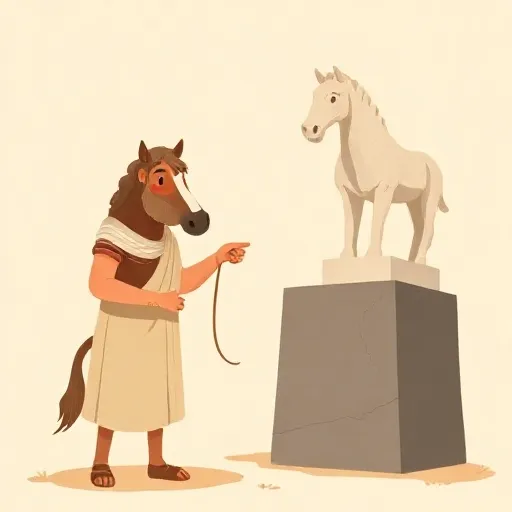
If you take apart your bicycle piece by piece, at what moment does it stop being a bicycle? The metal and rubber are still there — so what disappeared? The ancient Greek thinker Aristotle (384–322 BCE) wrestled with that kind of puzzle, but on a much grander scale. He wanted to know what makes anything a real thing.
He called his investigation first philosophy, and later readers called it metaphysics because it came after his writings on nature, the Physics. Aristotle described it as the study of being qua being — the study of things just insofar as they are. But “being” is a slippery word. A horse is a being, and the color white is a being too, but they aren’t the same kind of thing. Aristotle argued that “being” is said in many ways, but all those ways point toward one central, primary meaning.
He explained this with an analogy. A person, a diet, and a clear complexion can all be called “healthy,” yet they mean very different things. A person has health; a diet promotes health; a complexion is a sign of health. Though the word covers many things, they all connect to the same core idea: health itself. Likewise, “being” has many senses, Aristotle said, but they all refer back to substance. A horse is a being in the primary sense — it is a substance — while the white color is a being only because it belongs to that horse. So if you want to understand being, you must understand substance first.
Aristotle’s early work, the Categories, gave a helpful map. He listed ten categories of things that exist: substance, quality, quantity, relation, and others. Among them, substances are the independent ones. A particular person or a particular horse is a primary substance; everything else — colors, sizes, where it is — exists only in a substance or is said of a substance. If all individual substances disappeared, nothing else could exist either.
What Is a Substance? The Puzzle of Matter and Form
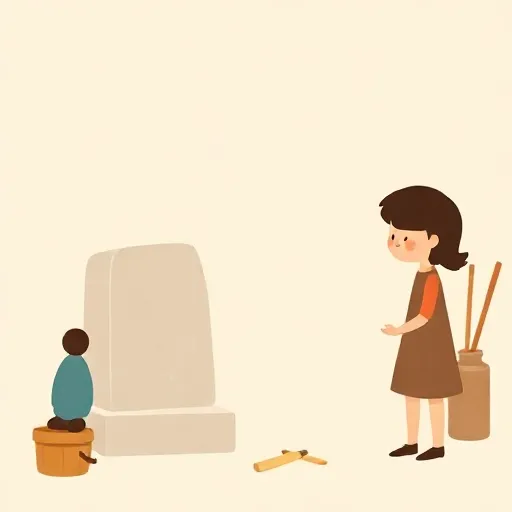
Pointing to examples like “this horse” wasn’t enough for Aristotle. He wanted to know what makes a substance a substance — what its inner cause is. In his Metaphysics, he considered four possibilities: the essence, a universal, a genus, or a subject. He started with the idea that a substance might be the ultimate subject — the hidden thing that everything else is predicated of.
Think about change. When a sculptor carves a statue out of marble, the marble is the stuff that stays through the whole process. It can take on a rough shape or a polished one, but underneath, it’s still marble. So maybe the substance of a thing is its matter — the basic material that remains when you strip away all its properties.
Aristotle pushed that thought to the limit. If you peel off every quality, every shape, every feature, what’s left? A completely blank, featureless stuff, sometimes called prime matter. But something with no qualities of its own isn’t a definite individual, and it can’t exist separately. So matter alone can’t be the primary substance.
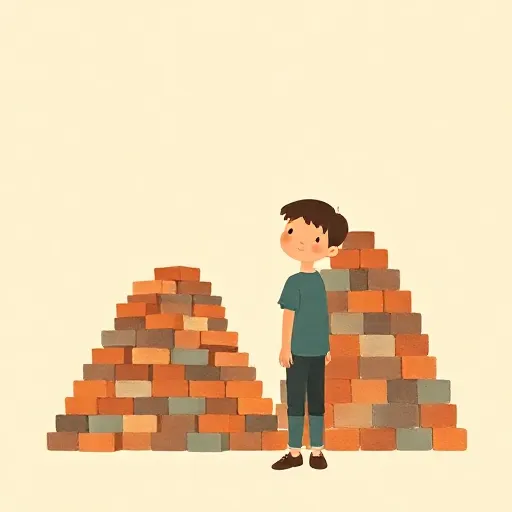
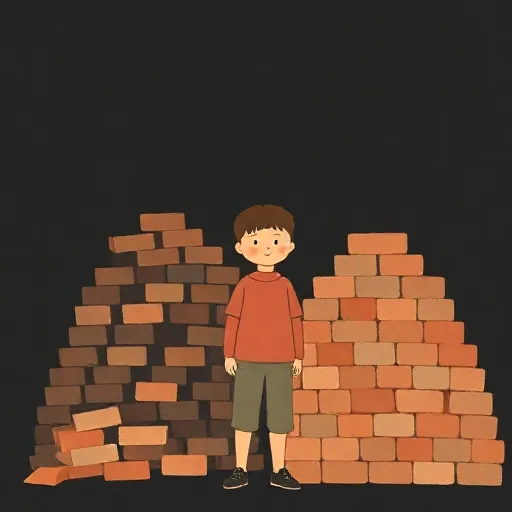
Instead, Aristotle argued that ordinary things are hylomorphic compounds — from the Greek words hylē (matter) and morphē (form). A house is more than a heap of bricks; it’s bricks arranged in a certain way, with a purpose. The form is the pattern, the blueprint, the “what-it-is-to-be” of the thing. The substance of a thing, in the deepest sense, is its form.
Essence: The “What-It-Is-To-Be” of a Thing
Aristotle gave that what-it-is-to-be a special name: essence (from the curious Greek phrase to ti ēn einai, “the what it was to be”). The essence of a thing is what you’d put in a perfect definition. For instance, the essence of a human is “rational animal.” A definition does not list every fact — it says what the thing is in itself. A pale man is not a different essence; paleness is an accident, not part of what it is to be human.
But if essence is what’s defined, that raises a sticky question: does a definition ever mention matter? After all, a human must have flesh and bones, not just any stuff. Aristotle conceded that some things do require a specific kind of matter. You can’t make a saw out of wool. Still, he insisted that even this requirement belongs to the form, because you can describe that kind of matter with a certain ratio or structure. So the core of substance remains the form.
A bigger puzzle loomed. A definition like “two-footed animal” combines two words. Why is that a single thing and not just a heap of words, like “pale man”? Aristotle would later solve this with his ideas of potentiality and actuality.
Potentiality and Actuality: Why a Seed Isn’t a Tree
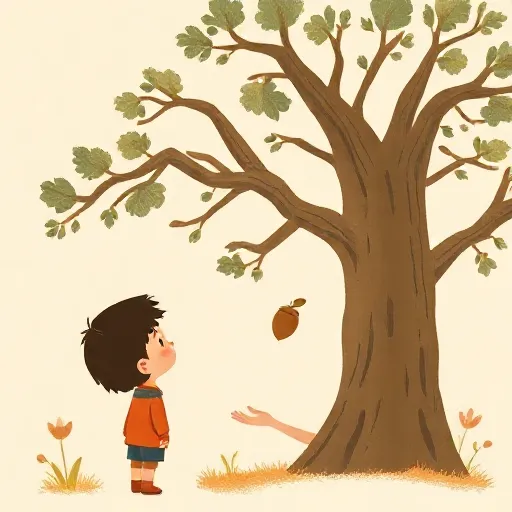
Look at an acorn. It is not an oak, but it can become one. Aristotle would say the acorn is potentially an oak, while the fully grown tree is the actual oak. He used two different Greek words for the two sides of this relationship: dunamis (potentiality) and entelecheia or energeia (actuality or activity).
Matter always comes with potentiality — lumber is potentially a table — while form is what turns that potential into an actual, finished thing. Aristotle argued that actuality is prior to potentiality in every important way. You cannot define “visible” without talking about actually seeing. A particular acorn is earlier in time than the oak it becomes, but it was produced by a previous actual oak, so actuality comes first even in time. Most importantly, actuality is prior in substance because it is the goal: the whole purpose of the acorn is to become a tree. The form is the end toward which the matter strives.
This also cracks the unity problem. In a definition like “rational animal,” the genus (animal) is like matter — it is potentially the whole species — and the differentia (rational) is the form that makes it actual. They are not two separate things glued together; they are one in the same way that a shaped lump of bronze is one sphere.
The Need for an Unmoved Mover
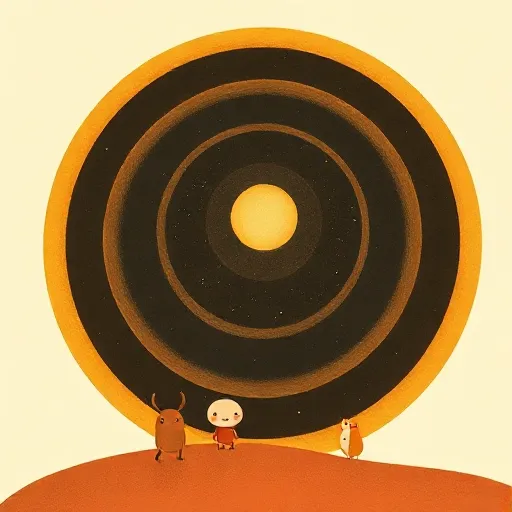
Material things are always a mixture of potential and actual. But if everything were merely potential, nothing would ever become actual. Aristotle reasoned that there must be something that is fully actual, with no potentiality at all, to set the whole chain of motion going. He called this the unmoved mover. It moves the stars and planets not by pushing them, but by being the perfect good that everything desires to imitate.
What could such a being be like? Aristotle described it as pure activity, a living thought that has itself as its own object — thought thinking itself. Because it has no matter and no potential, it is eternal and unchanging. Studying this divine substance, he said, is theology, and it turns out to be the highest and most universal science. Since this first substance is the cause of all other beings, the study of being qua being ultimately leads to a study of the divine.
Why It Still Matters: What Makes You You?
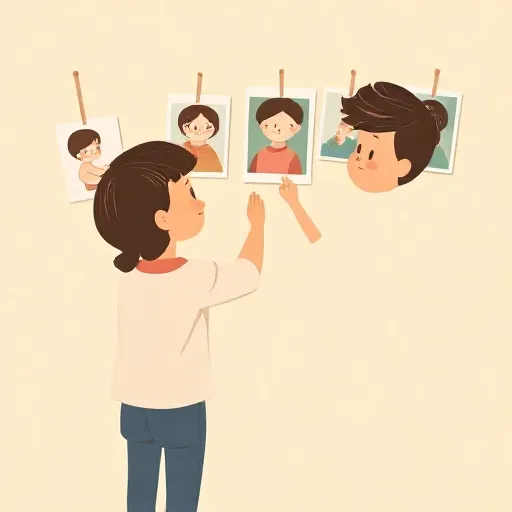
You might wonder why any of this matters today. The answer is right in your own mirror. Every few years, nearly every atom in your body is replaced. Your thoughts, your voice, your size — they all change. And yet, you are undeniably still the same person. What stays the same? Aristotle’s answer is your form — the organizational pattern that makes you a living, thinking human being. That idea of form as a persisting blueprint echoes through modern biology, where we talk about DNA and the information that builds an organism.
Aristotle’s deep method — looking for the invisible causes that explain why things are as they are — still drives both science and philosophy. Next time you see a pile of bricks and a finished house, you’ll know the difference is not just in the arrangement. It’s in the hidden structure, the form, that makes a thing what it is.
Think about it
- If you replaced every plank of a wooden ship, one by one, would it still be the same ship? At what point, if ever, does it become a different ship?
- Could there be a being with no potential for change — something purely actual? What would it be like if it existed?
- Who gets to decide the true form of a thing: the person who made it, the person who uses it, or nature itself?