Is There Really Such a Thing as Matter? Nicolaus Taurellus Said No.
The Book That Dared to Erase Matter

In 1573, a 25-year-old scholar named Nicolaus Taurellus (1547–1606) walked into a famous printing house in Basel and handed over a manuscript with a shocking title: The Triumph of Philosophy. Taurellus had studied Aristotle carefully, but he was about to pull the rug out from under centuries of philosophy. The world, he argued, is not made of some invisible, shapeless “stuff” underneath everything. There is no such thing as prime matter—the basic material that many thinkers believed existed before form gave it shape. Instead, the universe is built entirely out of forms, immaterial things that give each thing its character. It was a radical idea, and it angered a lot of powerful people, but it also started a fascinating conversation about what it means to be a real thing.
What’s Wrong with Prime Matter?

Most of Taurellus’s teachers believed that every natural thing—a rock, a tree, a dog—is a combination of form and prime matter. The form gives a thing its shape and powers; the matter is what gets shaped. But Taurellus found a crack in this picture. Think about the two sides of any thing: its power to act (to push, heat, or change other things) and its power to be changed (to be pushed, heated, or reshaped). The old view said that active power comes from form and passive power comes from matter, because they are opposites. Taurellus pointed out that they aren’t opposites at all: when a thing’s power to act grows, its power to be changed can grow too—like how a stronger muscle can both lift more and still feel the push of a heavy weight. Since activity and passivity aren’t contraries, they don’t need two separate sources. A single form can be both active and passive. So why invent a separate prime matter? Taurellus concluded: we don’t need it. Prime matter is literally nothing. There is no raw stuff; only forms.
Everything Is a Stack of Forms
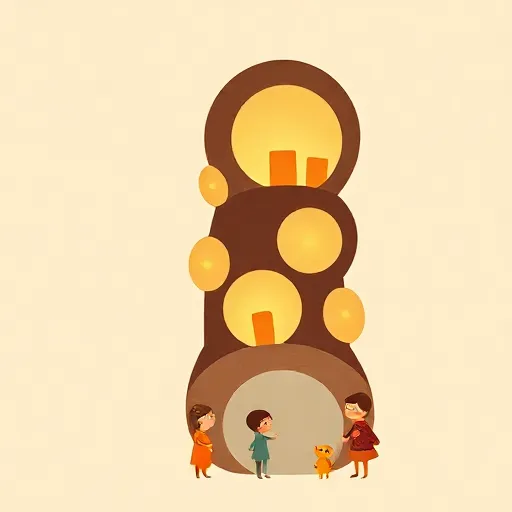
If forms are all there is, what about the things we see and touch? Taurellus said that every object is a kind of team of forms, not a single substance. A human being, for example, isn’t one big unified thing; it’s an aggregate of many forms working together—the form of a bone, the form of blood, the form of thought. That might sound strange, but it has a simple logic: if forms are the only real beings, then when forms come together, they don’t melt into one super-form. They just arrange themselves, like a pile of Legos that keeps its pieces distinct even after you build a castle. Taurellus even kept using the word “matter,” but he gave it a new meaning: matter is simply a less noble form that serves as a base for a nobler form. For instance, the form of a raw ingredient in cooking is less “noble” than the form of the finished dish, but they are both forms. So the world is a great stack of forms, each one resting on and being supported by others, but never losing its own identity.
Why God Needs You to Be Real
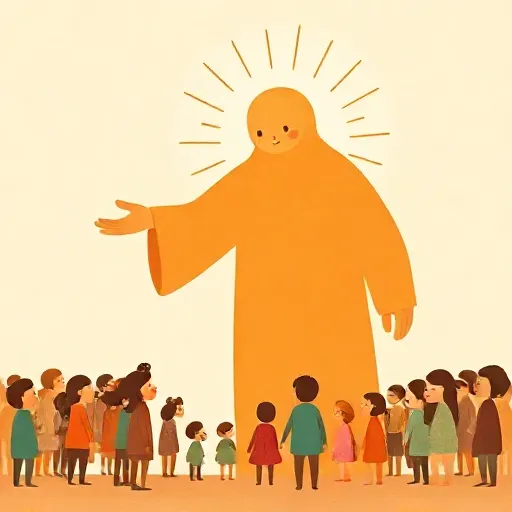
Taurellus wasn’t just rearranging pieces for fun. He was deeply worried about a threat to the Christian belief that the world was created. If the world didn’t have its own real substance, then it would be like a shadow stuck to God—an accident of the divine being. In standard philosophy, an accident is something that exists only in and through something else, like the color of an apple. If the world were an accident of God, then God would have finite, imperfect qualities, and that would contradict God’s infinity. Worse, if the world were just a piece of God, then creating the world would be nothing but God changing himself. Taurellus thought that was absurd. To defend the doctrine of creation, he needed to show that each created thing is a real substance—something that can stand on its own without needing to be propped up by God at every moment. His immaterial forms filled this role. God created them with their own active and passive powers, and from then on they keep the world running through their own changes. They are not just waves on the divine ocean; they are their own ships.
Souls from the Mix: How Life Emerges
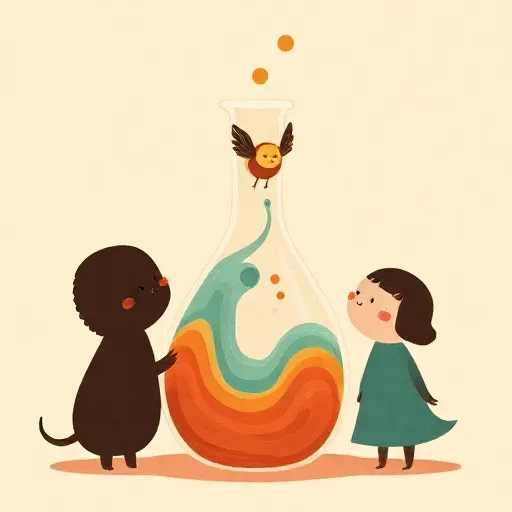
So far, forms explain the stuff of the world. But what about living things? Taurellus had a surprising answer: souls arise naturally when the right mix of elements comes together. Following his teacher Jacob Schegk and the ancient thinker Alexander of Aphrodisias (fl. ca. 200 CE), he claimed that when earth, water, air, and fire are blended in just the right proportions, a new, simple form leaps into existence—a form with powers that were not present in any of the ingredients alone. This is what today we might call an emergent form. The soul of an animal is not a tiny ghost put into a body; it is the shape and power that appears when the body’s ingredients reach a perfect balance. Even the human soul, Taurellus thought, emerges in this way. And because it arises from a blend, it can also be destroyed if the blend breaks down. That didn’t mean he denied immortality; he simply argued that if humans live on after death, it must be due to a special act of God raising both soul and body, not because the soul is naturally indestructible. The soul and body continuously perfect each other—the soul gives life, and the body’s actions refine the soul’s activity.
The Fight Against the One Big Mind
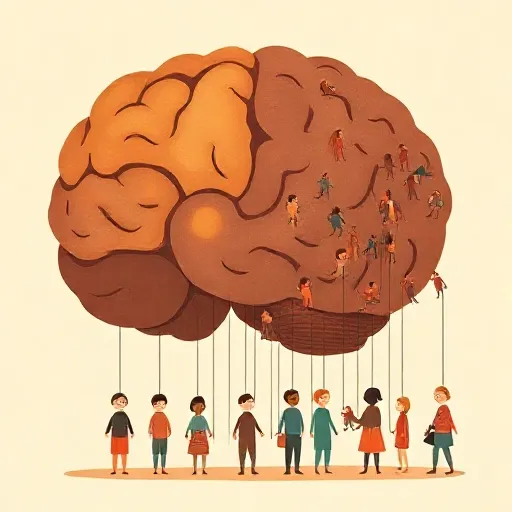
Taurellus’s biggest battle was against thinkers who said that all minds are really just one big mind, like a single ocean with each of us as a temporary wave. The Italian philosopher Andrea Cesalpino (1524/1525–1603) held that there is only one active intellect—the divine mind—that “perfects” everything and gives life to all bodies by being present in them. Individual humans, in this view, are just parts of the mind that happen to be separated for a while, like isolated streams of thought in the same head. Taurellus attacked this with a clever analogy. Imagine a moving stone: all its parts move in the same way. If the world-mind worked like that, your private thoughts would be exactly the same as everyone else’s. But they aren’t—I can’t see your daydreams. So the better analogy, Taurellus said, is a clock. A clock has many parts—gears, springs, a pendulum—each doing a different activity. The fact that the parts act differently is exactly why we think of them as separate things. Likewise, the fact that one series of thoughts is closed off from another shows that they belong to different substances. We are separate minds, not dimples on a single divine surface.
Why It Still Matters: You Are Not Just a Fragment
Nicolaus Taurellus died of the plague in 1606, and many Lutherans accused him of dangerous ideas. Yet his work didn’t disappear. A century later, the great philosopher Gottfried Wilhelm Leibniz (1646–1716) called him “the German Scaliger” and seems to have been influenced by his picture of the world as a community of immaterial, active forms—an idea that shaped Leibniz’s famous monads. More importantly, Taurellus’s question is still yours: Are you a real individual, or just a ripple in something bigger? If everything is ultimately one substance, then your choices, your feelings, and your friendships are just illusions of separation. But if the world is made of many truly independent substances, then you are a genuine center of action. Taurellus fought for that second view with every argument he had, not only to save a theological doctrine but to defend the reality of separate, free beings. So the next time you feel like your own person, making your own decisions, remember that a quiet, stubborn thinker in 1573 gave you a philosophical backbone for that feeling.
Think about it
- If everything you are could be explained as a pattern in one giant universal mind, would you still be you? Why or why not?
- Imagine you build a tower out of Lego bricks. Is the tower a single thing, or just a collection of bricks arranged in a certain shape? Does that distinction matter for your own body and mind?
- Can a new power (like life) appear that isn’t already in the ingredients? If you think yes, how would you know it’s truly new?