Is an Angel Made of Stuff?
A Classroom Fight Over Saints and Onions
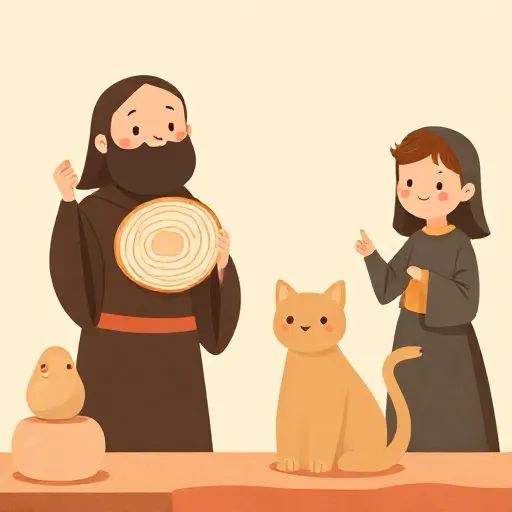
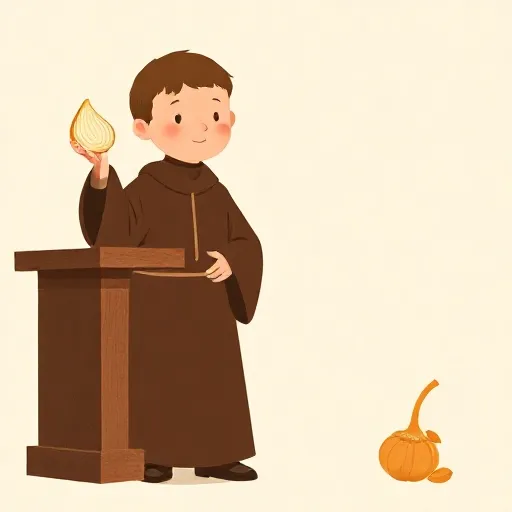
Picture a classroom in Paris around the year 1250. Students sit on wooden benches as a Franciscan teacher holds up an onion. He peels back one skin, then another. “Look,” he says. “Every creature is like this — layers of forms added one on top of another.” Across town, a Dominican friar named Thomas Aquinas (1225–1274) shakes his head. For him, things are not built like layered onions. They are more like a single clay statue, with one shape that makes them what they are.
Two big ideas clashed in those classrooms: universal hylomorphism and plurality of forms. Together, twentieth‑century scholars would later call them the “binarium famosissimum” — the “most famous pair.” But in the Middle Ages, nobody used that label. The two ideas were part of a long quarrel over the deepest question: what are things made of, at the most basic level?
What Is Universal Hylomorphism?
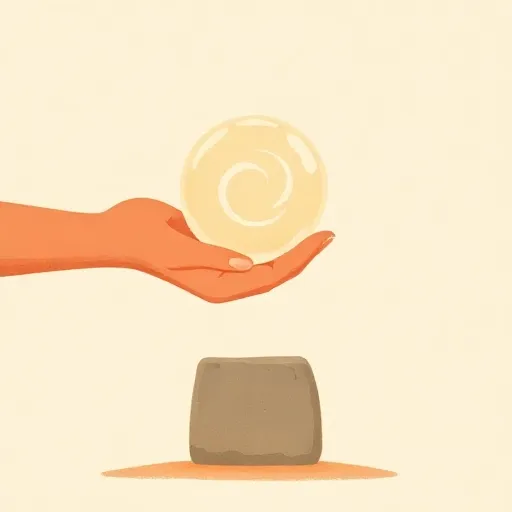
Hylomorphism is the idea, first taught by Aristotle, that every concrete thing is a combination of matter (hyle) and form — a kind of stuff and a shaping pattern. A clay pot has clay (matter) and the shape of a pot (form). A cat has physical stuff and the form of a cat.
Universal hylomorphism goes further. It says that everything except God is a compound of matter and form. God alone is utterly simple: no parts, no composition. Every created thing, even what we call “spirit,” must have some kind of matter. Why? The most common argument works like this: a composite thing — something put together — needs a cause that put it together. God, as the first cause of everything, cannot be put together; otherwise God would need a cause too. So God is purely simple. But everything God creates must be, in some way, composite. And if composition always involves matter and form, then all creatures — including angels and human souls — must be made of matter and form.
But how can an angel have matter? It doesn’t have a body you can touch. Thinkers who held universal hylomorphism replied that there are two kinds of matter: the heavy, bump‑into‑things stuff we see around us (corporeal matter), and a finer, invisible stuff called spiritual matter. Angels and the human soul after death are made of spiritual matter and a form. They are not pure emptiness; they are metaphysical composites, just without a physical body.
This view was popular among many Franciscan teachers, including Bonaventure (1217–1274). It was also defended by a Spanish Jewish philosopher and poet, Solomon Ibn Gabirol (c. 1022–c. 1070), known to the Latin world as Avicebron. His book Fountain of Life helped spread universal hylomorphism in the thirteenth century.
The Onion Picture: Plurality of Forms
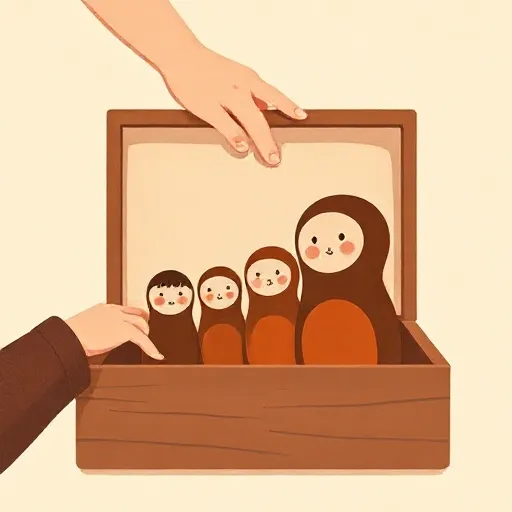
If you thought everything has matter and form, you might soon start seeing layers. That’s where plurality of forms enters. This is not the mild idea that a thing has many different accidental qualities (like being black, being fat, being asleep). Everyone accepted that. The stronger claim is that a single material substance can have several substantial forms stacked inside it in a fixed order.
Take a cat. The layered picture says: first, a very basic piece of prime matter gets the form of corporeity (“being a body”). That makes it a physical thing. Then, on top of that, it receives the form of life, making it a living body. Next comes the form of sensation, making it an animal that sees and hears. Finally, it gets the form of a cat, the narrowest layer that makes it exactly this animal. You could peel away layers in thought: even when the cat dies and its life-form departs, the form of corporeity remains, so the corpse is still a body — the same body that was alive.
One dramatic argument came from William of Ockham (c. 1287–1347). He worried about saints’ bodies. When a saint dies, the intellective soul leaves. But the faithful venerate the saint’s physical remains. If the form of corporeity were not a separate form that stayed in the body after death, then the dead body would not really be the same body the saint once had. The whole practice of honoring relics would, Ockham thought, make no sense. So a layer of bodily form must persist on its own.
Another argument, recorded even by Thomas Aquinas who disagreed, came from human development. In the mother’s womb, the embryo has some kind of form before the rational soul arrives. That earlier form does not simply vanish into nothing; it must remain as a layer underneath. And, some said, Aristotle himself noted that every definition has parts, which are forms. If you can define a human being step by step, there must be several forms nested inside — from body, to living thing, to animal, to human.
The Whole Cake: Aquinas Pushes Back
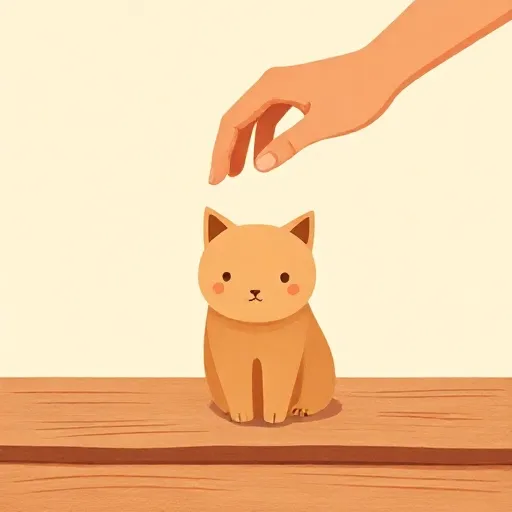
Thomas Aquinas rejected both parts of the “pair.” He agreed that God alone is absolutely simple, but he denied that created simplicity demands matter. For Aquinas, angels and human souls are immaterial — they have no matter at all, not even spiritual matter. Yet they are still composite, because there is a deeper kind of composition: the union of essence (what a thing is) and esse (the act of existing). A cat has an essence — catness — and the real act of being, which it receives from something else. An angel also has its own essence and its own act of existing. That is enough to make them composite without any matter. So universal hylomorphism is unnecessary.
Against plurality of forms, Aquinas argued that a substance can have only one substantial form. A cat is a cat all the way down. When you say “this is a body” and “this is alive” and “this is a cat,” you are not naming different layers inside the cat. You are using different words to describe one and the same metaphysical arrangement — matter informed by a single feline form. Calling it a body or an organism does not add any new form; it just describes the same single form through wider concepts. The only extra forms that come in are accidental forms, like blackness or sleepiness, which do not make it a different kind of thing.
Aquinas’s picture is more like a cake than an onion. A cake is not built of a “body‑layer,” then a “sweet‑layer,” then a “chocolate‑layer.” It is one unified substance, with one substantial form (cake‑ness) and many accidents. The living cat, too, is one thing, not a stack of independent forms.
Not everyone followed Aquinas. John Duns Scotus (c. 1266–1308) accepted plurality of forms but denied universal hylomorphism — a mixed position that showed how tangled these debates could get.
Why the Pair Seemed to Belong Together
Neither the phrase “binarium famosissimum” nor the idea that universal hylomorphism and plurality of forms were a natural pair existed in medieval times. The label was coined by twentieth‑century scholars like Daniel Callus in the 1940s. But they had a reason for linking the two doctrines: both fit beautifully with a particular idea about language and reality.
That idea says: the structure of a truthful sentence mirrors the structure of the thing itself. If you truly say “The cat is black,” there is a subject (the cat) corresponding to the word “cat,” and a quality (blackness) corresponding to “is black.” The cat by itself is somewhat indeterminate; blackness determines it to a specific color. In this picture, any subject‑predicate relation is a matter‑form relation. The subject is like matter that gets a form from the predicate. Since we can say many true things about a cat — it is a body, it is alive, it is an animal, it is black, it is fat — the cat must have a stack of forms, each one narrowing down what the thing is. That naturally pushes toward universal hylomorphism and plurality of forms.
Ibn Gabirol seems to have thought along these lines. And many who held the two doctrines were influenced by that view of predication.
Aquinas’s camp rejected this mirror theory. For them, language is a useful tool, but it does not draw a perfect map of reality’s inner structure. You can describe the same cat as a body, an organism, an animal, and a cat without adding any new forms. Only one substantial form does all that work. And since language does not force you to treat every subject as an indeterminate lump, you don’t need matter in everything. The world is richer than our words.
Why It Still Matters
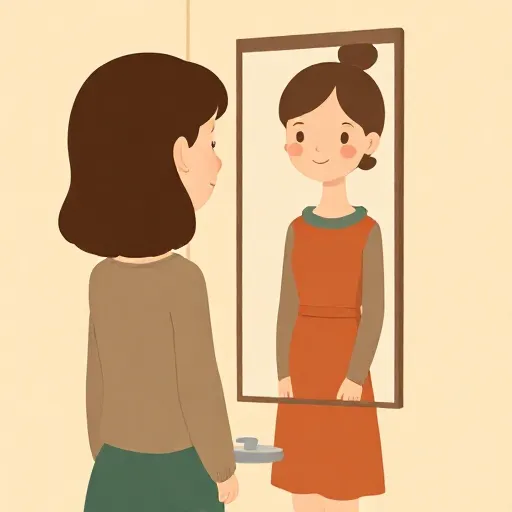
You probably never wondered whether an angel is made of spiritual matter. But the medieval fight hides a question you face every day: when you describe something — or someone — are you uncovering real inner layers, or are you just using different words for one unified thing?
Think about how you describe a friend. You might say, “She’s a body, she’s alive, she’s a person, she’s a musician, she’s shy.” Does that mean she has a physical‑layer, a life‑layer, a person‑layer, a musician‑layer, and a shyness‑layer inside her? Or is there just one her, and all those words pick out different angles on the same whole person?
The medieval thinkers who held the “most famous pair” would say the layers are real — not made of physical stuff after the first one, but real forms stacked in the substance itself. Aquinas would say no: your friend has one substantial form (her humanity) and a bunch of accidents that don’t split her into layers. The way we talk about her doesn’t automatically slice her into separate metaphysical slices.
This is not just about saints and souls. It’s about whether the world comes to us already carved at the joints, or whether our language is a rough net that sometimes catches more than is really there. Next time you get into a messy argument about what someone “really” is, you’re walking on ground that medieval students quarrelled over seven centuries ago.
Think about it
- If you call your dog both “a body” and “a loyal friend,” does that mean your dog has two separate parts — a physical layer and a loyalty layer — or is it just one dog described in different ways?
- Imagine you could peel away everything that makes you “you,” layer by layer. What would be left? Would there be a core that stays the same no matter what you peel off?
- Could two people look at the exact same cat and have completely different ideas about what it is, without either of them being wrong? What would Ibn Gabirol or Aquinas say?