Why Medieval Students Loved Arguing About Impossible Sentences
A sentence that stops the room

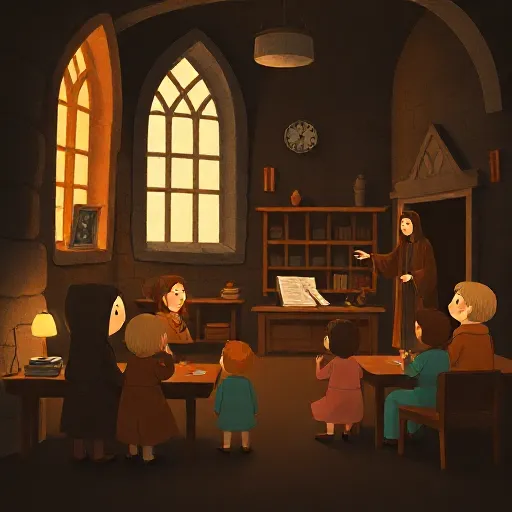
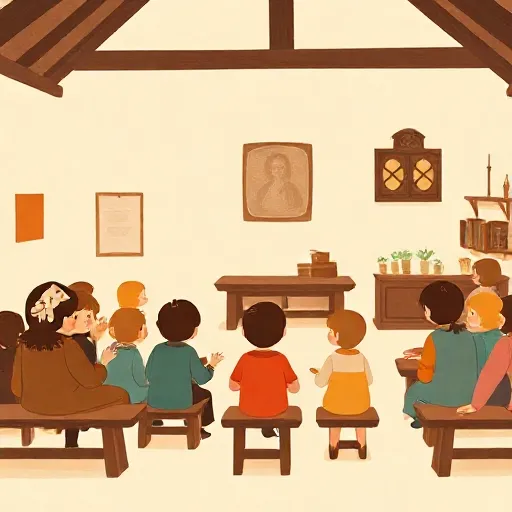
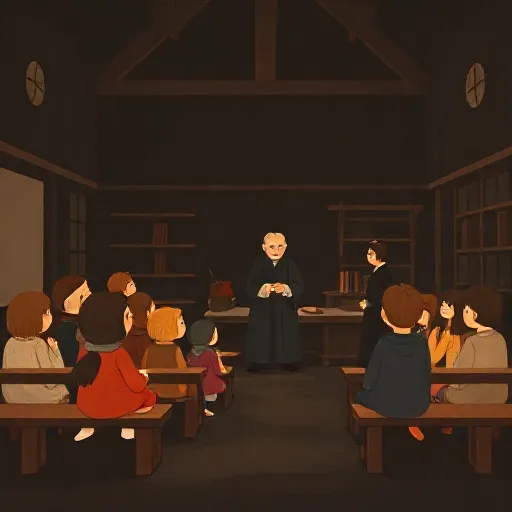
Picture a classroom in 14th-century Oxford. A master reads aloud a sentence in Latin: “Omnes homines sunt asini vel homines et asini sunt asini.” That translates to “All men are donkeys or men and donkeys are donkeys.” A few students chuckle at the phrase “men and donkeys.” Then the laughter dies. The master asks, “Is this sentence true, or false?”
The sentence feels like a joke. But the master is not joking. He expects the students to prove it true—and then prove it false. For the next hour, they will tear the sentence apart, hunt for hidden meanings, and argue until they find the puzzle’s secret. This exercise was called a sophisma (so-FIS-ma), and it was the beating heart of logic training in medieval universities.
What exactly is a sophisma?

A sophisma is not a fallacy or a trick meant to deceive. Medieval thinkers used the word in a precise way. A sophisma is a sentence that is puzzling—odd on the surface, or ambiguous, or perfectly ordinary until you place it in a strange situation. Its job was to make you think about how language works.
Some sophismata were just strange: “This dog is your father” or “A chimaera is a chimaera.” Others hid two meanings inside one string of words. The sentence “All the apostles are twelve” can be read as saying there are twelve apostles (true) or that each apostle is the number twelve (false). Similarly, “The infinite are finite” can sound like a contradiction, but flip the meaning of infinite and it becomes a true statement about how many finite things exist.
A third kind looked harmless until you set it in a special case. Take “Socrates says something false.” If Socrates says nothing else except that very sentence, you get a loop—the ancient Liar paradox. Or consider “Every man is an animal.” Normally true, but what if only one man existed? Would the sentence still work? These puzzles were not just word games; they forced students to question the rules they thought they knew.
The argument game: proving it both ways

Solving a sophisma followed a strict three-step dance. First, you built a proof that the sentence was true. Then you built a disproof showing it was false. Finally, you had to give your own solution and explain where the opposite side went wrong.
Take a real example from Peter of Spain (13th century): “Every animal but man is irrational.” Proof: the claim “Every animal is irrational” is false only because humans are rational animals. So if I make an exception for man, the sentence turns true. Disproof: “Every animal but man is irrational” seems to say that every animal except this individual man is irrational. But that is false—because what about other men? If I point to Socrates, other men are still rational. So the sentence must be false.
Peter of Spain solved it by showing the disproof made a mistake about what “man” stands for. In the original sentence, “man” refers to the human kind in general. In the disproof, “this man” sneaks in an individual. The word “man” shifted its supposition (the thing it stands for) mid-argument. The disproof also changed how the word “every” distributes. Once you see the shift, the puzzle evaporates—but only after you look closely at the logic.
Another example, from Albert of Saxony (c. 1320–1390), is the donkey sentence we opened with. Its proof: read it as “(All men are donkeys or men) and (donkeys are donkeys).” The second part is definitely true, so the whole conjunction is true. Its disproof: read it as “(All men are donkeys) or (men and donkeys are donkeys).” Both parts are false, so the disjunction is false. The sentence is ambiguous between two structures, like a drawing that flips between a duck and a rabbit.
The secret power of little words

Why did medieval thinkers spend so much energy on these puzzles? Because a sophisma often hid its trick inside a syncategorematic word. These are words like “and,” “or,” “if,” “every,” “only,” “not,” and “but.” They don’t name a thing the way “dog” or “stone” does. Instead they build the skeleton of a sentence, directing how other words connect.
A single syncategorematic word could make a sentence powerful or slippery. Consider “Only God being God is necessary.” The word only might exclude everything else from being God (true in medieval theology). Or it might exclude the whole scene “God being God” from being necessary, as if it were optional—which is false. The puzzle dissolves once you distinguish what “only” excludes.
The sentence “The white can be black” (a translation of Album potest esse nigrum) hides a scope problem. If you read it as “The thing that is white can later become black,” it’s true. If you read it as “It can be white and black at the same time,” it’s false. The difference is which idea “can be” covers—the timing of the color change or the whole situation. Medieval logicians sorted these out by making precise distinctions about scope.
Many sophismata were also exponible sentences—sentences that look simple but hide a bundle of smaller claims. “A differs from B” unpacks into “A exists, B exists, and A is not B.” “Socrates ceases to be white” could mean “Now he is white and immediately after he will not be” or “Now he is not white and immediately before he was.” Depending on the theory, the truth changes.
From grammar to the universe

Not all sophismata stayed within logic and grammar. Some tackled questions about motion, time, and infinity. These were called physical sophismata. A group of 14th-century English thinkers, the Oxford Calculators (such as Thomas Bradwardine (c. 1300–1349) and Richard Kilvington), blended sophismata with thought experiments.
Imagine Socrates is too weak to cross a long distance. His strength gradually increases until, at a certain moment, he can cross it. The sophisma asks: “Socrates will begin to be able to cross distance A.” Is that sentence true or false? At what exact instant does “begins” apply? Puzzles like this pushed medieval thinkers to develop a sharper understanding of motion and acceleration—laying groundwork for later physics, even if their approach remained mostly logical rather than experimental.
Theological sophismata were rare but memorable. One examined: “God is in the same way in the devil as he was in the Blessed Virgin.” Another asked, “God knows whatever he has known,” probing the object of God’s knowledge through the logic of the verb “to know.” These sentences used theology not to preach but to test the limits of language when talking about divine things.
Why argue about impossible sentences today?

You have probably never met a sophisma in math class. But the medieval habit still matters. The sophisma taught students to pause before answering, to ask whether a tricky sentence might carry two meanings, and to test their own reasoning by building the strongest case for both sides. That is the core of critical thinking.
Every time you hear a sentence that feels off—“You always get your way,” “That’s just fake news”—you are face to face with the descendant of a sophisma. The words might be simple, but their meaning shifts depending on what you emphasize, what “always” covers, or what counts as “fake.” The medieval answer was not to avoid these sentences. It was to walk straight into them and sort out the logic, piece by piece.
So the next time a sentence bugs you, treat it like a 14th-century student: prove it true, prove it false, and then figure out why.
Think about it
- If a sentence can mean two opposite things depending on how you read it, who gets to decide which meaning is right—the speaker, the listener, or the rules of the language?
- Think of an everyday sentence that can flip its meaning with a tiny change of pace or tone (like “I didn’t say you stole my book”). How would you explain the two meanings to someone who didn’t notice the switch?
- Is a sentence that describes something impossible (like “The mountain sang a song”) completely meaningless, or can it still communicate something real? Why do you think so?