Does Morality Begin with a Baby’s Cry?
Sympathy Starts in the Cradle
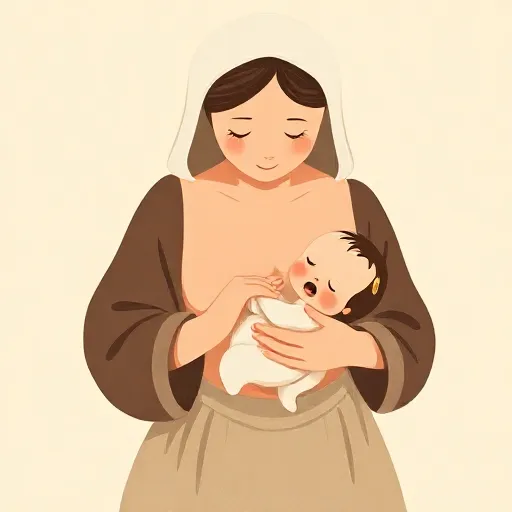
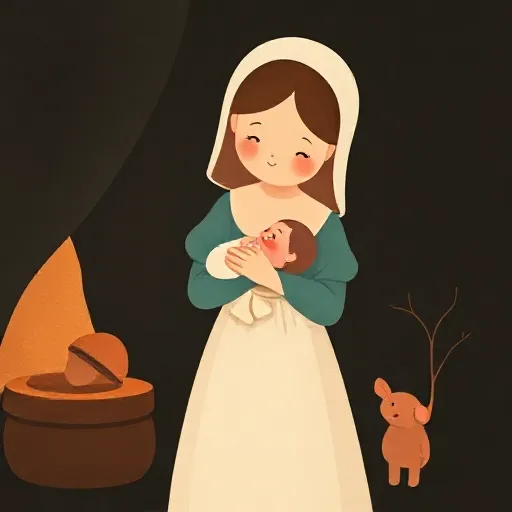
Imagine a wailing baby in a wooden cradle in the 1780s. A nurse lifts the child, pressing the baby’s skin against her own. The crying stops. That tiny moment, argued Sophie de Grouchy (1764–1822), is where every human sense of right and wrong comes from.
Most people in her time thought morality came from God’s commands or from careful reasoning. De Grouchy disagreed. She believed the seed of all goodness is sympathy — the ability to feel what others feel. Her short book, Letters on Sympathy, was published in 1798, right after the French Revolution had turned her world upside down. It was a daring answer to the big question: why do we care about anyone besides ourselves?
De Grouchy’s answer was startlingly simple. Before we can talk, before we can think, we experience pleasure and pain through another person’s body. A baby feels comfort at the breast, then pain when separated. Those raw physical sensations, she said, are the first sparks of morality. They teach us that another being’s closeness matters. From that, all our later ideas about fairness, justice, and human dignity slowly grow. Morality, for her, did not begin with rules. It began in the cradle.
The Salon Philosopher in the Storm of Revolution
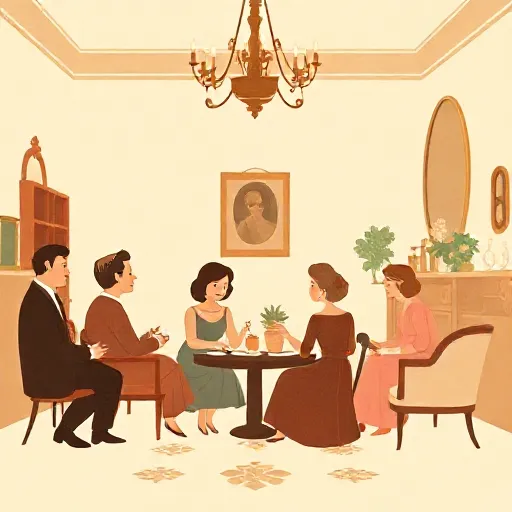
De Grouchy was not a shy thinker. Born to a wealthy family, she was sent to a convent finishing school where she read Voltaire and Rousseau and lost her religion. At twenty‑two, she married the mathematician and philosopher Nicolas de Condorcet (1743–1795). Together they moved into the Hotel of the Mint in Paris and started a salon — a regular gathering where writers, politicians, and foreign visitors argued about freedom and reform.
Their salon became a nerve centre of the French Revolution. De Grouchy spoke fluent English and translated works by Thomas Paine (1737–1809). She also co‑founded a short‑lived journal, Le Républicain, to teach French citizens what a republic — a state without a king — could actually mean. One of her unsigned articles offered a biting joke: why not replace the expensive royal family with mechanical dolls? The automaton king would cost far less and would sign every law the government wanted. Behind the satire was a serious worry. Even a well‑meaning monarch, she and Paine argued, holds domination — absolute power over people who never agreed to it. That power is always a threat to freedom.
When the Revolution turned bloody, Condorcet was declared an outlaw. He died in prison in 1795. De Grouchy, her wealth seized, survived by painting miniature portraits. She then finished her translation of Adam Smith and published her own Letters on Sympathy alongside it. The book was dedicated to her brother‑in‑law, the doctor Pierre‑Georges Cabanis (1757–1808), who shared her fascination with how the body shapes our moral feelings.
A Deeper Well: De Grouchy’s Reply to Adam Smith

Adam Smith (1723–1790) had already made sympathy famous. In his Theory of Moral Sentiments, he argued that we are naturally tuned to other people’s joys and sorrows. De Grouchy admired Smith, but she thought he stopped too soon. Smith described what sympathy does; he never asked where it comes from.
She dug deeper, all the way to the cradle. The first human relationship, she insisted, is not a moral duty but a physical bond — skin on skin, feeding, warmth. Out of that bond, an infant learns to recognise its own pains and pleasures and, later, to notice the same feelings in others. She called that discovery the “first cause” of sympathy. From there, she traced a step‑by‑step development. At first we feel for our nurse. Then our circle widens: family, friends, neighbours. Slowly, guided by reason, we can learn to sympathize with strangers, even with people we never meet.
This was not a completely new idea. The ancient Stoics had a word for it: oikeiôsis, the natural tendency to start by caring for our own body and then extend that care outward to all human beings. De Grouchy gave that old idea a fresh, physiological twist. She and Cabanis both believed that moral feelings begin in the stomach, the skin, the nerves — not in thin air. You might say they thought morality grows like a plant, with roots in the body and branches reaching toward the rest of humanity. In her picture, pleasure and pain are not just things that happen to us; they are the raw material that, shaped by reflection, becomes a sense of justice.
When Laws Forget the Cradle: Justice and Inequality

If sympathy is the glue that holds a society together, what happens when the glue cracks? De Grouchy saw a real danger: extreme inequality. When the very rich and the very poor live in completely separate worlds, she wrote, they stop seeing each other as human beings of the same kind. With that bond broken, men and women will no longer apply the same moral rules to each other. The law becomes a weapon, not a shield.
She took direct aim at the old French legal system, where aristocrats often enjoyed lighter punishments than commoners. The Italian thinker Cesare Beccaria (1738–1794) had already argued that punishments must be equal and predictable, or they lose their power to guide people’s conscience. De Grouchy agreed. A punishment that outrages the public, or that a judge can soften for a friend, makes the whole law feel like a trap set for the weak by the strong. In such a world, she said, ordinary people “are tempted to see criminal laws as made against them and in favour of the rich.”
Her answer was not perfect equality — she thought natural differences in talent and luck would always exist. But she insisted that no one should be so poor that they fall outside the circle of sympathy, and no one so rich that they float above the law. She also pushed for family reforms that often affected women most: easier divorce, renewable marriage contracts, and legal protection for children born outside marriage. These were bold proposals at a time when women had almost no legal rights, and they show how her moral philosophy spilled directly into the law.
The Hidden Engine: Families in the Story of Progress
While her husband was in hiding, he worked on his great unfinished dream: the Sketch of the Progress of the Human Mind. De Grouchy visited him often, and after his death she edited the manuscript and brought it to print. When you compare his handwritten version with her published edition, something striking appears. New passages emphasise the role of families in the long sweep of history.
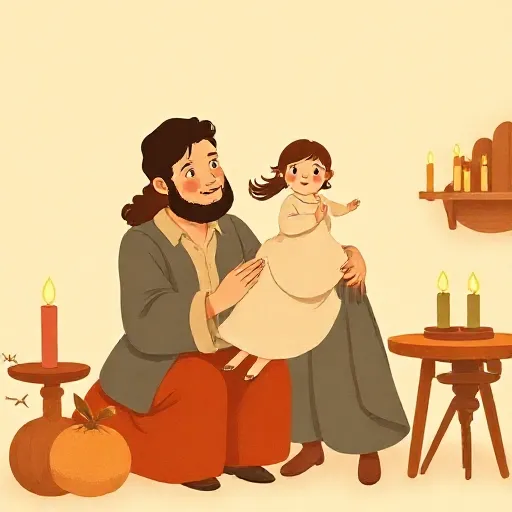
“What the human species actually consists in, the families, subsisting nearly entirely from their labour, has been forgotten,” reads a sentence she added near the end. For centuries, she argued, political history told the story of a few men — kings, generals, brilliant inventors. But real human progress happens in ordinary households where mothers, fathers, and children live, work, and teach each other how to be decent.
This was a profoundly feminist move, even if she never used that word. It put women and the labour of raising children at the centre of history, not in the footnotes. If we only celebrate the rare woman who broke through into a man’s world, de Grouchy implied, we miss the point. Progress depends on men changing nappies, helping daughters with their homework, and seeing family life as just as noble as any public office. Without that quiet, everyday work, the whole grand story collapses.
Why Your Twinges of Sympathy Still Matter

You have probably felt a sharp twinge when a friend is hurting — a kind of physical jolt that makes you want to help. De Grouchy would tell you that this feeling is not a small thing. It is the same power that, carefully nourished, can build a more just world.
Her warning is just as urgent today. When a society lets huge gaps grow between rich and poor, or when laws quietly favour the powerful, that natural twinge grows numb. If we stop seeing each other as equally human, we lose the very source of morality. But her philosophy also carries a hopeful message. Because sympathy starts so early, in such a simple touch, it can be reawakened. Pay attention to the lives of people who seem different from you. Notice when a rule treats someone unfairly. Those small acts are not soft feelings — they are, in de Grouchy’s view, the political work of keeping a society alive.
So the next time you flinch at someone else’s pain, you are not being weak or childish. You are doing exactly what a revolutionary philosopher in a Paris salon believed held the whole human family together.
Think about it
- If a baby grew up without ever being comforted by another person, do you think they could still learn to care about others’ pain? Why or why not?
- De Grouchy believed that our capacity for sympathy can expand to include all of humanity, but also that extreme inequality can break it. Can you think of a time when you felt less sympathy for someone because they seemed very different from you? What might help someone overcome that distance?
- She argued that laws should not have loopholes for the powerful, because that makes people feel like the law is against them. Can you think of a rule at your school or in your town that seems to favour certain people over others? How would you rewrite it to treat everyone equally?