Can You Feel Morality? Shaftesbury’s Revolutionary Idea
A Pamphlet That Started a Fire
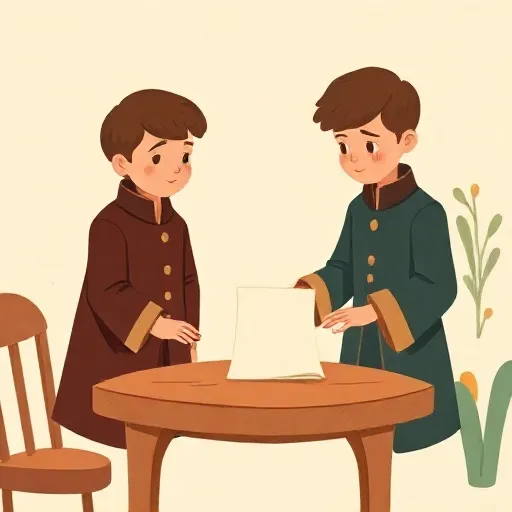
London, 1698. A small printed pamphlet appears in the coffee houses of the city. It has no author’s name. It praises “good nature” and warns against a dangerous idea: that people are nothing but selfish beasts. The unknown writer is Anthony Ashley Cooper (1671–1713), a young aristocrat who will soon become the third Earl of Shaftesbury. His grandfather, the first Earl, was a powerful political figure. Shaftesbury himself was educated by the great philosopher John Locke (1632–1704), and for a while he served in Parliament. But ill health forced him out of politics by age 30, and he turned to writing.
Shaftesbury had a bold conviction: philosophy should not be a dry puzzle for scholars locked in colleges. It should be a tool for becoming a better person — “the art of learning to live well.” He wanted to rescue morality from dark views that said you are only good because you fear punishment, either from a king or from God. He set out to show that virtue is built into human nature itself.
What Makes a Person Truly Good?
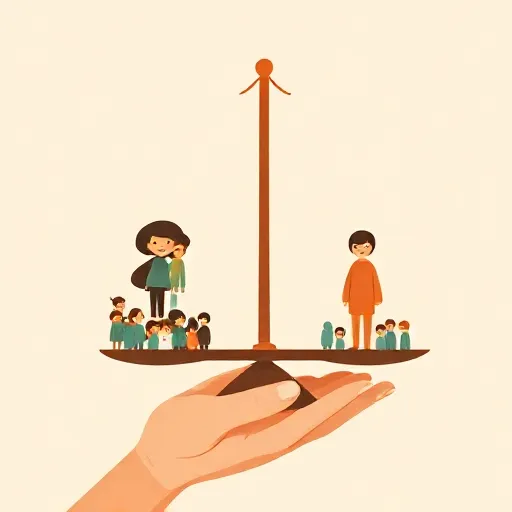
If you help a classmate who dropped her books, are you good just because you did a helpful action? Shaftesbury said no. Virtue is about your motive — the feeling that pushes you to act. For him, the height of goodness is to “love the public” and to promote the interest of the whole world, as far as you can. A truly virtuous person works for the good of all humankind, not because it gets them anything, but simply because they care.
Notice that this is a feeling, not just a thought. Shaftesbury believed everything that moves us to act comes from affections — inner drives like love, pity, or anger. Reason alone can’t make you jump. It can help you figure out the best way to help others, but only a feeling can push you to actually do it. So if you are going to be good, your affections must point toward the well‑being of everyone, not just your own.
But here’s the twist. Humans have a special power that other animals lack: we can reflect on our own feelings. You feel a desire to comfort a friend who is sad. Then you become aware of that desire and a second feeling arises: you like the fact that you feel that caring impulse. Or you feel an urge to mock someone who embarrassed you. When you notice that urge, a different second feeling kicks in — a dislike, an inner “ugh.” Shaftesbury called these second‑order feelings the moral sense.
Your Inner Mirror: A Feeling About Your Feelings
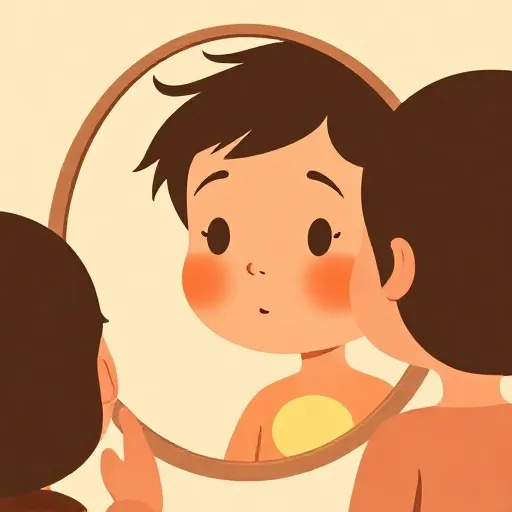
The moral sense is like having a small, constant companion that reacts to your own motives. When you act out of genuine kindness, it hums with warmth. When you act out of spite, it gives you a nudge of distaste. Shaftesbury insisted this sense is as natural to us as an eye is to seeing.
This was a huge break from thinkers like Thomas Hobbes (1588–1679), who thought humans are driven only by self‑interest and need a terrifying ruler to keep them in line. For Shaftesbury, the moral sense is a first principle of our makeup; you don’t acquire it from a priest or a king. He argued that no belief or philosophical opinion can directly destroy it — only a stronger contrary affection can crowd it out. Reason may guide, but affection drives the car.
Later philosophers — especially Francis Hutcheson (1694–1746) and David Hume (1711–1776) — ran with this idea. They too said morality is based on sentiment, not on cold logic. But a debate quickly arose: does your moral feeling constitute rightness, so that rightness just is the fact that you approve? Or does your feeling detect a real, mind‑independent goodness, the way your eyes detect a real tree? Shaftesbury often sounded like a realist — someone who thought moral truths exist independently of our reactions. He said virtue has an “immutable independent Nature” that even God’s will cannot change. But sometimes he seemed to say that our inner feelings are the final word. This live dispute still shapes moral philosophy today.
Self‑Interest: The False God of Hobbes
Shaftesbury waged an all‑out war on the idea that people only ever act for their own advantage. He pointed at ordinary life: we show “civility, hospitality, humanity towards strangers or people in distress” with no possible personal gain. Even war and conflict, he argued, are usually fueled by love of group or clan, not by selfishness. The “thorough‑selfish” character is too self‑absorbed even to take a side.
He aimed a clever arrow at Hobbes himself. If Hobbes truly believed everyone is selfish, why did he labor so tirelessly to write his philosophy — putting himself in danger — just to warn people? A purely selfish man would have flattered the powerful, not risked being a martyr for truth. Hobbes’s own life refuted his theory.
Shaftesbury was equally fierce against the view that morality depends on rewards and punishments from God or a ruler. True virtue is not a business transaction. He wrote that if a saint had no virtue beyond what was raised by the hope of a heavenly prize, “I should never think him worthy of mine.” Stressing reward, he believed, actually corrupts goodness — it crowds out the pure concern for others and makes virtue mercenary.
But then Shaftesbury turned around and wrote a long section arguing that virtue does make you happiest. The person with a well‑ordered, harmonious mind enjoys mental pleasures far greater than bodily ones, and these pleasures are within your own control, safe from fortune’s ups and downs. So is he saying we should be moral because it pays? Many philosophers think Shaftesbury meant something subtler: the virtuous person cares about others for their own sake, and that very caring is the experience of true happiness. Virtue is its own reward, not a tool to grab something else. Others argue he was simply inconsistent. The puzzle remains open.
When Beauty and Goodness Become One
Shaftesbury saw a deep link between ethics and aesthetics. Beauty, for him, is harmony, proportion, balance — a unity of design. And a human character can be just as beautifully arranged as a musical chord. A person whose affections are balanced, whose care reaches outward to all of humanity, is a beautiful soul.
He noticed something striking about how we experience beauty. When you admire a starry sky or a perfect wave, you are not calculating how you can use it; you are simply enjoying it for its own sake. This disinterested appreciation was a brand‑new idea. Before Shaftesbury, few had isolated the notion that aesthetic pleasure is utterly distinct from wanting to own or control something. He used this to explain moral commitment: just as a true artist would rather starve than produce dishonest work, a genuinely honest person never deliberates about being honest — they act from their nature, “in a manner necessarily, and without reflection.”
If beauty and goodness are the same, then cultivating your taste for beautiful things can make you a better person. Shaftesbury even believed that open public discussion, and especially the “test of ridicule,” could improve society. Let people joke and laugh at ideas: the false ones will crumble under mockery, while the true ones will stand. Liberty of speech, he argued, is essential for polishing our minds and manners — we “rub off our corners and rough sides by a sort of amicable collision.”
Why Shaftesbury’s Inner Compass Still Points

You have probably felt that jolt of warmth when you did something generous, or that tiny sting of shame after a mean remark. Shaftesbury would say that is your moral sense at work — a feeling that belongs to you, not something installed by parents or teachers. He believed that even someone who doubts everything outside their own mind can still know their own passions and use them as a guide.
Today, scientists study how emotions shape moral judgment, and philosophers still argue whether values are discovered or invented. The idea that morality is a sense, like taste or sight, remains powerful. And Shaftesbury’s insistence that virtue aims at the good of the whole — not just your own tribe — is a challenge that stretches from the 1700s to your own playground, your own nation, your own planet.
Think about it
- If a friend told you they never feel any inner approval or disapproval of their own actions — they just follow rules to avoid trouble — would you call them a good person? Why or why not?
- Shaftesbury believed we can test ideas by letting people laugh at them: false ones will be exposed and true ones will survive. Do you think ridicule always helps truth? Can you imagine a case where joking about an idea could harm something good?
- Think of a time you felt a strong sense that something was unfair, even though no one had taught you it was wrong. Where do you think that feeling comes from?