Why Be Good? John Locke’s Fight Between Reason and Reward
A Late-Night Argument That Changed Everything
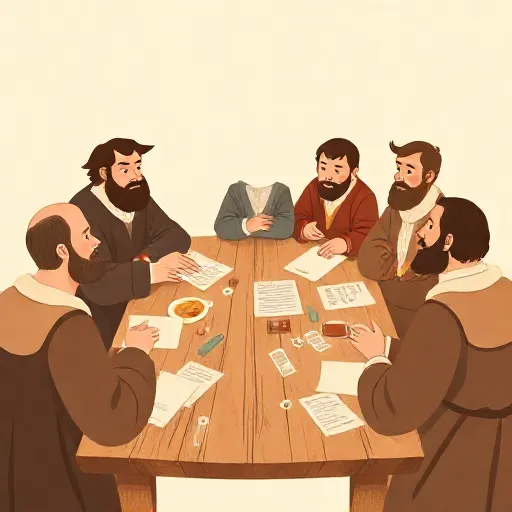
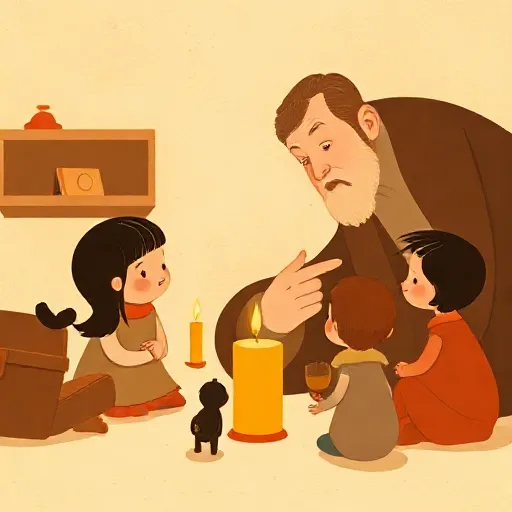
It was 1671. John Locke (1632–1704) sat with five or six friends in a room lit by candles. They were arguing about something remote from what would become his life’s work—morality and revealed religion. But the conversation hit a wall. No one could agree. Locke later said that at that moment he realized they had to first figure out what the human mind could actually know. So he decided to write a book about human understanding. That book became his famous Essay Concerning Human Understanding.
That night started something huge. Locke became convinced that morality was the most important thing we could study. He called it “the proper Science and Business of Mankind in general.” But he never wrote a single book just about ethics. Instead, he left his moral ideas scattered across many works—and those ideas sometimes seemed to pull in opposite directions. That puzzle has kept philosophers busy for over three centuries.
The Dream of a Moral Mathematics

Locke believed that moral rules were natural law—laws woven into the fabric of the universe by God. And just like mathematical laws, he thought they could be discovered by thinking clearly.
He put it boldly in the Essay: “Morality is capable of Demonstration, as well as Mathematicks.” This meant you could start with basic, self-evident truths about God and human nature, then reason step-by-step to firm conclusions about right and wrong. Locke even offered examples. Take the rule “Where there is no property, there is no injustice.” If you define property as a right to something and injustice as violating that right, then the statement follows necessarily—like a proof in geometry. For him, these were modal ideas, pure concepts built by the mind, not copied from things in the world. And because the mind created them, it could understand them completely.
But why should we bother doing all this reasoning? Locke’s answer had a dash of ancient purpose: humans have a built-in goal. Just as a watch is made to tell time, human reason is made to figure out our moral duty. When we use reason that way, we are living the life God designed for us.
Pleasure and Pain: The Engines of Human Action
At the very same time, Locke held a second, very different view. He was a hedonist about human motivation: everything we do, we do because of pleasure and pain. In the Essay he wrote that if we felt no pleasure or pain at all, we’d never lift a finger or think a single thought. Good and evil, at bottom, are nothing but pleasure and pain, or what causes them.
So what makes something morally good, rather than just tasty or fun? Locke’s answer was law. Moral good, he said, is “the Conformity or Disagreement of our voluntary Actions to some Law, whereby Good and Evil is drawn on us, from the Will and Power of the Law-maker.” In other words, an act is morally good when it matches a rule set by a rightful authority—and that authority attaches reward to obedience and punishment to disobedience. Without those rewards and punishments, Locke argued, a law would be powerless. Calling something a law means nothing unless the lawmaker can back it up.
So now we have two pieces: (1) reason can figure out God’s moral law, and (2) pleasure and pain—especially in the form of divine rewards and punishments—are what actually make us follow it. But can these two pieces really fit together?
The Pirate and the King: Two Reasons to Obey
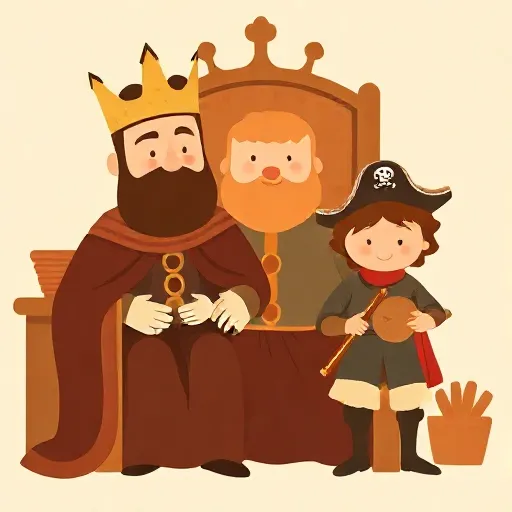
Many scholars have thought Locke simply failed to join his two views. They argue that a morality based on cold reason and a morality based on hot feelings just don’t match. But some see a smarter design: reason tells us what is right, and pleasure and pain give us the motive to actually do it. On this story, hedonism fills a motivational gap.
However, Locke himself gave us a clue that the story is richer. In an early work, Essays on the Law of Nature, he imagined two kinds of obedience. Imagine obeying a pirate because he has a sword at your throat. Now imagine obeying a lawful king because you recognize his rightful authority. Locke insisted these are completely different grounds for action. You obey the pirate out of fear; you obey the king “for conscience’ sake”—because it is right. Reason alone seems to give you a reason to act.
But wait: if all motivation comes from pleasure, how can conscience move you without a reward? Locke answered with a special kind of pleasure. In a short essay he wrote about a person who gives away a meal to save a starving man. That person, Locke said, feels “more and much more lasting pleasure in it than he that eat it. The other’s pleasure died as he eat and ended with his meal. But to him that gave it him ‘tis a feast as often as he reflects on it.” Doing your duty feels good in a deep way, quite different from getting a prize.
Why Sanctions? The Backup Plan for Flawed Humans

So if acting morally brings its own quiet joy, why all the talk of heaven, hell, and divine rewards? Locke was surprisingly realistic about people. He knew that most of us don’t spend hours calmly thinking through moral proofs. We are busy, distracted, or simply unwilling to follow where reason leads. The inherent pleasure of doing good can get lost in the noise.
For those cases, Locke said, God wisely added a stronger engine. Sanctions—rewards and punishments in an afterlife—make sure that even when we ignore the quiet voice of conscience, the virtuous life is still clearly in our interest. In his view, rewards and punishments are a kind of backup system, a way to “enforce morality the stronger” when the natural motive of loving the right wears thin. They turn morality into a true system of law that no one can ignore without facing consequences. But they don’t replace the deeper reason to be good; they just guard it.
Why It Still Matters: Head vs. Heart in Your Own Choices

You probably don’t spend your afternoons trying to prove moral rules like geometry. But Locke’s puzzle is closer to your life than you’d think. You know you should do your homework instead of gaming all night. You know you should stand up for someone being bullied, even if it’s scary. Your mind gets it. Yet something else—a craving, a fear—pulls you the other way.
Locke believed that in a perfect world, simply seeing what is right would be enough to move you. But he also knew the world isn’t perfect. So he built a safety net of rewards and punishments. That picture still shapes how we think about laws, parenting, education, and even self-control. It leaves us with a question that has no easy answer: is it enough to be good just because you know it’s right, or do you need something sweeter—or scarier—to get you there? Locke never settled it completely. And three hundred years later, neither have we.
Think about it
- Locke thought you could prove moral rules like math. Can you think of a moral rule that everyone would agree on if they just thought carefully enough? Or is right and wrong always up for debate?
- If you knew you’d get no reward for doing the right thing—not even a good feeling—would you still do it? Why?
- If you were designing a school, would you rely on students wanting to be good, or on rules with clear penalties? What might Locke say about your choice?