Why Be Good? The Ancient Answer That Might Surprise You
A Philosopher Chooses Death Over Injustice
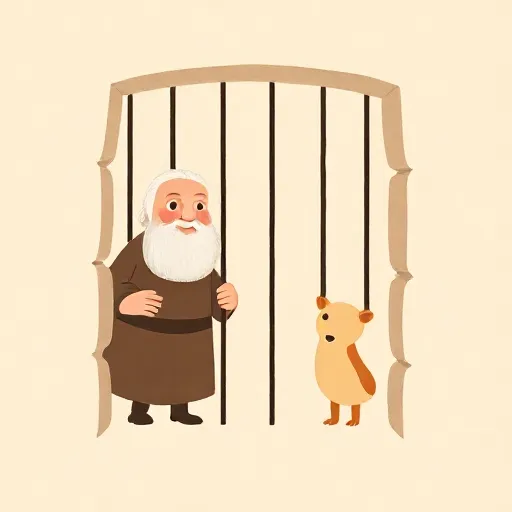
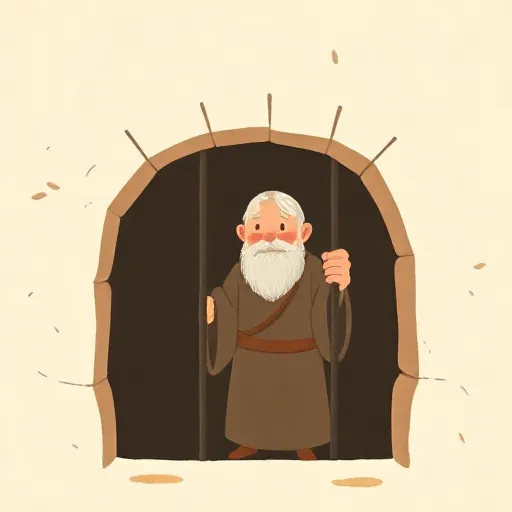
In 399 BCE, an Athenian citizen named Socrates (c. 470–399 BCE) was sentenced to death — not for violence, but for asking too many questions. His friends arranged an escape plan. All he had to do was slip out of jail after dark. Socrates said no. His reason shocked them. He argued that running away would be unjust, and doing something unjust was worse than losing his life. For Socrates, being a good person mattered more than staying alive.
To understand why, you need to know one of the biggest ideas in ancient Greek philosophy: eudaimonia. The word is often translated as “happiness,” but it doesn’t mean a cheerful mood. It means living well and doing well — the kind of life you could look back on and call truly excellent. Ancient philosophers believed everyone wants eudaimonia. The real puzzle was how to get it. And almost all of them agreed that virtue, or human excellence (the Greek word is aretê), is the key. Courage, justice, wisdom, and moderation aren’t just nice qualities; they’re supposed to make a person’s whole life go well.
Virtue = Knowledge? The Radical Claim of Socrates

Socrates went further than just linking virtue and happiness. He made a startling claim: virtue is knowledge. If you truly know what is good, he thought, you will do it. No one ever willingly chooses what is bad for them, once they fully understand what’s at stake. This means that all wrongdoing comes from ignorance — not from a weak will.
His contemporaries found this idea hard to swallow. Surely you’ve experienced something like this: you know you shouldn’t eat a third slice of cake, but you want it anyway. That inner battle is called akrasia — being “overcome” by desire, or acting against your own better judgment. Socrates denied that akrasia is real. He insisted that if you really and fully know the cake will make you feel awful and keep you from something more worthwhile, the desire for it will disappear. You only go wrong because you mistakenly think it’s a good idea, at least in the moment.
He tried to prove this by comparing wisdom to a master craft. A carpenter doesn’t just own tools; she knows how to use them to build something solid. Likewise, wisdom is the knowledge that lets you use everything else — health, money, courage — correctly so that your life truly benefits from them. Without wisdom, those things are useless, even dangerous. For Socrates, wisdom alone guarantees happiness. That’s why he spent his days in the marketplace, pushing people to examine their souls and seek real understanding rather than wealth or fame.
Plato’s Three-Part Soul: The Charioteer and the Wild Horses
Socrates’ student Plato (428/427–348/347 BCE) kept the connection between virtue and happiness but completely rethought how the soul works. He noticed that people often feel torn inside. You really do want to scream at your sibling, but something else inside tells you that’s a bad idea. To explain this, Plato argued the soul has three distinct parts.
First, there is reason, which calculates what is best for the whole person. Second, there are appetites — the hungers for food, drink, and comfort that don’t care about tomorrow. Third, there is the spirited part (thumos), an aggressive, honor-loving drive that can feel anger at injustice — or anger at yourself when you give in to a lazy desire.
Plato compared the soul to a city with three classes, and later to a charioteer with two horses. Reason should rule, like a wise governor. The spirited part should be its ally, supplying energy and courage. The appetites must obey, like good citizens, or the whole person falls into chaos. When each part does its own job, the soul has justice — and justice in the soul is exactly what it means to be a psychologically healthy, happy person. A just soul won’t lie, steal, or betray friends, because those actions come from appetites or anger running wild. So virtue isn’t just a list of rules; it’s an inner harmony. And that harmony, Plato insisted, is what makes a life truly worth living — even if you lose everything else.
Aristotle: Hitting the Bullseye of Good Character

A generation later, Aristotle (384–322 BCE) agreed that happiness is about excellent activity of the soul, but he put the focus on practice rather than just knowledge. He started with a simple idea: everything has a function (an ergon). A flute player’s function is to play the flute well; a human’s function is to use reason well — both in thinking and in shaping actions and emotions.
So what does it look like to use reason well in daily life? Aristotle’s answer is that moral virtue is a reliable disposition to feel and act in the right amount — the mean between two extremes. For example, courage is the mean between cowardice (too much fear) and recklessness (too little fear). Moderation sits between overindulgence and indifference to pleasure. Finding that mean isn’t like solving a math problem; it depends on the situation and requires practical wisdom (phronêsis) — the skill of knowing what a good person would do right now.
Notice how this ties virtue to happiness. Happiness isn’t a prize you win after being good. It is the active life of doing things virtuously — being brave when it matters, fair with friends, and thoughtful about what you pursue. But Aristotle admitted a sticky problem. Can you really be happy if you lose your health, your friends, or your home in a disaster? He worried that external goods do matter, even if virtue is the most important part. His honest struggle with that question has kept philosophers debating him ever since.
Stoics: Virtue Is All You Need — Even If You Lose Everything
The Stoics, including Zeno of Citium (c. 334–262 BCE), solved Aristotle’s problem in a daring way. They argued that health, wealth, and even life itself are not actually good — they are just preferred indifferents. Only virtue is good. Only vice is bad. Everything else is neutral material for a virtuous life.
Why would anyone believe that? The Stoics thought that if your happiness depends on things that can be taken away by sickness, chance, or an enemy, you can never be truly secure. Real happiness must be something you control. And the one thing you can always control is your assent — the judgments you make about what is good and what is worth doing. The Stoic sage trains herself to feel no destructive passions like rage or terror, because those emotions are based on the false belief that some external thing is truly good or bad. Instead, she focuses entirely on living in agreement with nature and with reason — and that is enough for a smooth, tranquil life.
This is extreme, even by ancient standards. But the Stoics found a practical way to think about it. Imagine an archer trying to hit a target. Her real goal isn’t to make the arrow hit the center, because a sudden gust of wind might blow it off course. Her goal is to do everything in her power to shoot well. Likewise, the Stoic’s goal is to choose virtuously — not to guarantee every outcome. Virtue alone, they said, is the art of living well, no matter what happens.
Why This 2,500-Year-Old Question Still Matters Today

None of these ancient thinkers ever fully won the debate. Socrates’ idea that knowledge alone makes you good seems to overlook how messy our desires really are. Plato’s harmony of the soul sounds inspiring, but is it enough to explain why you shouldn’t cheat a stranger? Aristotle left a crack of doubt about whether luck can ruin a good person’s happiness. And the Stoics’ dismissal of everything outside your control can feel both brave and hard to swallow.
What makes these theories still alive is that they won’t let you separate being “good” from being “well.” They force you to ask: would you rather be a dishonest person with a comfortable life, or a just person who struggles? And they push you to think about what internal resources — like self-control, courage, or wisdom — you could build so that you’re not at the mercy of every disappointment or unfair situation.
The next time you decide whether to return a lost wallet, stand up to a rumor, or keep a promise when it costs you something, you’re not just following a rule. You’re answering an ancient question about what kind of life is worth longing for. And that’s a question no time period can close.
Think about it
- If you could be the richest person in the world but also terribly selfish, or a generous person who earns just enough to live, which life would be better — and why?
- Can you imagine a situation where doing the brave or honest thing would make you less happy? Would you still do it?
- If a machine could let you feel cheerful all the time no matter what happens, would you use it — or would something be missing from that kind of life?