
Why Did Socrates Think No One Wants to Be Bad?
The Man Who Couldn’t Stop Asking
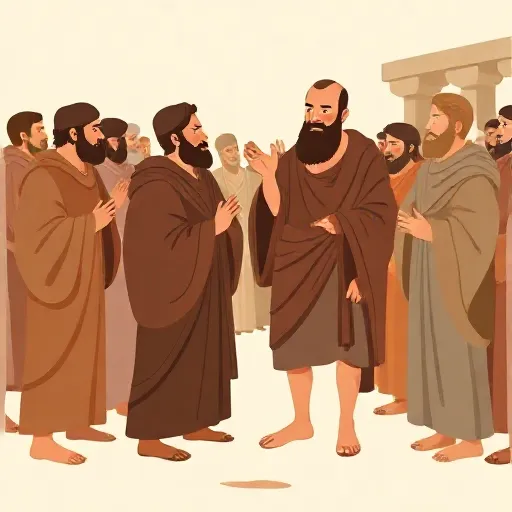
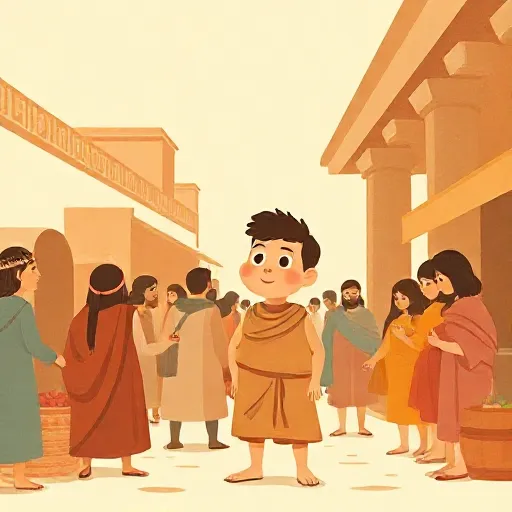
In 399 BCE, an old man with a snub nose stood before 500 Athenian jurors, accused of corrupting the young and rejecting the city’s gods. He wasn’t a politician or a general. He was Socrates (469–399 BCE), a thinker who had spent decades wandering the marketplace, stopping anyone who would listen with strange questions like “What is courage?” and “What does it mean to be a good person?” His trial, recorded in Plato’s Apology, was no ordinary defense. Socrates refused to beg for his life. Instead, he explained why he would never stop questioning — and why that made him the city’s greatest gift.
Socrates never wrote anything down. Everything we know about him comes from his student Plato and a few other ancient sources. The dialogues Plato wrote about Socrates’ last years — like the Apology, Crito, Euthyphro, and Protagoras — are thought to capture the historical Socrates most closely. And at the center of them all lies a radical idea: that no one ever does wrong on purpose, if they truly know what’s right.
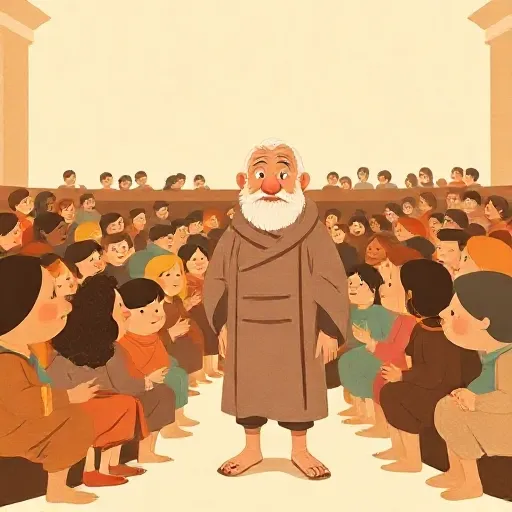
How did he get there? It started with a mystery. The oracle at Delphi, the most famous prophet in Greece, had declared that no one was wiser than Socrates. This baffled Socrates, because he felt he knew nothing important. So he set out to test the oracle by questioning people who claimed to know about virtue — politicians, poets, craftsmen. Time and again, he found that they couldn’t back up their claims. Their answers crumbled under his questioning. Socrates concluded that the oracle’s message was that human wisdom is worth little; the wisest person is the one who knows how little he knows. But this made him unpopular, because nobody likes being shown they don’t understand.
His method, called elenchus (Greek for “cross-examination” or “refutation”), was simple but relentless. He’d ask a person to state a belief — say, what justice is. Then he’d ask more questions until the person’s answers clashed with their original claim. The result was aporia, a state of confusion and impasse. Socrates didn’t do this to be mean; he believed it was a kind of medicine for the soul. He once said that a life without self-examination is not worth living.
What Does “Courage” Mean, Really?
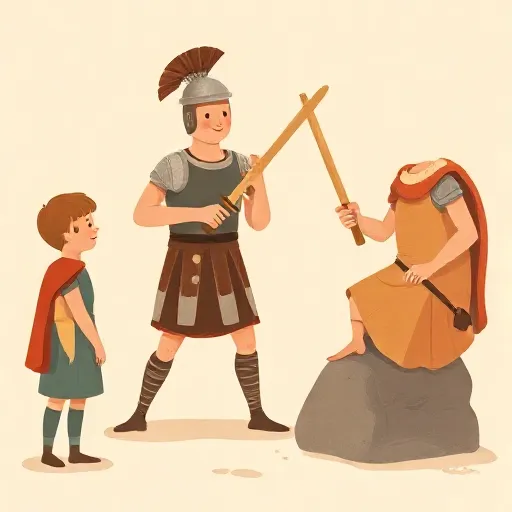
Socrates wasn’t satisfied with vague ideas about virtues like courage or reverence. He wanted definitions that would survive any test. In several dialogues, he pushes people to say what a virtue really is, not just give examples. In the Laches, two famous generals, Laches and Nicias, try to define courage. Laches first says courage is “staying at your post and not running away.” But Socrates points out that he himself showed courage while retreating from a lost battle — so courage can’t just be standing still. Laches then guesses courage is “a kind of endurance of the soul,” but that fails too, because foolish endurance isn’t good, and courage is always something fine.
Nicias has a fancier idea: courage is knowledge of what should terrify you and what shouldn’t, in war or anywhere. That sounds brilliant — until Socrates shows that this kind of knowledge would be knowledge of future good and evil, which seems to be all of virtue, not just courage. If courage is really that broad, then it can’t be one virtue among many. Nicias is stuck. The conversation ends in aporia.
This pattern repeats across the dialogues. In the Euthyphro, a self-proclaimed expert on piety tries to define reverence. He says it’s “what all the gods love.” Socrates counters: Is it reverent because the gods love it, or do the gods love it because it’s reverent? If the gods’ love makes it reverent, then we haven’t explained what makes something worthy of their love. And if different gods disagree, the definition falls apart. Euthyphro can’t give a satisfactory answer.
Socrates is after something demanding. A good definition must (1) cover all cases of the virtue, (2) exclude things that aren’t virtuous, and (3) explain why the virtue is what it is — just like a definition of a triangle explains it by straight sides and three angles, not by the fact that geometers enjoy it. He seems to think that if you don’t know the definition, you can’t reliably judge whether a particular action is courageous or reverent. Some scholars call this the priority of definition: you need to know what X is before you can identify X in real life. Not everyone agrees that Socrates really held that strong view, but it’s clear that he valued precise understanding.
Is Virtue a Kind of Expert Knowledge?
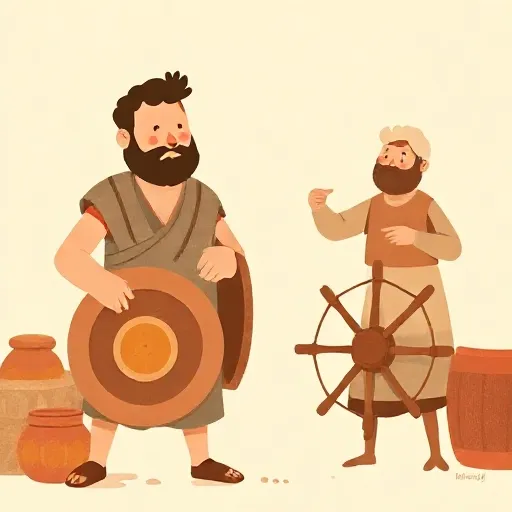
While searching for definitions, Socrates keeps comparing virtue to techne, a Greek word for expert knowledge or craft. Navigation, medicine, pottery — these are teachable skills with clear goals. A doctor knows how to produce health, and a navigator knows how to guide a ship safely. Can virtue work the same way? If so, there should be experts who can teach it. But Socrates doubts that virtue can be taught. In the Protagoras, he argues that the wisest Athenians couldn’t pass virtue on to their children. The famous sophist Protagoras (a traveling teacher, 5th century BCE) disagrees and claims he teaches good judgment and political effectiveness.
Protagoras gives a long speech arguing that all humans have a basic capacity for justice and reverence, and that society educates people in virtue from childhood — just as it teaches language. Socrates doesn’t attack that directly. Instead, he steers the conversation toward whether the virtues are really separate abilities or all one thing. He leads Protagoras through a series of arguments, aiming to show that wisdom, justice, courage, and self-control are deeply linked — maybe even the same knowledge applied to different situations. This is the unity of virtue thesis. If all virtues boil down to wisdom about good and bad, then having real wisdom would make you brave, just, and self-controlled all at once.
The idea that virtue is knowledge is called intellectualism. For Socrates, the healthy soul is like a healthy body: it’s undivided, living in harmony with what it knows to be good. He doesn’t picture the soul as having warring parts (that comes later in Plato’s Republic). In these early dialogues, the soul is a unity. If you truly know what’s good, nothing inside you fights against doing it. But this leads to one of the wildest claims in philosophy.
The Weirdest Argument: No One Does Wrong on Purpose
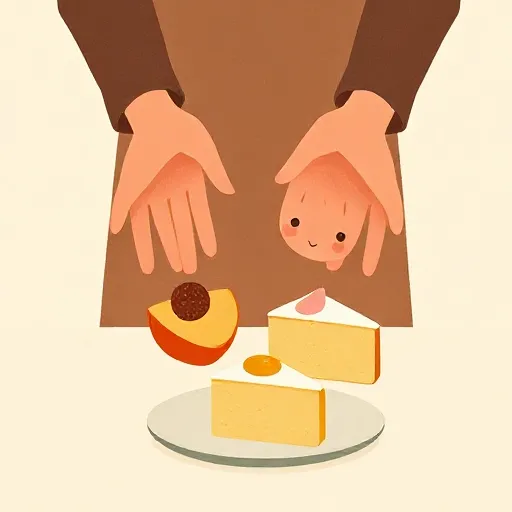
Most people think you can know what’s right and still choose to do wrong — because you’re tempted by pleasure or carried away by anger. Aristotle later called this akrasia (weakness of will). Socrates flatly denied it’s possible. In the Protagoras, he offers a surprising argument. Imagine you are deciding what to eat. You know that one food will make you sick later, but it tastes amazing now. People say, “I knew it was bad, but the pleasure overpowered my knowledge.” Socrates says that’s nonsense.
He asks: What makes a choice good or bad? If the only measure is pleasure and pain, then far-off pleasure (like being healthy tomorrow) weighs just as much as immediate pleasure (the taste now). If you truly know that the total pleasure is greater if you skip the unhealthy food, you can’t at the same time choose the less pleasurable option. The reason people mess up, Socrates suggests, isn’t that pleasure overpowers knowledge; it’s that they miscalculate — they don’t really know what’s better. In other words, every time you do something wrong, there’s a mistake in your thinking. No one errs willingly.
This doesn’t mean Socrates thought people are blameless. If you hurt someone, you were ignorant of what true goodness or justice required. The proper response isn’t punishment for revenge, but education — teaching the person to see clearly. In the Apology, he says he would never intentionally corrupt the young, because if he harmed them he’d be harming himself. That’s because, for Socrates, doing wrong damages the most important part of you: your soul.
But there’s a twist. In the short dialogue Hippias Minor, Socrates argues the opposite: that someone who does wrong on purpose is better than someone who does it by accident — just like a skilled athlete who trips on purpose is better than a clumsy one who falls by mistake. That conclusion makes Socrates uncomfortable, and he abandons it. The dialogue seems designed to expose flaws in the sophist Hippias’s assumptions, not to state Socrates’ real view. Scholars debate whether the argument is serious or just a trap.
Why He Refused to Escape from Prison

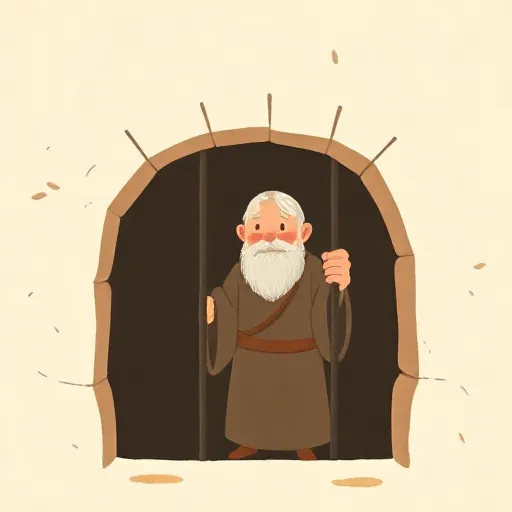
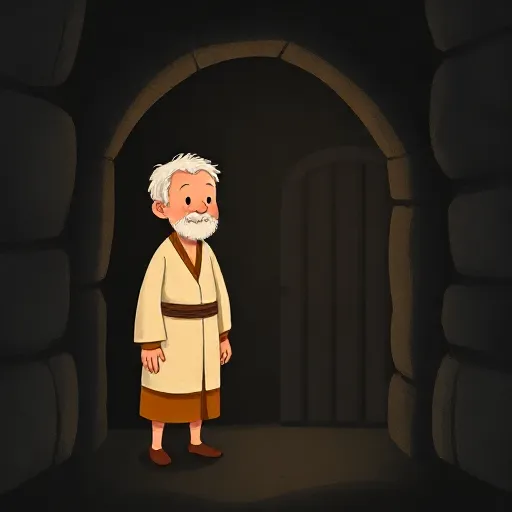
After his trial, Socrates was sentenced to death by drinking poison hemlock. While he waited in prison, his wealthy friend Crito bribed the guards and planned an escape. All Socrates had to do was walk out. But in the dialogue Crito, Socrates refuses. His reason rests on a single bedrock principle: it is never right to do wrong, even when you’ve been wronged first. If escaping would mean breaking the laws of Athens unjustly, he would rather die than damage his soul.
Socrates imagines the laws of Athens coming to life and questioning him. They remind him that he chose to live in Athens his whole life, enjoying its protection and benefits, and never tried to change the laws he disagreed with. An agreement, even an unspoken one, must be kept if it’s just. To run away now would be like biting the hand that fed you. Crito can’t answer the argument. Socrates accepts the cup of poison.
This decision still makes people uneasy. In the Apology, Socrates had said he would disobey a court order to stop his philosophical mission. How can he obey the death sentence but not the order to be silent? Scholars puzzle over this, but the heart of the matter is that for Socrates, nothing — not even life itself — outweighs the health of the soul. Acting wrongly is a moral injury, a disease of the self that’s far worse than physical illness. You should care more about your soul than your body, because the soul is what you truly are.
Why This 2,400-Year-Old Argument Still Zings

Socrates didn’t leave us a tidy rulebook. He left a method: keep asking, keep testing, and never assume you’ve got it all figured out. Every time you feel certain about right and wrong, his voice whispers from that Athenian courtroom: “Have you really examined that?” Can you define honesty without pointing to examples? If a friend does something cruel because they don’t understand the harm, should you punish them or teach them? And if no one does wrong on purpose, what does that mean for how we treat people who hurt us?
These aren’t just school questions. They shape real life — in friendships, in classrooms, in how you decide who to believe. Socrates would challenge you to look for the knowledge behind your decisions. Not because he thought you’d find a perfect answer, but because the search itself makes you a little bit wiser. And that, he’d say, is something worth living — and maybe dying — for.
Think about it
- Have you ever been completely sure about what was right, but someone else was just as sure about the opposite? What could you ask them to test both beliefs?
- If a person does something wrong because they really don’t understand the harm, should they get the same punishment as someone who understands but does the same thing anyway?
- Try to define a virtue like “patience” without using any examples. How hard is it? Does your definition hold up if someone plays Socrates and questions every word?