Socrates Said He Wasn’t Wise. Was He Right?
The Oracle’s Answer That Started It All
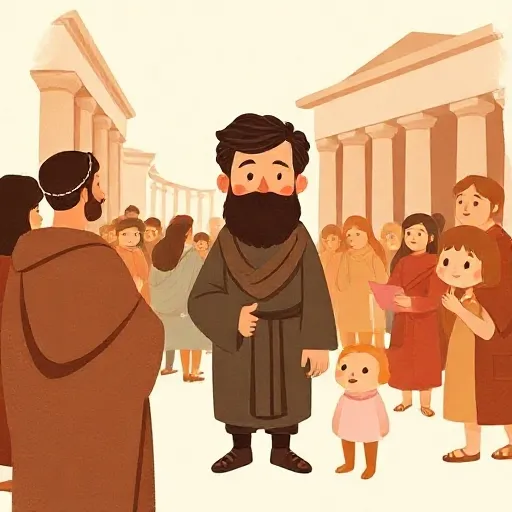
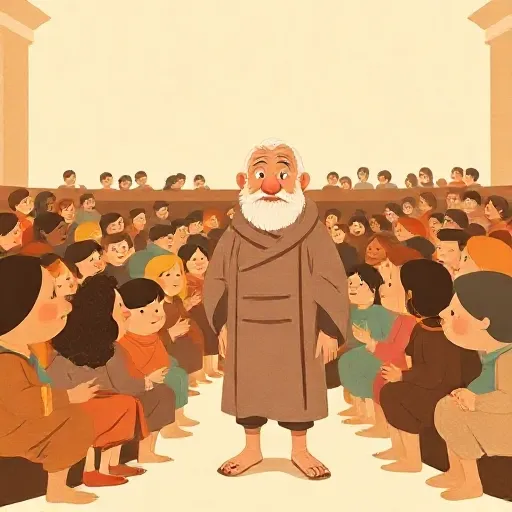
Around 430 BCE, an Athenian named Chaerephon asked the Oracle at Delphi a straightforward question: “Is anyone wiser than Socrates?” The priestess, believed to speak for the god Apollo, answered: no one is wiser.
When Socrates (c. 470–399 BCE) heard this, he was baffled. He felt sure he lacked wisdom. So he set out to prove the Oracle wrong. He questioned politicians, poets, and skilled craftsmen — people with big reputations for knowledge. After each conversation, he discovered the same thing. The politicians claimed to understand justice, but couldn’t explain it. The poets recited beautiful verses, but couldn’t say what their own poems meant. The craftsmen knew their craft well, but then assumed they knew about everything else too.
Socrates realized something. Unlike them, he did not claim to know things he didn’t know. That might be the one thing that made him wise. This idea is an example of epistemic humility: wisdom as knowing your own limits. But is that really enough? The whole puzzle of what wisdom is starts right here.
Is Wisdom About Being Humble?

You might think the story shows that wisdom means believing you are not wise. Call that Humility Theory 1. But look again. When the Oracle said Socrates was wise, he didn’t simply walk away. He believed the Oracle, at least enough to investigate. That means he believed, on some level, that he actually was wise. So Socrates himself would not fit Humility Theory 1. And many people who truly believe they are not wise are, well, correct. Believing you aren’t wise doesn’t automatically make you wise.
What about Humility Theory 2: a wise person believes they know nothing at all? Socrates never said that. He admitted craftsmen knew their trade. Their mistake was claiming knowledge far outside it. So humility alone can’t be the full definition.
Still, humility points to something important. Wise people do tend to be reflective, aware of their fallibility, and comfortable with uncertainty. But these traits are signs of wisdom, not wisdom itself. So if wisdom isn’t just humility, maybe it’s about being accurate.
Consider epistemic accuracy theories. The simplest version says: a wise person believes they know something exactly when they really do know it. But that’s impossibly strict. Even the wisest people in history have held false beliefs about what they did or didn’t know. A softer version says: a wise person believes they know something exactly when their belief is well-supported by evidence. That avoids the false‑belief problem, but it still has a flaw. Imagine a very cautious person who knows almost nothing of value and only believes things when she has solid justification. She’d satisfy the rule, but nobody would call her wise. She’s careful, not wise. So accuracy matters, but it’s only one piece of the puzzle.
Are Wise People Just Very Knowledgeable?

Maybe wisdom is simply knowing a lot. The philosopher Aristotle (384–322 BCE) distinguished between two kinds: theoretical wisdom (knowing scientific principles and deep truths about the universe) and practical wisdom (knowing how to live well). Some later thinkers say theoretical wisdom is just vast factual knowledge: a wise person knows plenty about science, history, philosophy, mathematics, and art. This feels right. A wise person isn’t just an expert in one narrow field. They see the big picture.
But knowing a mountain of facts isn’t enough. The philosopher Robert Nozick (1938–2002) pointed out that wisdom is not just knowing fundamental truths, if these are unconnected with the guidance of life or a perspective on its meaning. You can ace every test and still make terrible decisions about friends, danger, or what really matters. So many philosophers argue that practical wisdom is the heart of the matter. They define it as knowing how to live well. A person with practical wisdom knows what goals are worth pursuing, how to avoid or face dangers, how to understand people’s motives, when to accept what can’t be changed, and how to cope with tragedy. This is no small list.
Yet someone might know all that in theory and live recklessly. So some thinkers add a success condition: the wise person must actually live well, putting that knowledge into practice. A wise person’s actions match their understanding. This view, called Knowing How to Live Well and Succeeding at It, is appealing. And then, to capture the earlier emphasis on broader knowledge, some combine everything into a hybrid theory. On that view, a wise person has extensive factual knowledge, knows how to live well, succeeds in living well, and holds very few unjustified beliefs.
The Hybrid Theory and Its Broken Pieces

The hybrid theory tries to gather all the good ideas in one place. But problems remain. The contemporary philosopher Dennis Whitcomb (21st century) raises a sharp challenge. Imagine someone who has tremendous factual knowledge and knows exactly how to live well, yet is so deeply depressed that they have no desire to leave their room or pursue a good life. If you knocked on their door, though, they’d give you shockingly wise advice. Whitcomb says that person is wise, period — even though they don’t value or succeed at living well. So a “living well” condition isn’t necessary.
Others disagree. They argue that a truly wise person wouldn’t just know how to live and then do nothing about it. That would be deeply irrational. Wisdom seems to require a commitment to use your understanding, not merely possess it. The debate is still alive.
There’s another crack in any theory that requires actual knowledge. Knowledge demands truth. But what about people who lived centuries ago and held beliefs we now know are false? If Hypatia, Confucius, or Socrates himself had some mistaken ideas, a strict knowledge requirement would strip them of wisdom. That feels unfair. Bad luck in when you were born shouldn’t disqualify you. So perhaps wisdom doesn’t require having true, certain knowledge at all. It might require having well‑justified, rational beliefs instead.
Rationality: A More Complete Picture

To solve all these problems, the philosopher Sharon Ryan (late 20th–21st century) has proposed the Deep Rationality Theory. On this view, a wise person doesn’t need perfect knowledge. Instead, they have:
- A wide variety of justified beliefs about valuable academic subjects (from science to art).
- Justified beliefs about how to live rationally — not just practically, but morally and emotionally too.
- A genuine commitment to living according to those rational beliefs.
- Very few unjustified beliefs, and a sharp awareness of their own limits.
This theory respects all the earlier insights. It includes broad understanding, like the factual knowledge views. It captures practical wisdom and the need to actually live wisely, without requiring flawless success. And it weaves in epistemic humility, because condition four demands that a wise person not pretend to know what they lack evidence for. Socrates’ politicians and poets fail on that last point; a truly wise person wouldn’t.
The Deep Rationality Theory is not the final word — philosophy never stays put — but it’s a promising map of what wisdom might be. It tells us wisdom is a complex kind of excellence, not a single skill or a pile of facts. It’s about seeing clearly, reasoning well, and living the way your best reasons point.
So What Does This Mean for You?
You probably don’t spend your days thinking about ancient Greek oracles. But you do call some people wise — maybe a grandparent, a teacher, or even a character in a story. When you do, notice what you’re picking up on. It’s rarely just brainpower. It’s the way they handle setbacks, how they listen, how carefully they speak, how they seem to understand what really matters. The philosophers’ long argument shows that this combination of understanding, self‑honesty, and thoughtful living is exactly what makes wisdom so hard to define — and so worth chasing. Figuring out what wisdom means isn’t just a puzzle. It’s a challenge for the way you want to grow up.
Think about it
- Can a person who scores top marks in every subject but makes terrible life choices be called wise? Why or why not?
- Imagine someone who reads every book about kindness but never helps anybody. Are they wise about kindness?
- If you could ask one question to test whether someone is truly wise, what would it be — and what answer would you hope to hear?