
Why Did Athens Kill Its Wisest Man?
Who Was the Real Socrates?

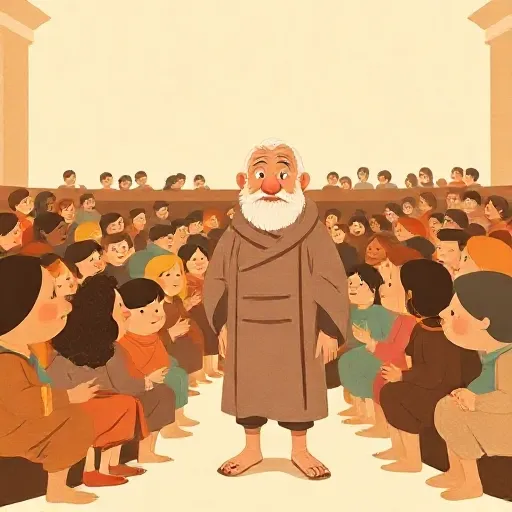
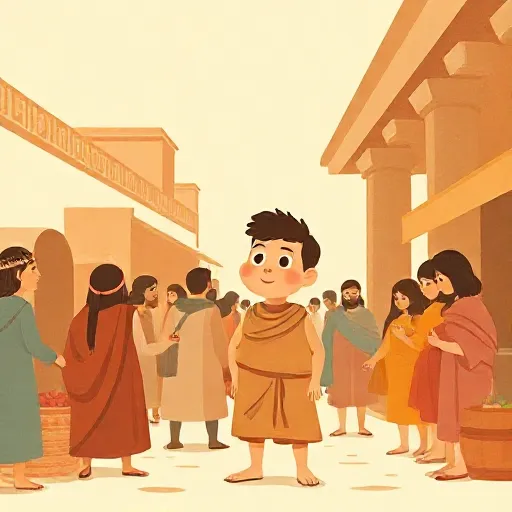
It is a hot morning in Athens, around 430 BCE. In the crowded agora — the city’s marketplace — a man stops anyone who will listen. He is short, barefoot, and has not changed his cloak in days. His eyes bulge out, his nose is flat and upturned, and his lips are thick. He looks nothing like the beautiful statues on the acropolis. Yet when he speaks, people stop. He asks a simple question: “What is courage?” The confident young soldier stumbles. “What is justice?” The politician grows red-faced. No one can give a clear answer. The man is Socrates, and he is about to change the world — but not everyone is happy about it.
Socrates lived in Athens from 469 to 399 BCE. He never wrote down a single word of his philosophy. Everything we know about his ideas and his life comes from other people’s writings. The trouble is, those writings tell wildly different stories. Was Socrates a dangerous joker who mocked the gods? A wise street-teacher who only wanted to help? A brilliant thinker who laid the foundation for all Western philosophy? Scholars call this puzzle the Socratic problem — the challenge of figuring out who the historical Socrates really was when our sources cannot agree.
The Strangest Man in Athens

If you met Socrates, the first thing you would notice was his appearance. His wide, crab-like eyes let him see sideways. His nostrils flared, and he walked with a peculiar, almost intimidating swagger. Unlike other Athenian men who spent hours grooming, Socrates embraced poverty. He wore the same cloak day and night, went barefoot through the city, and seemed completely unaffected by cold or hunger. He did not work for money, nor did he jump into politics like most free men expected to. Instead, he spent every day in public places, talking with anyone — rich or poor, citizen or slave, young or old — who would answer his questions.
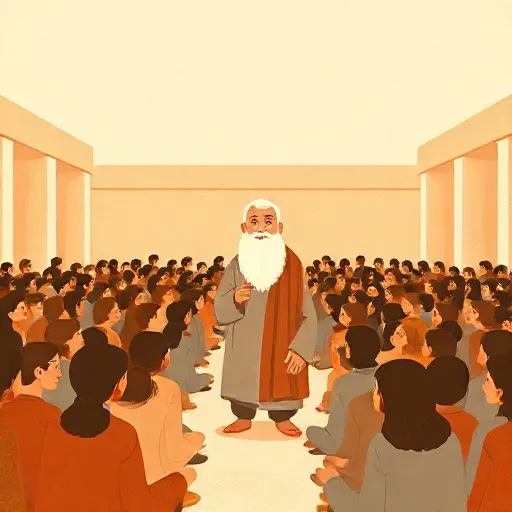
His behavior made him an object of suspicion. Socrates claimed he was no teacher, at least not in the usual sense. Teachers in Athens were seen as full pitchers pouring knowledge into empty cups. Socrates refused that role. He said he knew nothing important and only wanted to help people discover the truth for themselves. He would ask a question, then another, and another, until his conversation partner realized they did not really understand what they thought they knew. Many found this experience irritating, even painful. Some said they felt stung by a gadfly.
Stranger still, Socrates spoke of a personal inner voice, a daimonion, that would warn him not to do certain things — sometimes big, sometimes small. He did not call it a conscience or a gut feeling, but something divine or semi-divine. Some Athenians thought this was proof he was introducing new gods, which was a serious charge. And while most upper-class men kept women quiet and out of sight, Socrates openly praised foreign women as his teachers: one taught him about persuasive speech, another about love. None of this added up to a normal citizen.
Three Writers, Three Socrateses
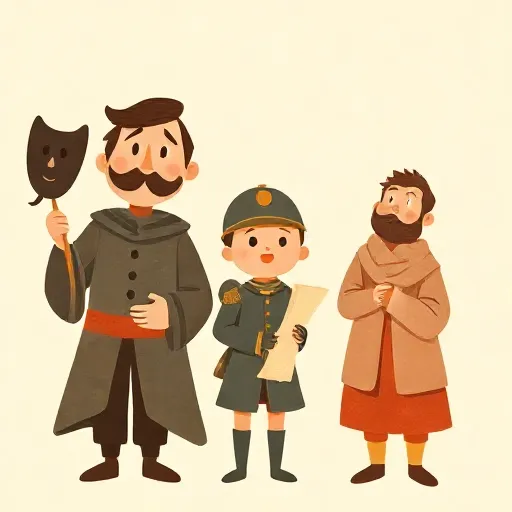
Without Socrates’s own words, we must rely on three main ancient sources who knew him at different stages of his life. Each one gives a Socrates that barely resembles the other two.
The earliest source is the comic playwright Aristophanes (around 450–386 BCE). In his play Clouds, written when Socrates was about forty-six, the Socrates character is a ridiculous figure who swings in a basket, studies nonsense about insects and stars, and teaches young men how to cheat their way out of debts. Worst of all, he encourages them to beat their parents. The play was a comedy, of course, and exaggeration was expected. But Aristophanes kept mocking Socrates in later plays for decades. Socrates himself later complained at his trial that this fictional portrait had poisoned the jury against him since childhood. Scholars today suspect Aristophanes used Socrates as a stand-in to mock all kinds of intellectuals Athens found irritating.
The historian and soldier Xenophon (around 425–386 BCE) offers a completely different picture. In his memoirs, Socrates is a practical, no-nonsense adviser who gives helpful tips on managing a household, making money, and exercising. He is so ordinary and sensible that it is hard to believe this Socrates inspired dozens of followers to write about him. Many scholars think Xenophon, who was not a deep thinker himself, may have simply put his own views into the character’s mouth. Xenophon also spent only part of his youth with Socrates before leaving Athens permanently on military adventures, so his firsthand time was limited.
Then there is Plato (424/3–347 BCE), the philosopher. Plato was about twenty-five when Socrates died and probably knew him most of his life. His Socratic dialogues are rich, subtle, and full of brilliant arguments. In some of them, Socrates only pokes holes in other people’s claims; in others, he builds complicated theories about knowledge, love, and the soul. The problem is that Plato never speaks in his own voice — he always uses Socrates as the main character. Did Plato faithfully record what the real Socrates said, or did he turn Socrates into a spokesperson for Plato’s own ideas? Most scholars today believe that in the earlier dialogues Plato tried to capture the spirit of the historical Socrates, while in later ones he developed his own philosophy. But exactly where that line falls is still hotly debated. The result is that there is not one Socrates but many.
The Trial and the Hemlock Cup
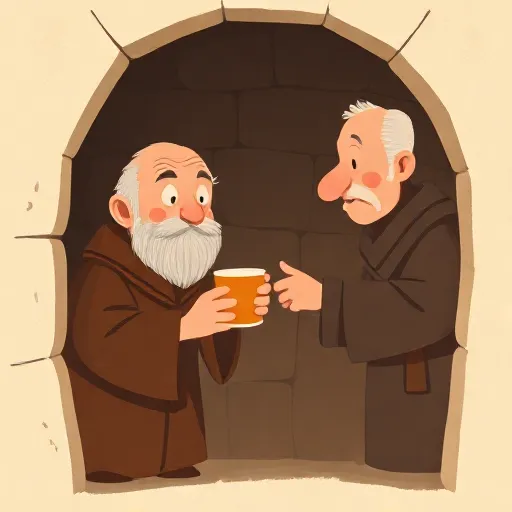
In 399 BCE, when Socrates was seventy, he was brought to trial on two charges: not believing in the city’s gods and corrupting the young. The charges were presented by Meletus, who was probably a young poet, along with two others. Athens was still recovering from a brutal war and a brief, bloody tyranny. The democracy had just been restored, and the city was in no mood for troublemakers. Socrates, with his relentless questioning of everything the city held dear, looked to many like one.
At his trial, he did not beg for mercy. He argued that he had done Athens a favor by waking it up, the way a gadfly stings a sleepy horse. He insisted that the unexamined life — a life spent never questioning one’s beliefs — is not worth living for a human being. The jury of about five hundred citizens found him guilty. Even then, he could have proposed a reasonable penalty, like exile, and likely survived. Instead, he suggested the city should reward him with free meals for life, like an Olympic champion. Then, at the last moment, he offered a small fine, which his friends covered. The jury voted for death.
While waiting for the execution, his friend Crito offered to bribe the guards and help him escape. Socrates refused. He argued that he had lived his whole life obeying the laws of Athens — laws that had protected and shaped him — and now he could not run away just because a single decision went against him. Breaking the law now, he said, would harm the city more than it would help him. So, when the time came, he calmly drank the poison hemlock, talked with his friends about the soul’s immortality, and died.
Why Socrates Still Matters

Socrates never founded a school or wrote a book, yet almost every philosophical tradition in the ancient world — even the ones who disagreed with him — claimed him as an inspiration. For centuries, he has been paired with figures like Jesus as an example of someone who died for truth. In the 1960s, Nelson Mandela and fellow prisoners taught themselves using Socratic questioning while locked up for anti-apartheid activism. Today, many classrooms use a version of the Socratic method, where a teacher does not lecture but asks questions to guide students toward discovering ideas on their own.
The Socratic problem — the messy, unsolvable riddle of who Socrates really was — is itself a lesson. It forces us to ask: How do we know what we think we know about any historical figure? Who gets to tell the story, and what happens when those storytellers have wildly different goals? If even a man who died surrounded by witnesses has three contradictory portraits, what does that mean for every other claim in history?
But maybe the most Socratic gift is the simplest one. When you find yourself certain about something — an opinion, a rule, a belief — try asking yourself a careful question, the kind Socrates might have asked: “What do you mean by that?” and then “How do you know it’s true?” It is a habit that can unsettle people, even get you into trouble. But Socrates would probably say that a little trouble is a small price to pay for thinking clearly.
Think about it
- If you could only learn about a famous person from three sources who disagreed completely, how would you decide what to believe?
- Is it possible to live a good life without ever questioning your own beliefs?
- Socrates chose to obey the law and die, even when his friends offered him an escape. Was that the right decision, or should he have fled?