
If You Didn’t Sign a Contract, Why Obey the Law? Locke’s Answer
What If No One Was in Charge?

Imagine a neighborhood with no police, no courts, no mayor. There’s no written rulebook. Yet most people still know not to steal each other’s bikes or break into houses. How? John Locke (1632–1704) believed the answer lay in something he called natural law.
To explore this, Locke used a thought experiment: the state of nature. This is a situation where no government exists. In that state, he said, everyone is free and equal, but not lawless. The world itself comes with moral rules that anyone can grasp by thinking clearly. The most important one? As much as possible, mankind is to be preserved. That means you must not harm others, and you have a duty to help them when you can without endangering yourself. From that, certain rights follow: the right to life, to control your own body (liberty), and to own things you work for (property).
But there’s a hitch. In the state of nature, everyone has the right to punish anyone who breaks the natural law. If someone steals your lunch, you can demand it back and make them stop. Yet that means you’re the judge in your own case — and people aren’t always fair when their own stuff is on the line. That inconvenience, Locke argued, is the main reason people agree to leave the state of nature and create governments with impartial judges and clear laws.
The Law Written in Your Heart: Rules Before Rulers

Locke’s natural law was different from laws that kings invent. He called those human-made rules positive law. They apply only where a particular government has power. Natural law, by contrast, applies to every human being, everywhere, all the time — simply because we are human.
He also separated natural law from divine law — rules that (in Christian belief) God reveals directly through sacred texts or prophets. Locke thought you could discover natural law using reason alone, like solving a math problem. But divine law requires special revelation; it might tell you to rest on a certain day or avoid certain foods, and that binds only those to whom it was revealed.
This raised a tricky question: Why should we obey natural law at all? Some thinkers said it’s right because God commands it. Others worried that makes morality arbitrary — as if God could have declared “torture is good” and that would make it good. Locke seemed to think that God’s reason and human reason are similar enough that natural law will never feel random to us. It’s like the difference between “eat your broccoli because it’s healthy” and “broccoli is healthy because Mom says so.” Locke believed both could be true at once, because Mom (God) wants what’s genuinely good for us and we can figure out why.
Rights vs. Duties: Which Comes First?

Here’s a puzzle you can feel: do I have a duty not to steal because you have a right to your stuff, or do you have that right because I already have a duty not to take it? Scholars who study Locke divide into two camps.
On one side, some say he thought natural rights are the foundation. On this reading, you own your own body and your freedom, and duties exist mainly to protect those rights. That view can sound a bit like Thomas Hobbes, who thought people are driven by self-interest.
On the other side, many scholars argue that duties are primary. Locke insisted that we are all the property of God, created for God’s purposes. We have duties to preserve ourselves and others, and rights are tools that help us carry out those duties — like a duty to feed the hungry giving you a right to own bread you’ve earned.
Still others think Locke saw rights and duties as equally basic, two sides of the same coin. He also believed there’s a “zone of indifference” where neither rights nor duties force your hand. You might prefer chocolate ice cream over vanilla, or blue curtains over yellow — and nothing in natural law tells you which to pick. In that zone, your choice is truly free.
Can You Own a Mountain Just by Working It?

Locke’s most famous idea about property goes like this: you find a wild apple tree. No one owns it. You pick an apple. Now it’s yours. Why? Because you own your own body and the effort — the labor — it performs. When you mix your labor with something unowned, it becomes your property.
But there’s a catch. Locke added that you must leave “enough and as good” for everyone else. In a world with plenty of land and food, taking an apple doesn’t hurt anyone. However, what happens when land gets scarce or when money lets you store unlimited wealth without anything spoiling? Suddenly the rich can pile up gold while others are left with nothing.
Some later critics, like Robert Nozick (1938–2002), poked a hole in Locke’s mixing idea with a now-famous example: if you pour a can of tomato juice you own into the ocean, you don’t magically own the whole sea. So why should labor give you permanent ownership of a field? Defenders of Locke replied that labor isn’t just a substance you stir in — it’s a purposeful act that improves the world and helps you secure your survival.
Locke’s theory also had a dark historical shadow. In his own time, some used it to argue that Native Americans didn’t truly own their land because they hunted and gathered rather than farming it. Today, many people see that as a convenient excuse for taking land that clearly belonged to others — a powerful reminder that even ideas about freedom can be twisted.
Did You Really Say “I Do” to the Government?
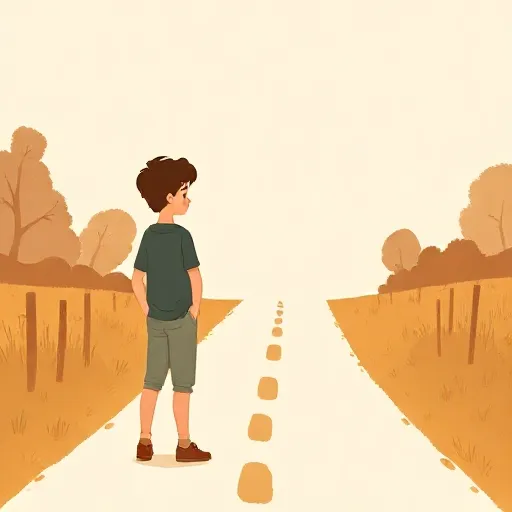
So how do we get from a world with no government to one with laws and leaders? Locke’s answer: consent. A legitimate government must be based on the agreement of the people who live under it. If you never said “yes,” the government has no right to tell you what to do.
But most of us never signed a contract. To solve this, Locke came up with tacit consent — consent you give without words, just by doing certain things. Walking on a country’s highways, enjoying its protection, or inheriting land there counts as quietly agreeing to obey its laws. If you really don’t want to consent, you can pick up and leave.
Critics push back. Is it fair to say you agreed just because you didn’t abandon your entire life? A philosopher named A. John Simmons argued that real consent must be deliberate and voluntary, and that Locke’s view leads to “philosophical anarchism” — the awkward conclusion that hardly any government is truly legitimate. Others, like Hannah Pitkin, suggested that what really matters isn’t consent but whether the government actually follows natural law and protects people’s rights.
Locke never backed away from the strongest implication, though: if a government becomes tyrannical — if it deliberately destroys the people’s lives, freedom, or property — the community has the right to overthrow it. He called this the “appeal to heaven,” meaning that when there’s no judge on earth, the people must take their case to God, sometimes with arms in their hands.
Why Force Can’t Make a Believer
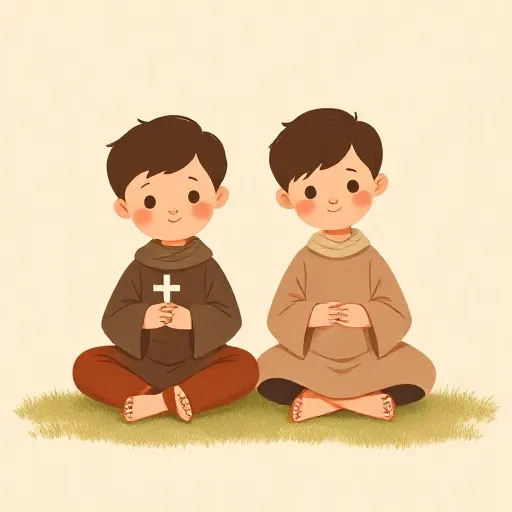
Locke’s ideas about freedom didn’t stop with property and politics. He also wrote a passionate letter arguing for toleration — the policy that government should not use force to try to make people follow a particular religion.
His first reason: Belief happens inside your mind, and force can only act on your body. You can threaten to punish me until I say “I believe,” but you cannot make my heart genuinely convinced. Sincere faith must come from inner persuasion.
Second: Even if force could somehow change minds, how do you know your ruler has the right religion? Rulers make mistakes all the time. If every magistrate forced their own religion on others, most people would be forced into false beliefs, which would be a disaster.
A sharp critic named Jonas Proast fired back: Force can work indirectly. If the government makes it harder to teach what it thinks are false ideas, maybe people will listen more carefully to the truth. Locke didn’t think that saved the argument. A belief you hold only because someone blocked the other side isn’t the kind of sincere, free conviction that God wants. And on a purely practical level, throughout history, using force in religion has more often caused bloody conflict than genuine conversion.
Your Life in Locke’s Shadow
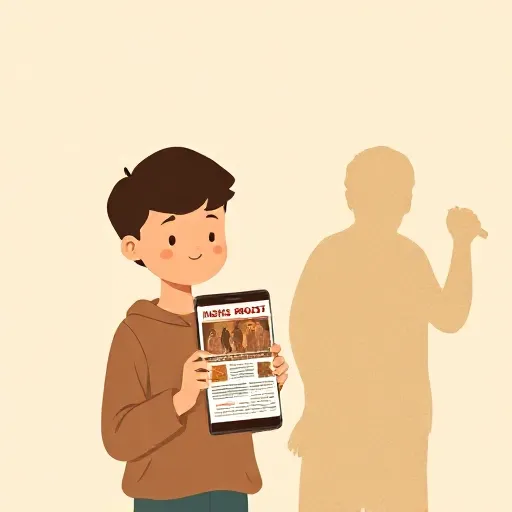
You might not realize it, but Locke’s fingerprints are all over the world you live in. When the American Declaration of Independence said people have a right to “life, liberty, and the pursuit of happiness,” it directly borrowed from Locke’s triad of life, liberty, and property. Modern ideas of human rights — that some freedoms belong to you just because you are a person — lean heavily on the belief that natural law exists and that governments are the servants, not the masters, of the people.
Yet Locke’s legacy is complicated. The same logic that gave a powerful voice to democracy was also used to justify taking land from indigenous peoples. And his idea of tacit consent still makes us ask uncomfortable questions: Did you really consent to the laws you live under? What would you do if you thought they were deeply unjust?
The debates Locke started haven’t cooled down. From protest marches to courtroom battles over privacy and property, people are still arguing about exactly how far our natural rights extend, and what to do when the “common judge” fails. That’s a conversation you didn’t sign up for — but you’re already in the middle of it.
Think about it
- If no one ever explicitly asked you whether you agree to be governed, can a government still be legitimate? Why or why not?
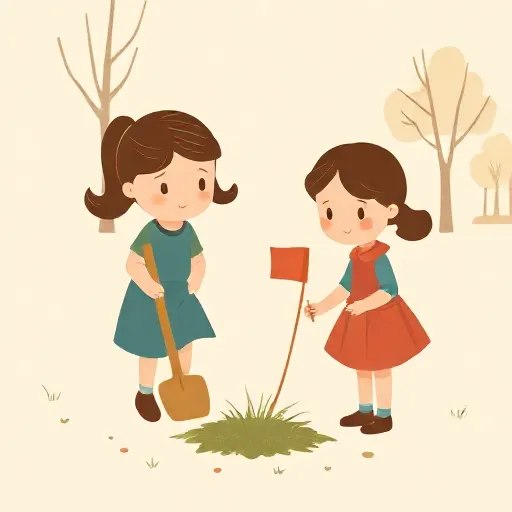
- Can you own something just by mixing your labor with it — what if you plant a flag on the moon and claim it for yourself?
- Is it ever acceptable to force someone to listen to your religious beliefs if you are absolutely certain you are right? Where would you draw the line?