Do You Know Right from Wrong — or Just Feel It?
A new professor, and a new question
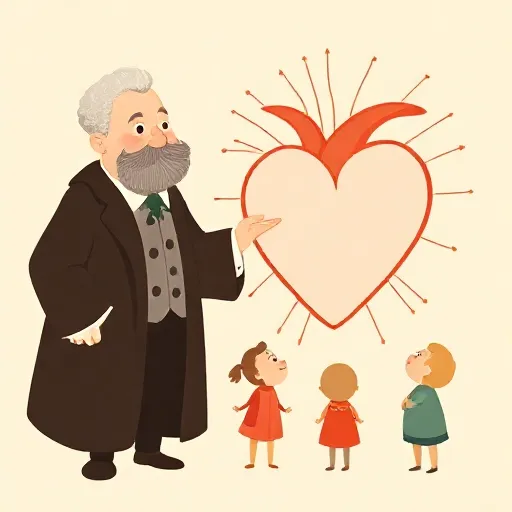
Glasgow, 1730. Francis Hutcheson (1694–1746) steps into the moral philosophy classroom. Most professors of the day talk about duty, law, and what God commands. Hutcheson wants to start somewhere else — with something anyone, even a child, can notice. You see someone share their lunch with a hungry classmate, and before you think a single word, a warm approval rises in you. That feeling, Hutcheson says, is the real starting point of morality.
Right away, Hutcheson takes a side. On one side sit thinkers like Thomas Hobbes (1588–1679), who argued that everything we do, even helping others, is secretly selfish — a trick to make ourselves feel good or to look good. On the other side sit rationalists like Samuel Clarke (1675–1729), who believed we figure out right and wrong with pure reason, the way we do geometry. Hutcheson rejects both. Human nature, he insists, includes genuinely kind affections that owe nothing to calculation, and reason alone never moves anyone to act. You need a desire — something that pushes you toward an end. Then reason can help you get there.
So if reason doesn’t give us the moral “push,” what does? Hutcheson’s answer: a moral sense.
A sixth sense for goodness

Hutcheson thought we have many more senses than the five we usually count. One of them he called the public sense — a built-in pleasure when others are happy and an unease when they suffer. Another was the sense of honour, which makes you warm when people thank you. But the most important is the moral sense: a determination of the mind to perceive virtue or vice in ourselves or others, and to feel pleasure at the former and pain at the latter. And this perception happens instantly, without any decision of the will. You open your eyes and you see a tree; you witness generosity and approval wells up. You don’t choose it.
Hutcheson used this idea to tackle selfish theories head-on. If every action were driven by self-interest, we couldn’t explain why people sometimes sacrifice their own good for a stranger. He pointed to a mother soothing a frightened child, a friend defending someone who can’t fight back, a doctor rushing into a plague-ridden house. The wider the circle of those you help, he thought, the more morally beautiful the act. In fact, Hutcheson was the first philosopher to talk about “the greatest happiness for the greatest numbers,” an idea that later became famous.
He also believed that our affections can get unruly. A burst of anger, even if it feels righteous, tends to wreck our sociability — our ability to live peacefully with others. So Hutcheson warned that we must not let selfish feelings overrule “calm universal benevolence.” The moral sense guides us, but it needs careful management, like a garden.
Hume: even cause and effect is a feeling
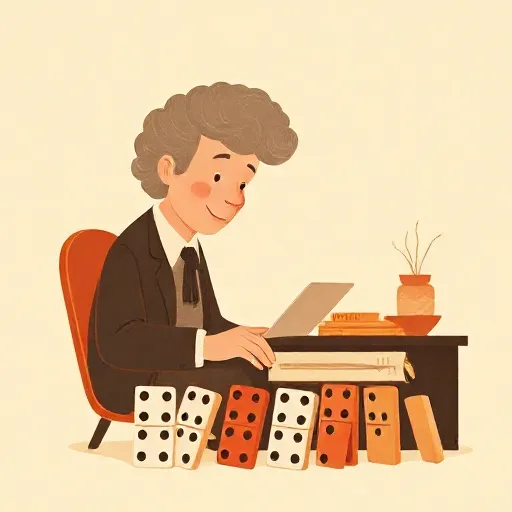
If Hutcheson planted the seed, David Hume (1711–1776) let it grow over the whole garden of human knowledge. Hume agreed that moral and aesthetic qualities really exist in our minds as sentiments — feelings. But he went further. Think of two events, like a match striking and a flame appearing. You don’t see a necessary connection out in the world; you just see one thing after another, and after many repetitions your mind forms a habit. The idea that the flame must follow, that the match causes it, is a determination of the mind — a kind of feeling — not something you spot with your eyes. Even our belief that an external world of solid objects exists outside our heads is, for Hume, mostly the work of our imagination.
Hutcheson did not welcome this. He saw Hume’s early draft of the Treatise of Human Nature and strongly disapproved. When Hume tried to become a professor of moral philosophy at Edinburgh University in the mid-1740s, Hutcheson worked behind the scenes to stop him. They remained divided, but later philosophers noticed that Hume had taken Hutcheson’s “internalisation” of value and spread it to almost everything: morality, beauty, causality, the very “out there” world itself. If our moral sense tells us what is good, Hume seemed to ask, maybe every other part of life is also built from feelings.
This bothered many of their contemporaries. If right and wrong are just sentiments in our heads, do they have any authority outside us? Can we still say someone’s cruelty is really wrong, or only that it feels unpleasant to us? Those questions would light a fire under the next generation.
Smith’s big idea: the impartial spectator

Adam Smith (1723–1790) studied under Hutcheson at Glasgow and later took over that very moral philosophy chair. He admired his teacher but thought the theory of a single moral sense was too simple. Smith noticed that moral judgment always involves more than one person. There’s a spectator (who judges), an agent (who acts), and a recipient (who is acted on).
When you watch someone suffer, you don’t just receive a flash of moral sense. Your imagination copies what you would feel if you were in that person’s situation. Smith gives a haunting example: a person who has lost his mind and is happy, unaware of his tragedy. As a spectator, you feel sorrow — not because the man feels sad (he doesn’t), but because you imagine yourself reduced to that state and it hurts. Sympathy, for Smith, is this ability to enter into another’s circumstances, whether or not the other person actually has the feelings you’d expect.
Now, how do we judge an action as right or wrong? You approve of an agent’s feelings if, when you imagine yourself in her shoes, you discover that you would feel the same way. You judge an act to be proper when your sympathetic feeling matches the agent’s emotion. But what about justice? Smith draws a sharp line. If an agent harms someone, you sympathise with the victim’s resentment, and you judge the act demeritorious — worthy of punishment. This works even if the actual victim doesn’t resent the act (maybe they don’t know yet). You judge not by what the victim does feel, but by what you, as an impartial spectator, would feel if you were in their place.
The real twist is that you also judge your own actions this way. You split yourself in two: the “I” who acts, and an imagined spectator who watches from a distance, without self-love. Smith calls this the impartial spectator. It isn’t just the voice of society; it can sometimes oppose what everyone around you thinks. But it is born from real experience — from noticing that other people judge you just as you judge them.
The common sense pushback
Not every Scottish thinker was comfortable resting morality and knowledge on feelings alone. A group of philosophers called the common sense school pushed back. Thomas Reid (1710–1796), George Campbell (1719–1796), and James Beattie (1735–1803) argued that certain beliefs are implanted in us by the very frame of our nature. They are first principles — things we accept without proof. Why? Because we literally can’t reason about anything else without them.
For Reid, the most basic principle was consciousness of our own mental acts. For Campbell, truths like “every event has a cause” or “testimony from another person is to be trusted unless we have reason to doubt it” were part of our natural equipment. The cleverest skeptic can’t genuinely doubt that other minds exist or that the sun will rise tomorrow — and if he says he does, you can safely ignore him, because he still acts as if they’re true from breakfast to bedtime.
This was partly a response to Hume. If Hume was right that our minds never directly encounter causes or an outside world, then why does everyone walk, talk, and eat as if those things are solidly real? The common sense answer: we are built to trust our natural faculties. The maker of our nature wouldn’t give us faculties that systematically deceive us. Even Henry Home (Lord Kames), another Enlightenment thinker, held that some beliefs arise from “tendencies” we must rely on when reason can’t decide.
The debate between the sentimentalists (Hutcheson, Hume, Smith) and the common sense philosophers was never a shouting match — they read each other, critiqued each other, and often remained friends. But it left a permanent fork in the road: is the foundation of morality a feeling or a self-evident truth?
Why this still matters when you argue with a friend

The Scottish thinkers could see their problem in everyday life and so can you. A friend shares her lunch with a new kid and your heart fills with approval — for a moment, you are a Hutchesonian. Later, someone cuts in line and you feel anger shoot up, almost as if it’s obvious to everybody that this is wrong — you’re standing on common sense ground. And when you try to explain why a punishment is fair, you might ask, “How would you feel if someone did that to you?” — that’s Adam Smith’s impartial spectator at work.
None of them settled the argument permanently. Today psychologists debate whether we make moral snap judgments first and then search for reasons, or whether conscious reasoning actually steers our moral instincts. When classmates hotly disagree about cheating, sharing, or loyalty, they are replaying the same puzzle: does a rule tell you what’s right, or does a feeling guide you toward a rule? And if your feeling is strong, can you ever trust it completely?
The Scots gave us a richer language for that puzzle — a language of moral senses, sympathy, impartial spectators, and first principles. They didn’t hand us an answer on a plate. They handed us better questions, and those questions still rattle around whenever you stop to think about why some things just feel wrong.
Think about it
- Imagine you see someone drop money on the ground and you pick it up to return it. If you do it because a warm feeling pushes you to help, is your action more or less moral than if you did it after carefully reasoning that returning it is the right rule to follow?
- If you and a friend disagree about whether a joke is mean or just funny, are you disagreeing about facts, or are you having different gut feelings — and does that change how you should argue?
- Suppose a new student at school seems completely unbothered by being left out, but you remember how it felt when you were new. Should you trust your own remembered feeling to decide whether the student is actually okay? Why or why not?