
Do You Have a Built‑In Goodness Detector?
The feeling that tells you right from wrong

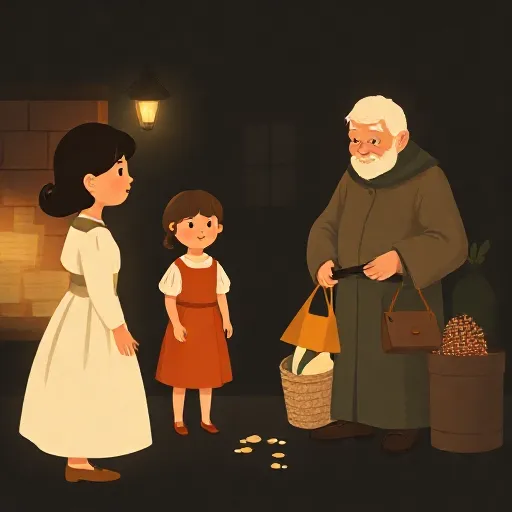
Imagine you see a kid trip in the hallway. Before you can think, you feel a tiny flutter of sympathy. You might even stop and offer a hand. That flutter, the philosopher Francis Hutcheson (1694–1746) would say, is your moral sense at work.
Hutcheson lived in Ireland and Scotland and spent his life asking where our ideas of good and bad, right and wrong come from. His answer was bold: we are not blank slates who need to be taught morality by rules or religion. We are born with a set of inner senses that generate feelings of pleasure or pain, and one of them is tuned to kindness and cruelty.
A sense, for Hutcheson, is any part of the mind that gives us ideas and feelings without our choosing — it just “strikes us,” like the taste of honey or the shock of a loud noise. We all know the five external senses (sight, hearing, touch, taste, smell). But Hutcheson insisted there are also internal senses, such as a sense of beauty, a sense of humor, and — most importantly — a moral sense. An internal sense does not just receive raw sights or sounds; it works on combinations of ideas. When you watch someone sharing their lunch with a hungry classmate, your moral sense takes in that pattern and immediately fills you with a feeling of approbation, a kind of pleased warmth toward the sharer. When you see bullying, the same sense produces an uneasy, condemning feeling.
Hutcheson called this view sentimentalism: morality is grounded in our sentiments, our gut‑level feelings of approval and discomfort, not in cold reason. Rightness is something you feel before you can explain it.
Why reason can’t do the job alone

In Hutcheson’s day, many serious thinkers were rationalists. They argued that moral truths are like mathematical truths — they exist whether we feel them or not, and we discover them by reasoning. Samuel Clarke (1675–1729) said that actions have a “fitness” or “unfitness” built into the fabric of the universe, just as shapes have geometrical properties. John Balguy (1686–1748) claimed virtue is conformity to reason. William Wollaston (1659–1724) even argued that doing wrong is a kind of lying about the way things are — stealing treats someone else’s property as if it were yours, which is acting out a false statement.
Hutcheson thought this was all a mix‑up. He asked: if reason alone could show us right and wrong, why doesn’t a mathematical proof about the fitness of generosity make us want to get up and help? Reason, he argued, can give you facts — “this action will feed five hungry people” — but it cannot make you care. Something else has to supply the spark, and that something is a feeling.
He also gleefully pointed out how silly Wollaston’s view became if you took it literally. If a crime is just “acting out a false proposition,” then would wearing plain clothes while being a priest falsely say “I am not a priest” and therefore be immoral? Would leaving your light on at night falsely declare that you were awake? These everyday acts clearly aren’t evil, so the whole truth‑telling account of morality collapses. In every rationalist theory, Hutcheson insisted, a hidden moral feeling was doing the real work — the rationalist just didn’t want to admit it.
Selfishness is overrated

Another rival position was the self‑interest theory of Thomas Hobbes (1588–1679) and Bernard Mandeville (1670–1733). They claimed that everything people do, even seemingly generous acts, is secretly motivated by a desire for their own safety, praise, or pleasure. Charity is just a trick to feel good about yourself.
Hutcheson fired back with a famous thought experiment. Imagine a good person is told by God that in the next instant they will wink out of existence, feeling nothing ever again. But just before that instant, they must choose whether their friends, family, and country will be happy or miserable for the rest of time — with no chance of the person ever knowing or benefiting. Would they shrug and say “I don’t care, I’ll be gone”? No, says Hutcheson. A genuinely good person would still wish for their loved ones’ happiness. That shows we have a capacity for disinterested benevolence — wanting the good of others for its own sake.
Crucially, Hutcheson held that our moral sense only approves of actions that flow from benevolence. If you rescue a drowning child but secretly do it for a reward, your act might be useful, but it is not truly virtuous. To him, the motive matters just as much as the outcome. A failed rescue attempt from pure love looks morally beautiful; a successful rescue done for selfish reasons does not. The moral sense, he said, “approves” and makes us love the agent only when we see kindness driving the action.
The math of kindness
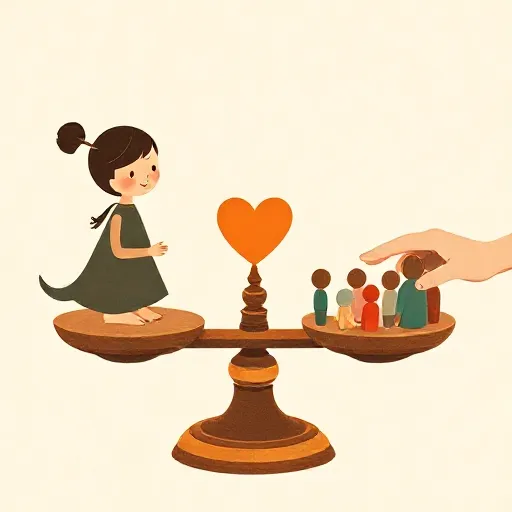
Hutcheson didn’t stop at saying “benevolence is good.” He tried to build a kind of moral arithmetic. In his 1725 book An Inquiry into the Original of our Ideas of Beauty and Virtue, he wrote that the Moment of Good (M) equals Benevolence (B) multiplied by Ability (A): M = B × A. The best action is the one that aims at “the greatest Happiness for the greatest Numbers.” He even offered that sentence — one of the first clear statements of what later became utilitarianism, the view that we should do whatever produces the most happiness overall.
But his version of utilitarian thinking had important twists that many later thinkers dropped. First, for Hutcheson, the goodness of an act is scalar — it comes in degrees, rather than being simply “right” or “wrong.” A little kindness is a little good; heroic sacrifice is a lot good. There is no sharp line you must cross to count as a decent person.
Second, the agent’s intention is written straight into the equation. If you care partly about your own gain along with the happiness of others, the selfish chunk has to be subtracted. Good consequences that you never foresaw or intended don’t add moral credit either. So the moral value of an act depends on what you genuinely aim at, not just what accidentally happens. Hutcheson’s ideal is a person whose whole aim is the greatest overall good that lies within their power — and who doesn’t secretly slip self‑interest into the mix.
The odd secret: being good feels good

But here comes a puzzle. Hutcheson was a hedonist — he believed that happiness (pleasure and the absence of pain) is the ultimate thing that makes life go well. So, if virtue requires you to aim only at the good of others, how can being good possibly make you happier? After all, if you help someone because you want that warm glow, your motive is self‑interested, and the action loses its moral shine. You seem to be stuck: either you are good but not happy, or you aim at happiness and stop being good.
Hutcheson’s solution was clever. He claimed that the moral sense is not just a detector — it is the most powerful pleasure‑machine we possess. When you act purely from benevolence, you may not feel the pleasure right away. But later, he said, you can perform a reflex act: you can look back on your own conduct like a spectator and feel the same approving delight your moral sense would give if you saw a stranger performing the same kind deed. That pleasure, he believed, is deeper, longer, and more satisfying than any external thrill — more than food, music, or applause. Some of his passages even suggest it has a special “dignity” that mere counting of pleasures cannot capture, though he was not entirely consistent about that. The key point is that virtue does turn out to be in our self‑interest — not because we chase happiness directly, but because the very act of genuinely caring for others creates, in reflection, the richest happiness we can have.
This idea keeps his picture of morality together: the Creator, Hutcheson thought, wired human nature so that what is morally beautiful is also, in the end, what makes us deeply fulfilled. It’s a kind of cosmic design that rewards goodness — but only when you aren’t trying to cash in.
Why your flutter still matters

Hutcheson’s ideas still hum beneath a lot of the way we talk about morality today. When people say “it’s not what you do, it’s why you do it,” or when we find ourselves instinctively rooting for a character who helps others even at a cost, we are echoing his insistence that motive matters. The phrase “the greatest good for the greatest number” — which he coined — has become a common slogan in politics, economics, and everyday debates about fairness.
But his deepest challenge is the one he leaves for you. He said we are born with a moral sense that works like a taste — immediate, powerful, and not invented by culture. Yet he also admits that selfish passions can drown it out. So the quiet flutter you get when you see a stranger’s kindness is, in his view, the real voice of your better nature. The question he hands you is whether you’ll listen to it, knowing that if you act on it purely, without angling for a reward, you might end up with a happiness no selfish scheme could ever buy.
Think about it
- If helping someone because it makes you feel warm inside is still partly selfish, can a person ever be 100% purely good? Why or why not?
- Imagine a person who does exactly the right thing for exactly the wrong reason (for example, donating money only to show off). Do they deserve any moral credit? How should we decide?
- Hutcheson thought we have a built‑in feeling that tells us right from wrong, like a taste for music. Have you ever had a gut feeling that something was right even though everyone around you said it was wrong — or the other way around? Which felt more true, and why?