
Do Feelings Make Us Moral? The Sentimentalist Answer
The Neighbor Who Wouldn’t Share Lunch

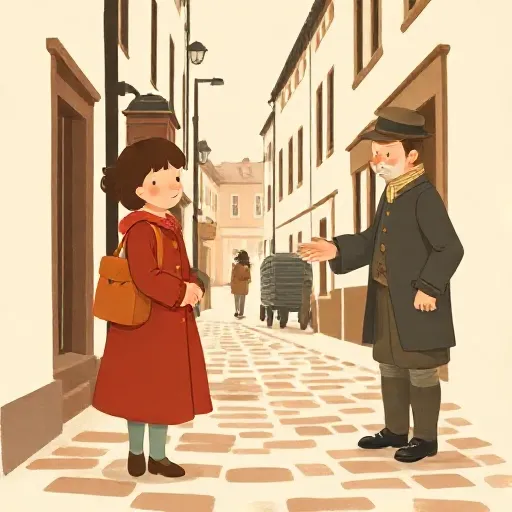
Imagine you do a huge favor for someone. You spend the entire day helping them with a difficult project. They never say thanks, never offer you so much as a glass of water. Later, when you hint at a small return favor, they pretend not to hear. Your chest tightens. You feel a flash of anger, maybe even disgust. You think: That was wrong.
Now, why do you think it was wrong? One answer is that you reasoned your way to that conclusion. You quietly weighed the principles of fairness and decided the neighbor failed. But sentimentalists say something different. They believe that your negative feeling — that hot sting of disapproval — isn’t just a side effect. It’s what drives your moral judgment. In fact, without that feeling, you might not have the thought “that was wrong” at all.
A sentiment is a broad term for any emotion, feeling, desire, or gut reaction you have. Sentimentalism in ethics is the view that such sentiments are the true source of our moral life. This idea has many forms, but we’ll start with the oldest one: that our feelings explain why we approve of kindness and condemn unfairness. The handyman J. in the story (told by the primatologist Frans de Waal) helped his neighbor for free, and the neighbor’s coldness naturally sparks a negative response in you. Even if you’ve never studied philosophy, your emotions seem to announce that something immoral happened. So, are your feelings a reliable guide, or just a messy distraction? That’s the question sentimentalists have been wrestling with for over three hundred years.
The Sympathy Engine: What Hume and Smith Believed
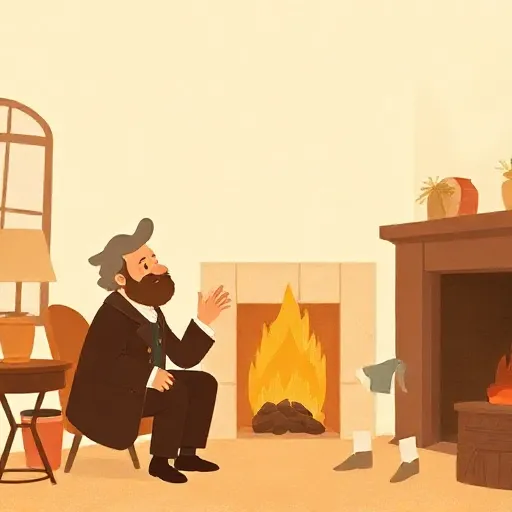
In the 1700s, two Scottish philosophers, David Hume (1711–1776) and Adam Smith (1723–1790), made a radical claim. Reason alone can’t tell you that stealing is wrong. Hume argued that reason has two big limits. First, it can’t motivate you by itself. You can calculate all day that helping others creates the greatest happiness, but unless you care about that happiness, you won’t lift a finger. Second, reason can’t tell you what to care about. It can discover facts — like whether an action will cause pain — but it can’t stamp “wrong” on those facts. That stamp, Hume said, comes from sentiment.
Both Hume and Smith believed that the key sentiment is sympathy (what we’d often call empathy today). For Hume, sympathy works like a string that plucks the same note in two separate violins. When you see someone suffer, your mind unconsciously mimics their feeling, and you experience a faint version of their pain. That shared feeling, when you step back and view it impartially, gives you a special kind of pleasure or displeasure. You’re pleased when you think of character traits that reliably cause joy in others — and that pleasure is what makes you call those traits “virtuous.” The vice is not in the action itself, but in the way your own heart responds.
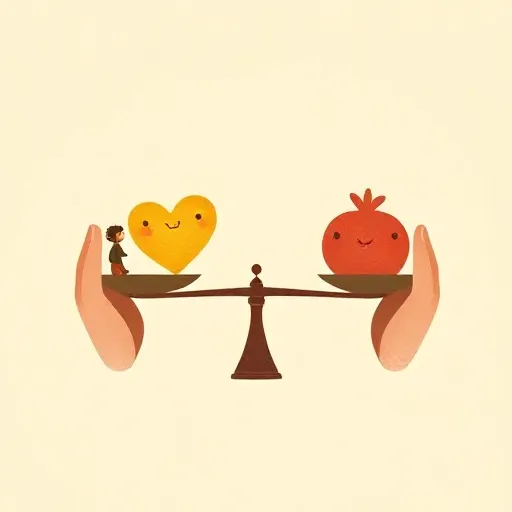
Smith added a crucial piece. He noticed that our sympathy is naturally biased: we sympathize more easily with people we love, or who are like us, than with distant strangers. To correct for that, we must imagine an impartial spectator — a neutral, well-informed observer who doesn’t care about our personal interests. We ask: would this imaginary spectator share the gratitude or resentment someone feels? If the passion matches what the impartial spectator would feel, we call it proper; if not, we blame. Smith’s impartial spectator became a kind of inner compass, guiding us away from selfishness and toward what’s truly fair.
Your Brain’s “Like-O-Meter” — and Its Critics
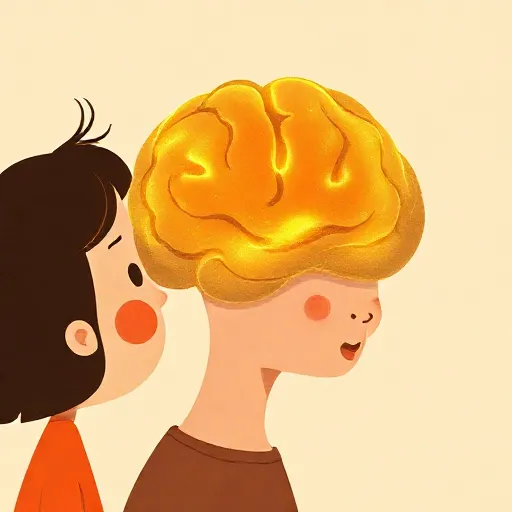
In the 21st century, the psychologist Jonathan Haidt (1963– ) gave sentimentalism a new twist. He said that moral judgments are mostly intuitive — quick, automatic flashes of affect that happen before any conscious reasoning. He called it a “like-ometer” in your brain. In some experiments, people were told a story about harmless sibling incest. They immediately felt disgust and said it was wrong. When pressed to explain why, they stumbled, giving weak reasons. Haidt took this as evidence that gut feelings drive moral judgment, and that reasoning is just a lawyer hired after the fact to defend what you already feel.
Joshua Greene went further, using brain scans. He found that when people face a dilemma where they must kill one person to save five, the emotional parts of the brain often scream “don’t do it!” — especially if the killing involves personal force. He claimed this is why many find such acts intuitively wrong, even if a cold calculation says they maximize lives saved.
But the story is not so simple. Guy Kahane showed that the brain difference isn’t between utilitarian and deontological judgments, but between what’s intuitive and what’s counterintuitive. Other researchers, like Joshua May, argue that moral judgments rely heavily on unconscious reasoning. For instance, we notice whether an action was intentional or accidental, and that fact quickly triggers a reaction. So maybe our “gut” is actually a fast, invisible calculator, not just raw emotion. Even so, sentimentalists can still reply: that unconscious reasoning alone can’t cross the bridge from a plain fact (“she intended harm”) to a moral verdict (“that’s wrong”). An emotional jolt is still needed to make that final leap.
When “Wrong” Is Just a Fancy “Boo!”

So far, we’ve talked about what causes our moral judgments. But there’s a deeper question: what are moral judgments, exactly? When you think “that neighbor was wrong,” are you stating a fact — like “the Earth is round” — or are you doing something else entirely? Judgment sentimentalists answer that moral thoughts are, at least in part, non-cognitive states — desires, emotions, or attitudes — not cool beliefs about the world.
The strongest argument for this view starts with a plain fact about morality: it moves you. If you genuinely believe that bullying is wrong, you feel at least some pull to stop bullying. This is called internalism about moral judgment. But according to the Humean Theory of Motivation, a bare belief (like “this glass contains water”) can’t by itself push you to act; you also need a desire (like “I’m thirsty”). If moral judgments motivate all by themselves, they must contain a desire-like or emotional element. They can’t be pure beliefs.
So what are they? One early answer was emotivism: saying “stealing is wrong” is just a way of expressing a negative feeling, like shouting “Boo, stealing!” It isn’t a statement that could be true or false. Contemporary expressivists, like Simon Blackburn (1940– ) and Allan Gibbard (1942– ), refined this. They say moral sentences express attitudes, just as “the sun is shining” expresses a belief. The attitude expressed is not a simple emotion, but a higher-order stance — for instance, disapproving of stealing and also wanting others to disapprove, too. When we argue about morals, we are not disagreeing about facts, but clashing in our attitudes. This view neatly explains why we care so much about morality: it’s woven from our desires and feelings, not from cold, inert facts we could shrug off.
Critics push back. If your “wrong” just expresses your attitude, how can we have genuine disagreement? As the philosopher G.E. Moore noted a century ago, if you say “eating people is wrong” you mean you disapprove, and a cannibal says “eating people is not wrong” she means she doesn’t disapprove — both can be true at the same time, so you’re not really disagreeing. Expressivists reply that you’re disagreeing in attitude, like two people who want incompatible things. The debate is whether that’s enough to account for the way we really argue about right and wrong.
Do Moral Facts Float on a Sea of Feelings?
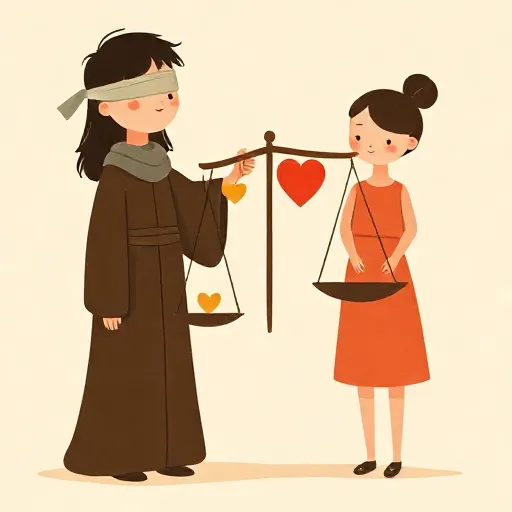
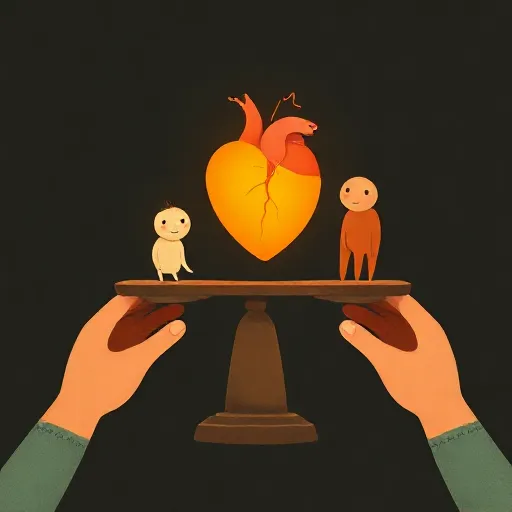
If our moral judgments are deeply tied to our sentiments, what about moral facts? Is there a fact of the matter about whether the neighbor’s behavior was wrong, or does wrongness depend entirely on our feelings? Metaphysical sentimentalists say that moral properties are response-dependent — they are real, but they are built out of our own reactions, much like the property of being “disgusting” depends on what triggers disgust in us.
The simplest version, which almost nobody accepts, says something is wrong just because you happen to disapprove of it. That would mean a murder nobody finds out about isn’t wrong — absurd. So philosophers upgrade to ideal dispositionalism. They say an action is wrong if an ideal observer — someone who is fully informed, impartial, and otherwise normal — would disapprove of it under perfect conditions. This solves the problem: we can be mistaken, because we may not know what an ideal observer would feel. And slavery wouldn’t become right even if everyone suddenly approved of it, so long as the ideal observer, starting from normal human sentiments, would still protest.
But a sharp dilemma lurks here, named after Plato’s dialogue Euthyphro. If the ideal observer is described using only non-moral terms (like “informed” and “impartial”), why should his reactions have moral authority? He might end up approving something horrible — or so the critic says. If instead we smuggle in moral words like “wise” or “virtuous,” we’ve gone in a circle. The sentimentalist must somehow show that an ideal observer, defined without relying on prior moral truths, reliably tracks what we pre-theoretically consider right and wrong. That’s a tall order.
Can Feelings See the Truth?

Even if your emotions don’t make morality, could they help you discover it? Epistemic sentimentalists think so. They hold that some emotions are like a moral sense — they present value to you directly, the way your eyes present color. When you see a child being bullied, your surge of indignation doesn’t just make you hot; it seems to reveal a feature of the situation: this is wrong. You don’t need to reason it out; you just see it.
But emotions are clearly not flawless. Jealousy, fear, and anger often distort how things are. So sentimentalists add a crucial requirement: we must calibrate our feelings by stepping into an impartial perspective. This is exactly what Smith’s impartial spectator was for. The goal is not to feel nothing, but to feel what a properly situated, well-informed human would feel. When we train ourselves — through stories, reflection, and discussion — our emotions can become more reliable guides. They track the features that matter, like cruelty or unfairness.
This view also explains why you can’t simply tell someone a moral truth and expect it to sink in. If you hear testimony that some practice is wrong, you might believe it like a fact from a textbook. But unless you also feel the wrongness — perhaps you imagine the harm vividly and your stomach knots up — you lack moral understanding. You don’t yet grasp why the practice is wrong. That’s why moral education isn’t just about memorizing rules; it’s about shaping the heart.
Why This Matters Today

You might wonder: does this old philosophical puzzle affect my life? It does, in everything from how you forgive a friend to how you vote. If sentimentalism is right, moral disagreements aren’t just mistakes in logic. They are clashes of feeling, often rooted in different life experiences. That’s why shouting facts at someone rarely changes their mind. To shift a moral view, you may need to invite them to see — and feel — a situation from another perspective.
Sentimentalism also suggests that being a good person is not just about knowing the right principles, but about cultivating the right emotions: widening your sympathy beyond your own tribe, learning to check your initial burst of anger with the impartial spectator inside you. Perhaps the neighbor who didn’t share lunch wasn’t a monster; maybe he had never learned to feel what J. felt. That doesn’t make his action right, but it points to where change might come from.
So next time you feel that flush of indignation, don’t ignore it — but don’t let it be your only guide, either. The sentimentalist tradition asks you to take your feelings seriously, test them against an impartial view, and let them deepen into a compass that steers you toward what’s fair. It’s a call to be not just a rational calculator, but a feeling, thinking, fair-minded human.
Think about it
- If something feels wrong to you, but everyone else around you says it’s fine, should you still trust your feeling? Why or why not?
- Imagine a person who does everything “by the rule book” but feels no sympathy for anyone. Could they be a truly good person? What would be missing?
- If you could take a pill that made you feel exactly what an impartial spectator would feel in every situation, would that make you a saint — or would something important be lost?