
Is the Voice That Says “Be Kind” Just Your Society Talking?
Sympathy: The Superpower You Didn’t Know You Had

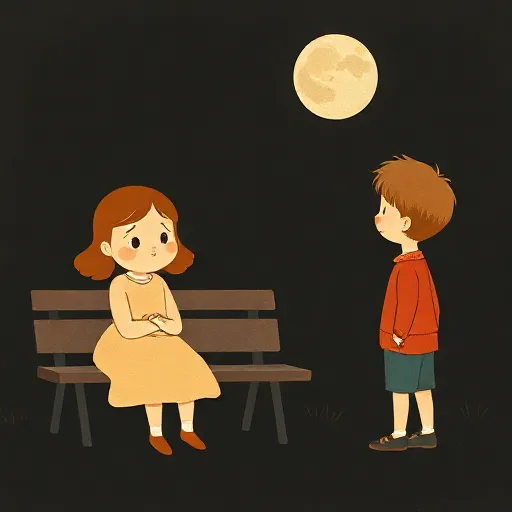
It’s lunchtime. A classmate trips and her tray clatters to the floor — milk spreads across the tile, and she buries her face in her hands. You wince, even though you’re still holding your own tray. You didn’t actually get hurt, but for a second you felt a flash of her embarrassment. That quick twinge of shared feeling is what the Scottish philosopher Adam Smith, writing in the 1700s, called sympathy. But Smith meant something more interesting than just catching someone else’s mood. He believed that whenever we see someone in a situation, we immediately imagine what we would feel if we were in their shoes. We project ourselves into their circumstances. This is projective sympathy — unlike the “contagion” picture his friend David Hume proposed, where emotions spread like a yawn. For Smith, sympathy isn’t about feeling exactly what the other person feels; it’s about using your imagination to generate a feeling that may be similar, or different.
This difference matters a lot. Because your imagined feeling might not match the other person’s actual feeling — you might think they should be more upset, or less upset, than they are. The gap between your sympathy and their real emotion opens the door for moral judgment. Smith thought this drive to share feelings is one of our deepest human needs, and it pushes us to constantly adjust our own emotions to match what others can go along with. That back-and-forth dance of emotional adjustment, Smith argued, is where morality is born.
The Impartial Spectator: The Judge Inside Your Head
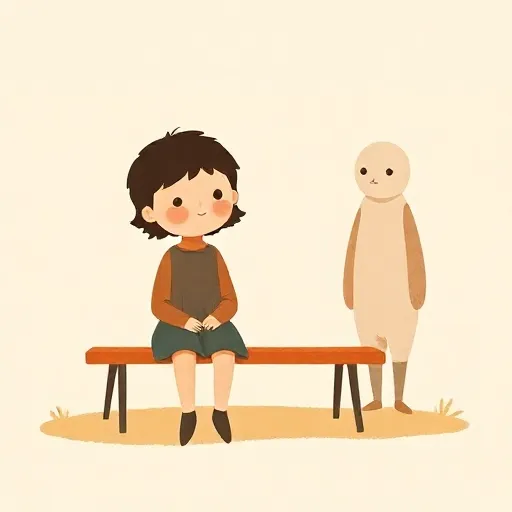
As you grow up, you don’t just adjust your feelings for one person at a time. You start to imagine what any fair-minded person would think — someone who isn’t on your side or your enemy’s side, someone who knows all the facts. Smith called this internal voice the impartial spectator. It lives in your head, but it isn’t just another version of you. It’s a standard you build from the reactions of lots of people around you, refined into an ideal observer. When you ask yourself, “Was it okay that I laughed at that joke?” or “Should I have helped my friend even though I was tired?” you’re consulting your impartial spectator.
The spectator’s feelings become the measure of right and wrong. Smith said a feeling or action is proper — it has propriety — when an impartial spectator would sympathize with it, meaning they’d feel it was suitable for the situation. Getting angry when someone deliberately pushes you? Fitting. Screaming with rage over a small accidental bump? Not fitting — the impartial spectator would shake their head. When doing the proper thing is especially hard — like staying calm when you’re furious, or being generous when it costs you — Smith called that virtue. So propriety is the baseline of decent behavior, and virtue is the high bar you reach when self-control or kindness demand real effort. For Smith, morality isn’t a list of rules handed down from above. It’s a constant process of checking your feelings against an imaginary fair spectator, a spectator that develops through ordinary social life.
More Than a Rulebook: The Virtues Smith Loved

Smith drew a big distinction between following moral rules and being a truly virtuous person. Rules — don’t steal, don’t hurt others, keep your promises — are essential. They keep society from falling apart and give even imperfect people a rough guide for decent behavior. But rules, he thought, are just the floor, not the ceiling. Real virtue requires reshaping your emotional habits so that you want to do the right thing, not just fear punishment. You don’t merely copy the impartial spectator’s feelings; you become the impartial spectator, as deeply as you can.
Smith admired two kinds of virtue above all: self-command and compassion. Self-command is the “awful” virtue — the strength to hold back a flood of grief or anger so that others can sympathize with you. Compassion is the “amiable” virtue — the active effort to enter into other people’s joys and sorrows. A good life, he thought, weaves both together. This idea echoes the ancient Greek philosopher Aristotle, who saw virtue as a middle ground between too much and too little feeling. Smith said his own system “corresponds pretty exactly” with Aristotle’s. Instead of a checklist of do’s and don’ts, Smith offered a picture of moral development more like learning to paint: you start by copying techniques, but eventually you develop an artist’s eye and a steady hand. You gain moral taste, not just a rulebook.
The Bias Problem: Is Your Inner Judge Wearing Your Culture’s Glasses?

Now for the big worry. The impartial spectator is built from the reactions of the people around you — neighbors, parents, classmates. But what if those people are biased? What if everyone in your town looks down on people from a different country, or thinks kids who dress a certain way are untrustworthy? Smith himself noticed that societies often foolishly admire the rich and despise the poor. He worried that political parties and religious fanaticism can “pervert” our moral feelings. If your impartial spectator just absorbs the preferences of your community, then your inner judge might be wearing thick, crooked glasses. You may feel perfectly righteous while excluding someone who doesn’t fit in.
This is a serious challenge for Smith’s theory. He hoped that better information — like truly imagining what it’s like to be a poor person or a slave — could help correct those biases. He also sometimes wrote as if all humans share a basic recognition of each other’s equal worth. But he never gave a foolproof method for escaping cultural blind spots. The impartial spectator works through feelings, not through pure logic, and feelings are shaped by the society you grow up in. So the question remains open: can your internal fair spectator be truly fair, or is it just a polite version of your tribe’s values? Smith left that tension unresolved — and it’s a tension we still wrestle with today.
Why Be Moral at All? Smith’s Surprising Answer

There’s another tough question: even if the impartial spectator tells you what’s right, why should you listen? Why not just do whatever benefits you? Smith’s answer turns the question on its head. He thought the very idea of a separate, selfish interest that morality gets in the way of is a misunderstanding of what makes humans happy. “The chief part of human happiness,” he wrote, “arises from the consciousness of being beloved.” We crave being loved and approved of, and acting morally is the best way to earn genuine love from others — and, even more importantly, from yourself.
Once you fully internalize the impartial spectator, your own self-approval becomes a deep source of satisfaction. You don’t obey the spectator because you fear it; you obey because you want to be the kind of person it approves of. From inside a life of virtue, the question “why be moral?” starts to sound like “why be happy?” The two are intertwined. Smith’s defense of morality doesn’t try to prove from the outside that you should care — instead it invites you to see that a fully human life already includes that care. Some critics say this is circular, but Smith saw it as simply honest: there is no neutral, non-moral reason to be moral, but that’s okay. The discovery that virtue is its own reward is something you make from the inside.
Why This Matters Every Time You Argue About Fairness

Smith’s big idea — that morality comes from trying to see things through the eyes of a fair spectator — shows up in your life constantly. When you tell a friend “That’s not fair!” because they got a bigger slice of cake, you’re appealing to an imaginary person who would see the situation as you do. When you try to understand a sibling’s side of a fight, you’re doing the work of a projective sympathizer. And when you feel a pang of guilt after saying something mean, that’s your impartial spectator frowning.
But Smith’s blind spot is also our blind spot. The same inner voice that helps you be kind can also whisper society’s prejudices. That’s why it’s important to keep checking where your sense of fairness comes from — to listen to people with different lives, to question what “everyone thinks,” and to imagine harder. Smith gives us a powerful tool for moral growth, but he also reminds us that tools need maintenance. More than two centuries later, the conversation he started about sympathy, bias, and the voice inside your head is still wide open.
Think about it
- If you grew up in a community where almost everyone thought it was acceptable to exclude people who dressed differently, do you think your own inner impartial spectator would ever tell you that exclusion was wrong? How would you know?
- Imagine a friend says, “Why shouldn’t I cheat if I can get away with it?” Using Smith’s ideas — but your own words — how might you reply?
- Can you think of a time when you felt torn between what your friends thought was fine and what you felt was right? How did you decide what to do, and did your decision surprise you?