Is Your Inner Voice of Right and Wrong Just a Trick of Evolution?
That Sting of Unfairness
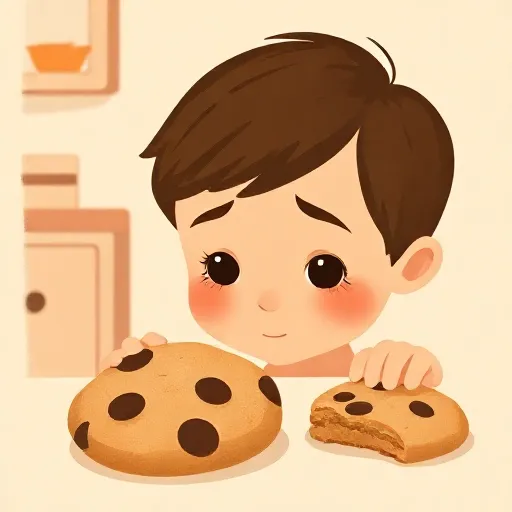
You and your friend both clean the kitchen, and your dad gives you each a chocolate chip cookie. Yours is half the size of your friend’s. Instantly, a hot little voice says, “That’s not fair!” Where does that voice come from? Did you decide to feel that way, or did something deep inside you—something very old—just fire off?
Charles Darwin (1809–1882) showed that every living thing, including us, has been shaped by natural selection. Traits that helped our ancestors survive and raise children got passed down, generation after generation. Obvious examples are bodies: opposable thumbs, walking on two legs. But Darwin suspected that our minds—our feelings and even our moral sense—were shaped by evolution, too. If that’s true, then the voice that cries “unfair” might be a kind of biological tool, planted in your brain long before you were born.
Philosophers call this our capacity for normative guidance—the ability to be pushed and pulled by thoughts about how people ought to behave. The central question in evolutionary ethics is: how much of that capacity, and how much of what it tells us, is a product of evolution? And if it is a product of evolution, does that mean morality is just a trick our genes play on us, or can we still find something genuinely true about right and wrong?
How Did Morality Evolve? A Three-Part Story
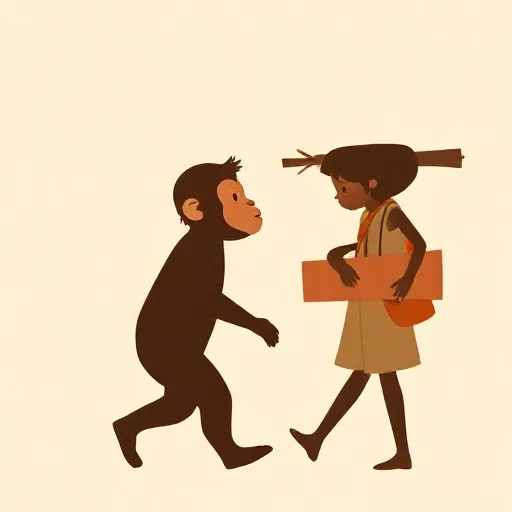
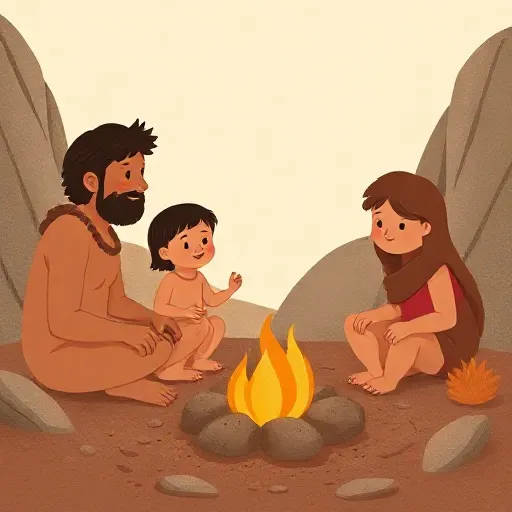
Human morality didn’t just flick on like a light switch. The philosopher Philip Kitcher has proposed a gradual story, and many scientists find it compelling. It begins around three to five million years ago, with our early hominin ancestors living in small, mixed groups, a bit like modern chimpanzees or bonobos.
First, these ancestors developed a simple form of psychological altruism—a blind tendency to care about what another creature wants, without calculating what’s in it for you. In the competitive world of Pleistocene Africa, that kind of “I’ll help you just because” turned out to be useful. Even fragile cooperation helped the weak, the young, or the low-status form coalitions and survive better. So genes that nudged brains toward that kind of caring spread.
But pure altruism was unstable. Selfish drives could easily shatter it, and the group would fall apart. That constant threat of breakdown created a pressure for something new. Over hundreds of thousands of years, according to Kitcher, a second big innovation appeared: a capacity for emotionally charged, rule‑like guidance. Our ancestors learned to make normative judgments—statements about how one ought to act—and to back them up with powerful feelings like guilt, resentment, and shame. If you broke a rule, the whole group might punish you with scowls or exclusion. If you followed the rules and earned a reputation as a good partner, you stayed safe. This new internal “voice” glued larger groups together better than blind altruism ever could.
Finally came a long, third phase of cultural evolution. Over thousands of years, the simple proto‑morality of our early ancestors blossomed into the complex moral systems we see in history—codes of law, religious ethics, human rights. The inner hardware was ancient, but the software got endlessly rewritten by human culture.
The result is that many of our moral feelings—the outrage at a cheater, the warmth of loyalty, the sting of unfairness—may be biological adaptations, just as much as our thumbs are. They helped our distant ancestors navigate a dangerous social world. But does that settle what’s really right? Not even close.
The Scary Question: If Evolution Made It, Is Morality an Illusion?
Once you see morality as something that evolved, a big worry creeps in. Evolution doesn’t care about truth—it cares about what helps genes survive. If believing something false made our ancestors cooperate better and have more babies, natural selection would have favored that false belief. So maybe the voice inside you that says “help your family” or “cheating is wrong” isn’t a detector of real moral facts. It might be just a survival gadget.
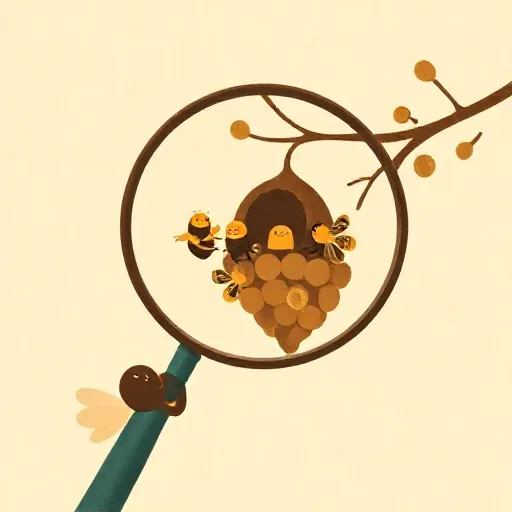
Darwin himself pointed this out with a famous thought experiment. Imagine, he said, that hive‑bees had grown brains as powerful as ours. Their society would be built on a sisterhood where female workers are sterile and die to protect the queen. If those bees could reason, Darwin suggested, they would see killing their brothers or wanting to kill fertile daughters as a sacred duty. Their moral sense would feel just as natural to them as ours does to us. But both would be shaped by the accidents of each species’ ecology—not by some invisible ladder of right and wrong.
Contemporary philosopher Sharon Street pushes this argument further. She says that if moral realism is true—the view that there are objective moral facts that don’t depend on what anyone thinks—then we have a huge problem. Natural selection rewarded whatever moral beliefs led to more babies, whether or not those beliefs were true. It was blind to real wrongness or rightness. So if realism is right, it would be an incredible coincidence if our evolved moral beliefs happened to line up with the real moral facts. It’s far more likely, she argues, that we’ve just been fitted with whatever feelings kept the group stable. That “coincidence” problem, she claims, should make us doubt that moral realism can give us knowledge. If our beliefs are just evolutionary footprints, we have no reason to trust them.
Philosophers who take this line are offering an evolutionary debunking argument. The claim is not that we should stop caring about morality, but that it’s hard to see how our brains could be reliable guides to an independent moral truth. At the extreme, Richard Joyce argues that once we see a complete, non‑moral story of how our moral beliefs came to be, the idea of real moral facts becomes “explanatorily superfluous”—like having a full explanation of why people believed in witches without ever mentioning any real witches. So maybe morality is just a useful fiction.
Fighting Back: Maybe We Can Think for Ourselves
That’s a powerful argument, but many philosophers think it goes too far. Their reply leans on a simple fact: humans don’t only follow gut feelings. We can also reason. When a mathematician proves there’s a prime number between 5,000 and 10,000, we don’t explain her belief by talking about what helped her ancestors survive on the savanna. We explain it by the reasons she gives. We assume she has a capacity for autonomous reflection—thinking that follows its own standards, not just biological instincts.
The same, these philosophers say, can be true for morality. Evolution might have equipped us with some powerful emotional reflexes, but we can step back and examine them. If someone tells you that evolution programmed you to favor your own group, you can reflect and decide that’s actually unfair. You can look at a gut feeling like “homosexuality is wrong” and ask: are there good reasons for that belief, or is it just a feeling of disgust that got dressed up as a moral rule? Many moral judgments that were once common—like the wrongness of interracial marriage—are now widely seen as prejudices that crumbled under rational scrutiny. That suggests our moral minds aren’t locked in a cage.
Philosophers Allen Buchanan and Russell Powell have developed this idea into a “biocultural” model. Humans evolved not with one rigid moral nature, but with adaptive plasticity. Under conditions of plenty and safety, our minds lean toward inclusiveness and cooperation even with strangers. When threats loom—war, disease, loss of group identity—tribal, us‑versus‑them thinking gets turned on. Both settings are part of our evolved kit. That means moral progress is possible, but it’s also fragile. The abolition of the slave trade and the rise of human rights didn’t come from our genes; they came from people thinking hard, challenging old feelings, and building institutions that brought out the better side of our nature. Evolution gave us the hardware; our thinking can rewrite the software.
From this angle, the debunking worry loses its sting. Yes, evolution shaped the starting points of many of our feelings. But we no more have to accept those starting points as final than a musician has to stop playing because her ancestors used sound only to warn of predators. The very fact that we can debate whether morality is an illusion already shows we’re not slaves to our instincts.
Why This Fight Matters to You
Here’s why this debate isn’t just for dusty books. Every time you feel a rush of guilt after lying to a friend, or a surge of anger when a bigger kid cuts in line, you are experiencing a brain that was shaped over millions of years. That’s fascinating. But the bigger question is: can you trust those feelings? Do they point toward something genuinely right, or are they just echoes of old survival strategies?
If the debunkers are correct, then there are no real moral facts—just feelings that helped our genes. That doesn’t mean you should go hurt people, but it does mean you can’t ever say an action is truly wrong, only that it feels that way. If the realists are right, then your ability to think, listen, and change your mind can lead you toward moral truths that outrun your biology. You become an active seeker, not just a puppet.
Right now, the debate is wide open. Philosophers keep arguing about how deep evolution’s fingerprints go, and scientists keep uncovering new clues about the brain. What’s certain is that understanding this ancient conversation inside you—between your primate inheritance and your human ability to reflect—makes you a sharper thinker about your own life. It lets you ask the most human question of all: not just “what do I feel?” but “should I feel it?”
Think about it
- If our feelings of fairness were planted by evolution to help our ancestors survive, does that make it less important to be fair today? Try to defend both sides.
- Imagine an intelligent species of ant that genuinely believes sacrificing weak members for the colony is the highest moral good. How would you argue that their morality is better, worse, or just different from ours?
- Can you think of a time when you felt sure something was wrong but later changed your mind after thinking about it or hearing someone else’s reasons? What changed, and how did your “gut feeling” stack up against your reasoning?