
Is Right and Wrong Something You Feel, or Is It a Real Fact?
What if you had to choose between a lie and a hurtful truth?

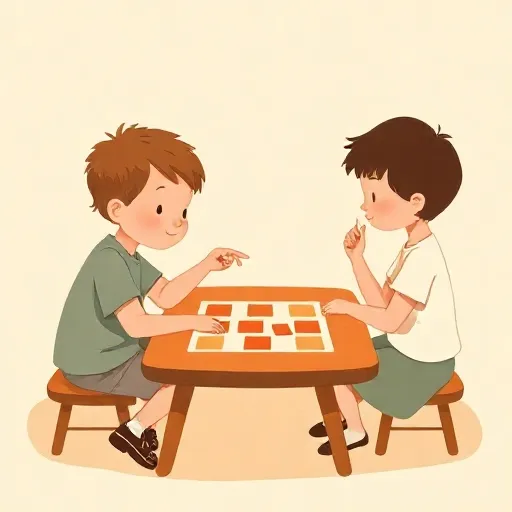
Imagine this. A friend asks if you like their new haircut, and you don’t. You can say something honest but sharp, or you can soften the truth. In that moment, it feels like you just see that lying is wrong — but is that feeling the whole story? Or is there something more solid going on?
In the 1700s, a quiet Welsh minister named Richard Price (1723–1791) thought this was the most important question in the world. He believed morality is not about feelings at all. Right and wrong, for him, are real features of actions — things we discover with our minds, not with our emotions. His opponents, like David Hume (1711–1776) and Francis Hutcheson (1694–1746), thought the opposite. They said morality is built from our feelings of approval and disapproval. The battle they started is still being fought in philosophy today.
The voice of reason: moral truth is like a math equation
Price belonged to a tradition called ethical intuitionism. This is the idea that humans can know some moral truths directly, without needing to learn them from experience. When you think about what gratitude or fairness really is, you don’t just feel a warm glow — you grasp something necessary about the way actions fit together. Price said this understanding comes from reason, not from your senses.
He argued that certain concepts, like right, wrong, and obligation, cannot be built from what we see, hear, or touch. You can watch a thousand kind acts, but you won’t find the color “right” floating in the air. Yet you do understand these words, and you use them correctly. Where do they come from? Price answered: your mind has a power to grasp simple ideas that don’t come from the senses. Think of ideas like cause, solidity, number, or infinity. You can’t point to any of them directly, but you couldn’t think without them. Price called these necessary truths — things that must be true and can’t be otherwise, like “a circle is round.” He believed some moral principles are just like that: necessarily true, discovered by reflection, not invented by your culture or your feelings.
This meant moral rules are objective. They don’t change if your feelings change. Lying is wrong not because it makes you uncomfortable, but because the very nature of lying makes it unfitting for a rational being. Price was a moral realist — he thought moral facts exist independently of anyone’s opinions or emotions, as real as the shape of the earth.
The heart’s reply: morality as a feeling we project outward
David Hume and Francis Hutcheson looked at the same evidence and saw a different story. They were sentimentalists. For them, morality is grounded in our emotions, not in abstract reason. Hutcheson suggested we have a special moral sense, something like our sense of taste. When we see someone helping another, we naturally feel a pleasing warmth. When we see cruelty, we feel disgust. Reason’s job is just to figure out how to achieve the goals our feelings set, not to decide what is right.
Hume put it bluntly: “Morality is more properly felt than judged of.” We don’t calculate that a rescue was good; we feel that it was. And because humans share a lot of similar emotional reactions, we end up with shared moral standards. But these standards are contingent — if our emotional makeup had been different, our moral codes would be different too. A creature that felt pleasure at pain would have a completely different “morality,” and there would be no rational way to say it was wrong.
Price found this alarming. If morality depends only on how humans happen to feel, then right and wrong aren’t real features of the world. They are like the colors we see in a rainbow — not in the objects themselves, but something our brains paint onto them. Hume even made this comparison directly: vice and virtue are like sounds or colors, “not qualities in objects, but perceptions in the mind.” Price could not accept that. He thought that made morality arbitrary, a matter of what “implanted sense” you were born with, rather than a set of eternal truths that even God must follow.
The open question and the broken promise

Price had a clever weapon against the sentimentalists. He asked something like this: if someone says “right” just means “what produces good feelings,” then the sentence “producing good feelings is right” would be as boring as “a bachelor is an unmarried man.” It would just be repeating the same idea. But that’s not how it feels. It always makes sense to ask, “Is that thing that gives people pleasure really right?” This is called the open question argument. The fact that we can seriously ask this shows, Price thought, that the concept “right” can’t just mean the same thing as “pleasing” or “commanded by God.” It points to a separate property that reason can grasp.
Another test case was promising. How can a promise create a new obligation out of thin air? Hume had puzzled over this: if an act was morally neutral before you promised, how can your words make it required? It seems like magic. Price’s answer was clever: promising doesn’t magically create a new kind of duty. It simply turns an action into an instance of an existing duty — veracity, or truthfulness. When you promise to meet someone, you are declaring that a certain future event will happen. If it lies in your power and you don’t do it, you have, in effect, told a falsehood about the future. The duty to keep promises is a branch of the duty to tell the truth, not a separate invention. Word must be matched by deed, and reason grasps this fitness directly.
Why knowing the good meant wanting to do it

One of the sentimentalists’ strongest points concerned motivation. If morality is just about knowing facts, how does that knowledge push you into action? I can know a rock is gray without caring at all. So why should knowing “helping is right” make me want to help? Feelings, on the other hand, push you naturally — no gap there.
Price’s reply was bold and direct. He claimed that to truly see an action as right is to be moved by it at the same moment. “I cannot perceive an action to be right without approving it,” he wrote. “To behold virtue is to admire it.” The recognition of a moral fact carries with it a motivational pull, built into the very act of understanding. You can’t coldly note that something is your duty and then just shrug. If someone does, Price would say they don’t fully see the duty yet; their vision is clouded by self-love or desire.
And what happens when we fail? We feel guilt, remorse, a kind of internal fracture. For Price, this was a clue that our core identity is our reason, not our passing feelings. Our conscience, he said, is our true self. When we go against it, we are fighting our own nature. That is why moral failure feels so awful — you are not just breaking a rule, you are breaking yourself.
Still at the crossroads

Price’s arguments didn’t settle the fight. The sentimentalist challenge returned in new forms — later philosophers like John Stuart Mill and modern psychologists continue to tie moral judgment to emotion. Yet Price’s intuitionism also kept returning, especially in the 20th century with thinkers who believed we directly see certain basic duties. And today, many people still feel pulled between both pictures. When you strongly disagree with someone about fairness, do you think one of you is just wrong, as if there is a moral fact to get right? That’s Price’s side. Or do you think you just have different emotional reactions, shaped by different upbringings, and nobody is really mistaken? That’s Hume’s echo.
Price thought that doubt about difficult cases should not make us lose confidence in moral truth itself. He argued that just because two moral principles can clash — like honesty and protecting someone’s safety — it doesn’t mean there is no fact of the matter. It just means the situation has a complex essence, and our limited minds sometimes struggle to read the correct answer. But the answer exists. That confidence, that sense that morality is a real thing we can aim at rather than a shadow we cast, continues to inspire some philosophers and unsettle others. The crossroads you saw at the beginning is still ours.
Think about it
- If you felt absolutely no guilt after breaking a serious promise, would that make the act okay — or would it still be wrong, even without the feeling?
- Imagine you meet a new friend who says helping others wrongs nobody is just a feeling, not a fact. Could you ever prove to them that they’re mistaken, using only reasons and not your emotions?
- If a scientist could predict every moral choice you will ever make by scanning your brain feelings, would that show that right and wrong are just feelings — or would your reasons still matter?