Why Do You Feel What Someone Else Feels? The Empathy Puzzle
The Mirror in Your Head
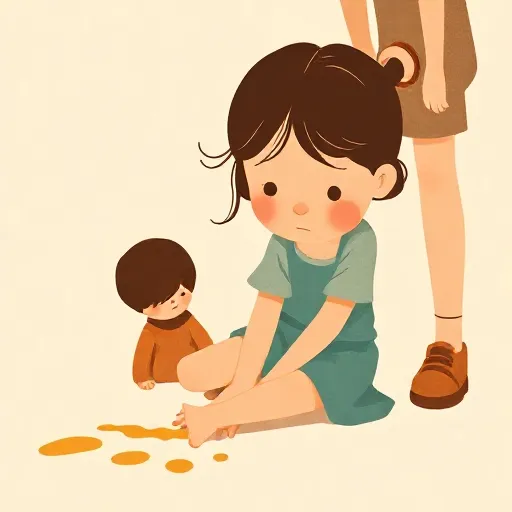
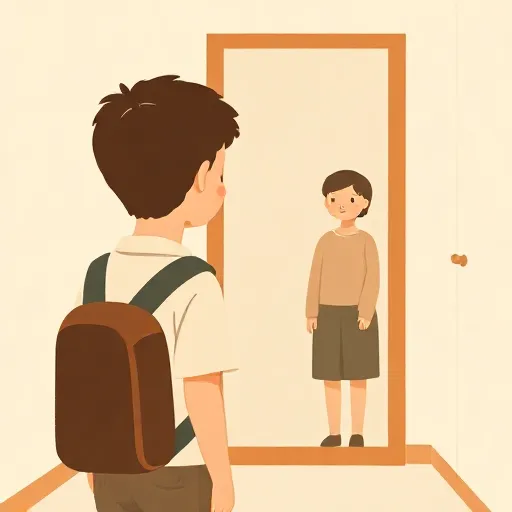
You’re at recess. Your best friend trips and scrapes her knee. As soon as you see her wince, your own stomach tightens. You almost feel the sting yourself. That instant pull is empathy, from a German word meaning “feeling into.” It’s not just sympathy (feeling sorry for her) or simple mood-matching. Empathy requires you to feel something similar to what she feels, while still knowing the pain is hers, not yours. Psychologists distinguish several responses that people mix up: emotional contagion (a baby starts crying because other babies cry, without knowing they’re separate beings), proper empathy (you feel sad because she is sad, and you know you’re picking it up from her), sympathy (feeling concern for her without necessarily sharing her emotion), and personal distress (feeling upset yourself and wanting to escape). This article focuses on proper empathy — the kind that lets us know other minds and steers our moral choices.
The Philosopher Who Thought You Imitate Everything Inside
A hundred years ago, the German thinker Theodor Lipps (1851–1914) argued that empathy is the only way we truly understand other people. He rejected a popular idea of his time: the inference from analogy. That theory said you know someone is angry because you see them clench their fists, you remember that your own fist-clenching goes with anger, so you infer they’re angry. Lipps saw a deep problem: to even start that inference, you must already know the other person has a mind like yours. How do you get that idea? He answered: by inner imitation. When you see an angry face, your brain automatically sends tiny signals to your own facial muscles, almost as if you were making that face yourself. Those faint movements stir up feelings of anger in you — but you project them onto your friend. Empathy lets you directly feel their anger “from the inside,” without logical steps.
Today, neuroscience has found a biological basis for Lipps’s idea. Mirror neurons are brain cells that fire both when you perform an action and when you watch someone else do it. If you see someone smile, your smile-related neurons light up; your brain mirrors theirs. This basic empathy helps us instantly recognize emotions and goals — as if nature built a resonance circuit in your head, dissolving the old puzzle of other minds. Yet mirror neurons aren’t the whole story. Understanding complex reasons for actions requires reenactive empathy: using your imagination to step into someone else’s shoes, replay their situation in your mind, and feel what they might feel. This is harder and depends on your own experiences. A child who has never known deep fear can’t fully reenact that terror; our empathy is always shaped by the life we’ve lived.
Does Empathy Make You a Hero — or a Biased Friend?
Here’s the burning question: does feeling another’s pain actually push you to help? In the 1980s, psychologist Daniel Batson ran clever experiments. He had volunteers watch a person they thought was receiving electric shocks. Some were encouraged to empathize strongly (imagine how the person feels). Then they could either take the shocks themselves or easily leave. The result: highly empathetic people chose to help even when escaping was easy. Batson’s empathy-altruism thesis claims that empathy can spark genuinely selfless care — helping for the other’s sake, not just to relieve your own distress.
But not everyone buys it. Critics argue we might help to avoid guilt or to feel a warm glow. Some suggest empathy blurs the line between self and other, so helping is really about feeling better ourselves. The debate is alive: while many psychologists accept that empathy often leads to prosocial behavior, whether that motivation is truly pure remains contested.
Even more troubling, empathy is biased. It works like a spotlight: we feel far more for a single crying child in front of us than for millions suffering in another country. We empathize more with people who look like us, who are nearby, or who are cute and attractive. Studies show we even feel less empathy for members of an out-group and sometimes feel pleasure at their misfortunes. Martin Hoffman (born 1935) mapped how empathy develops: a newborn cries when another baby cries (contagion); around age two, children start to tell self from other, so they comfort a friend with the friend’s own toy instead of their own teddy. Yet even as adults, our empathy naturally stays partial — it loves the familiar and the here-and-now.
Why We Still Need Empathy (Even If It’s Messy)
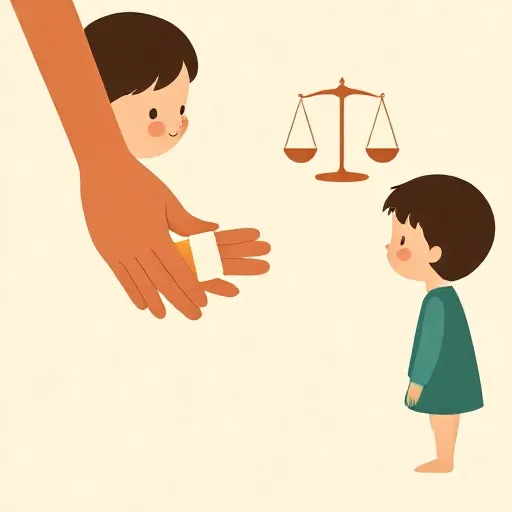
If empathy is so biased, should we ditch it? Some philosophers, like Jesse Prinz and Paul Bloom, say moral judgment needs impartial principles, not fickle feelings. They point out that empathy for a victim can lead to harsh revenge against an out-group; good policies often require caring about large numbers, not just one face. In their view, sympathy (feeling for someone’s well-being) guided by thoughtful rules may be safer.
But others, following Adam Smith (1723–1790), believe empathy can be corrected. Smith imagined an impartial spectator inside us — a perspective that asks whether a fair stranger would approve of our feelings. We can train ourselves to feel with others beyond our tribe: by learning their stories, listening to their voices, and actively taking their perspective. Research shows that perspective-taking can reduce prejudice, at least for a while. So empathy isn’t a flaw to remove; it’s a tool that needs sharpening with justice.
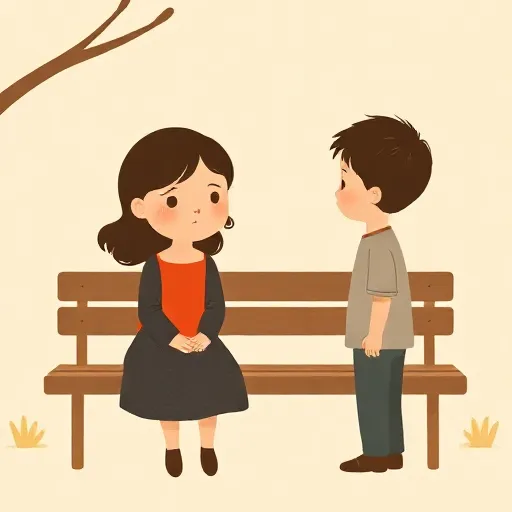
Think about your own life: hugging a sad friend, feeling a pang when a homeless person shivers, celebrating a sibling’s joy — these are empathy. They make relationships rich and remind you that others matter. Without empathy, the world would be a cold bundle of rules. But with only empathy, you might ignore the kid nobody likes or the distant stranger. The trick is steering empathy’s warmth with the rudder of fairness.
So, Can You Trust the Mirror Inside?
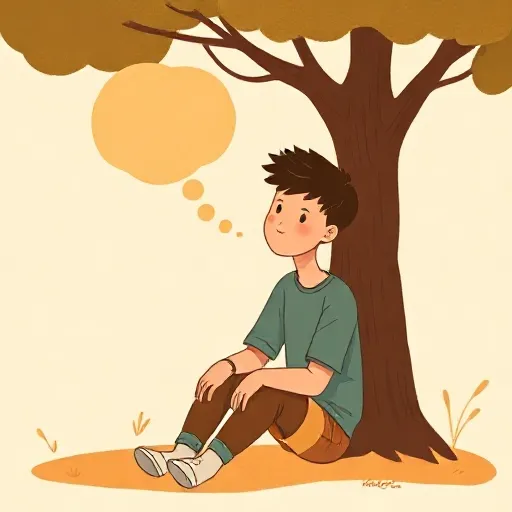
Next time you flinch at a friend’s pain or tear up at a movie, know that you’re tapping into an ancient, brain-based bridge between minds. Empathy lets you see others as someone, not something. Yet the mirror is curved: it reflects some faces more clearly than others. That doesn’t mean you should smash it — it means you should adjust your angle. By noticing your own biases, listening to stories from different groups, and asking “what’s fair?” you can use empathy to build a kinder, more just world. The puzzle remains open: how much can we widen our circle of care? That’s for you to keep thinking about.
Think about it
- If you were in a burning building and could save either your best friend or a newborn infant you’ve never met, which would you choose and why? Does empathy make that choice easier or harder?
- Is it ever wrong to feel happy when a bully gets in trouble? Your feeling might be understandable, but what does it say about our natural empathy?
- Imagine a device that lets you perfectly feel the physical and emotional experiences of anyone on Earth. Would that end cruelty, or create new problems? What might go wrong?