

Why Does It Sting When Someone Else Has What You Want?
A Scene That Stings

You’re walking home when you spot your friend skating on a brand‑new board, the one you have been eyeing for months. Instantly, a hot, tight feeling rises in your chest. It’s not anger, exactly. It’s something between wanting it for yourself and feeling suddenly smaller. Philosophers have a name for this sting: envy. What is envy, really? Is it the same as jealousy? And can it ever be a good thing? These questions have tugged at thinkers from ancient Athens to today.
The Recipe for Envy
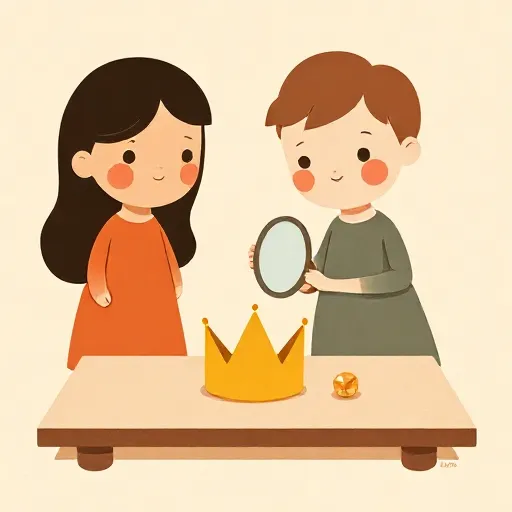
Ancient Greek philosopher Aristotle (384–322 BCE) described envy as pain at the good fortune of others. Centuries later, Immanuel Kant (1724–1804) said it is distress at seeing another’s well‑being, even if it does not take anything from you, together with a wish to destroy their good fortune. Adam Smith (1723–1790) called it a malignant dislike of someone’s superiority. All these definitions share three ingredients: a subject (the envier), a rival (the person envied), and a good — a possession, skill, or trait the subject believes the rival has and the subject lacks.
Crucially, envy is painful. Simply wanting something another person owns is not yet envy. You might long for a new phone without feeling anything toward the person who has one. But when you are bothered because she has it and you don’t, the emotion shifts into envy. The difference between your situation and hers becomes the focus of your distress. Many philosophers also say envy includes a desire for the good, and some add a further piece: a wish that the rival not have the good. This extra piece fuels a big debate.
Envy or Jealousy? Don’t Mix Them Up

People often use “jealous” and “envious” as if they mean the same thing, but philosophers draw a sharp line. Both emotions involve three parties, but in different ways. Jealousy is about protecting a relationship you are afraid to lose. It needs a subject, a rival, and a beloved — the person whose affection or attention you cherish. When you see your best friend swapping secrets with someone else, the ache is jealousy. Your real concern is the beloved, not the rival.
Envy, by contrast, is about a good, not a beloved. The subject, the rival, and the good form a triangle where the subject’s attention is fixed on the rival. Imagine your classmate shows up in sneakers you would love to own. If you find yourself brooding about her and wishing you were the one with those shoes, that is envy. The rival matters; if a stranger had gotten the sneakers instead, you might not care nearly as much. So here is a quick test: if you could swap the rival for anyone else and the feeling would vanish, you are probably jealous. If the rival is what stings, it is probably envy.
Two Faces of Envy: Admiring or Undermining?

Not all envy feels the same. Some philosophers separate invidious envy — the sour, hostile type that wants the rival to lose the good — from a gentler, benign envy. Benign envy is the ache that makes you think, “I want that too,” and pushes you to work harder, without any wish to tear the other person down. Some languages even have a word for this emulative kind of wanting.
But other philosophers reject this split. They argue that what gets called benign envy is not really envy at all; it is something like admiration mixed with a desire to improve. Why? Because genuine envy, they insist, is essentially competitive. It does not just hurt that you lack the good — it hurts that she has it when you don’t. Picture a “decent envier” who would never try to harm her rival. Yet if the rival accidentally lost the good, the envier would feel a secret flash of relief, and the sting would fade. That flicker, the deniers claim, reveals a hidden wish for the rival’s downfall, even if the person would never act on it.
Sara Protasi, a contemporary philosopher, offers a more detailed map. She sorts envy by two questions: does the subject care most about the good or about the rival, and does the good feel reachable? In emulative envy, the person focuses on the good and believes she can get it, so she is motivated to improve without hoping the rival fails. Critics then ask: if the subject truly only cares about the good, why does the inferiority to that particular rival matter? If it does not matter, then emulative envy might be a different emotion entirely, not a mild form of envy. So the question stays live: is there a real, benign kind of envy, or does every drop of envy contain at least a tiny grain of ill will?
Is Envy Ever Smart? The Rationality Question
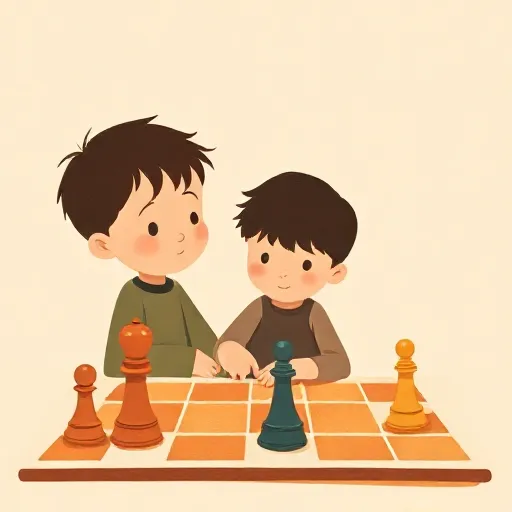
Even if envy feels ugly, could it sometimes be fitting — an accurate response to how things are? Philosophers discuss the fittingness of emotions, meaning whether the emotion correctly sizes up the situation. Fear is fitting when you face real danger. Is envy ever fitting?
Consider the envious preference: you prefer a world where neither you nor your rival has the good over a world where only your rival has it. If envy claims that this world is better for you, some philosophers say that is a mistake. What makes your life go well, they argue, depends on what you have, not on what your neighbor has. If your neighbor loses his fancy bike but you still do not have one, your life has not improved. So envy seems systematically irrational — it treats something as bad for you that is not.
But this is not the whole story. Some goods are positional: their value depends on how you compare to others. Being the fastest sprinter on the team, winning the science fair, or earning a spot in a selective orchestra are all comparative achievements. If your rival drops out, your own position rises, and that can genuinely make your life go better, at least in that domain. So envy about positional goods might be entirely fitting. Moreover, if you deeply care about your standing among friends, some philosophers would say that your well‑being includes those concerns, so envy can be fitting for you.
There is also a practical side. If envy pushes you to train harder, study longer, or master a skill, it might be prudentially good — helpful for your goals. But that does not settle whether the feeling itself captures the truth. The rationality of envy is still debated, and much hinges on what we think makes a human life go well.
Envy, Fairness, and Why It Still Matters

You might wonder: if envy is so painful, does it have anything to do with justice? After all, people often complain that inequality is unfair, and that sounds a lot like envy. But philosophers warn against confusing envy with resentment. Resentment is a moral emotion: it says, “You wronged me” or “This situation is unjust.” Envy, in contrast, does not need any claim of injustice. You can envy someone’s good luck without thinking they did anything wrong. Most philosophers hold that envy itself is not a moral feeling.
This distinction matters because some critics have accused campaigners for equality of being driven by envy, not principle. But if egalitarians want to correct unfair rules, not just tear down the fortunate, they are feeling resentment, not envy. The twentieth‑century philosopher John Rawls (1921–2002) took the threat of envy seriously. He worried that in a society with large gaps between rich and poor, envy might explode and destroy people’s self‑respect. He called this “excusable general envy” — a kind of pain that, if widespread, could make a just society unstable. Rawls thought the deepest root of envy is a lack of confidence in our own worth, combined with a sense of powerlessness.
Yet Rawls also noted that envy tends to target people close to our own level, not those astronomically richer. If that is right, the real danger may not be enormous inequality itself, but the everyday comparisons we make. So the question is not just “how much do people have?” but “whom do we compare ourselves to?”
All this lands close to home. The next time you feel that gnawing twinge because a friend got something you wanted, pay attention. Is it pushing you to practice, create, or learn? Or is it just wishing they would stumble? Recognizing the shape of your own envy can help you decide whether to listen to it, reshape it, or let it go. Philosophers will keep arguing about envy because it sits right at the intersection of our inner lives and our relationships with others — and because understanding it might make us wiser about both.
Think about it
- If you could secretly press a button that would make your rival lose the thing you envy, but you still wouldn’t get it yourself, would you press it? What does your answer reveal about you?
- Can feeling envy ever help you become a better person, or does it always hold you back?
- Imagine a world where no one ever compared themselves to anyone else. Would that world be more or less fair? Why?