Is Money Real? The Strange World of Social Things
Cutting in Line: Nature or Make-Believe?

You are waiting in line for a movie, and someone cuts ahead. Instantly, you feel they have done something wrong. But is that wrongness baked into the universe, like gravity? Or is it just a rule that humans invented?
This is the ancient puzzle of social ontology—the study of how social things exist. Over two thousand years ago, Greek philosophers called the Sophists started a noisy debate: are justice, law, and language products of phusis (nature) or nomos (custom, convention)? Some argued that certain rules are naturally right, while others claimed they are just agreements people make up. The question never went away. In the 1600s, Thomas Hobbes (1588–1679) said that a peaceful society is generated by a covenant—a kind of contract—among all the people. A century later, David Hume (1711–1776) argued that many social things, from money to promises, arise from convention: not from explicit deals, but from shared habits and expectations that build up without anyone planning them.
Today, philosophers split this big puzzle into two precise questions. First: How do social categories and facts get set up? (What gives a piece of paper the status of money?) Second: What are social things made of once they exist? (Is a dollar bill ultimately just thoughts in people’s heads, or is it something more?) Let’s take them one at a time.
How a Piece of Paper Gets Power

The philosopher John Searle (b. 1932) gave one of the clearest answers to the first question. He noticed that many facts exist only because we collectively treat them as existing. He called these institutional facts. A dollar bill is not valuable because of its physical makeup. It works because we, as a society, collectively accept a rule: X counts as Y in context C. A piece of paper with a special design (X) counts as a dollar bill (Y) in the United States (C). This rule is a constitutive rule—it does not just regulate an activity; it actually brings a new type of thing into being.
When we collectively accept that rule, the paper gains a status function: it now functions as money. And with that status come deontic powers—rights, obligations, and permissions. You have the right to exchange the paper for goods; the seller is obliged to accept it. Searle argued that all institutional reality, from governments to marriage, is built up by layers of such status functions, all ultimately resting on collective attitudes. He even said that the whole structure is created and maintained by declarations—speech acts that something counts as something else.
This explains how social categories get anchored. But it does not yet tell us what the dollar bill is made of underneath those collective attitudes. Is it just a swirl of thoughts? That leads us to the second question.
Minds or Monsters? The Fight Over Social Building Blocks
One powerful answer is that all social facts are made of the mental states of individual people. The British philosopher John Stuart Mill (1806–1873) argued that society is simply an aggregate of human minds, and that social science is just psychology applied to large numbers of people. This view, called psychologism, holds that a group’s intention, a law’s meaning, or the value of money can all be reduced to what individuals think, intend, and believe. If you could look inside every person’s head, you would have the complete recipe for every social fact.
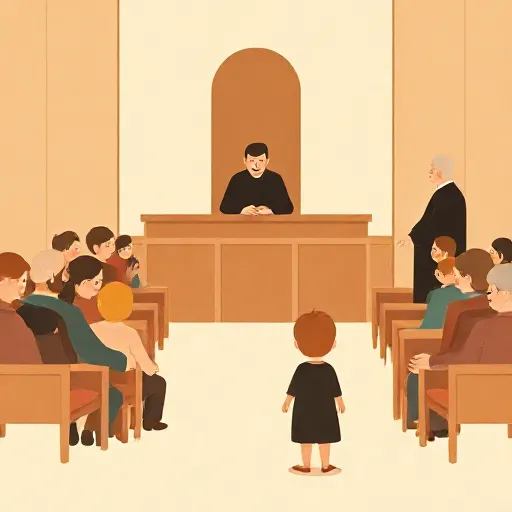
At first, this sounds satisfying because it uses only familiar ingredients. A basketball team’s plan seems to be nothing but each player’s intention plus their expectations of one another. But roadblocks appear. Imagine a jury that finds a defendant guilty. The verdict is a group belief. Yet it is possible that every single juror has private doubts, and only when they discuss the case do they arrive at a collective judgment that none of them would have reached alone. That group belief cannot be identical to the sum of individual beliefs. And consider a corporation: it can own property, sue, and be sued, yet it is not the same as any person or even the total of all its employees. Psychologism struggles to capture these cases.
The opposite view, championed by the French sociologist Émile Durkheim (1858–1917), is that social facts are things in their own right, external to individuals and able to push back. Remember that line you were in? Even if nobody is watching, you feel a pressure to stay in place. Durkheim said that pressure is a social fact—a real force woven into the community. He studied crowds and found that people in groups sometimes act in ways they never would alone, as if the group has its own personality. He argued that such collective behavior cannot be broken down into individual psychology. Social facts, he claimed, are just as real as physical objects, and they can be studied by observing their effects, much like a scientist studies magnetism.
But holism has troubles too. If a social fact floats free of any particular person’s mind, where exactly is it? And how can something created by humans become so independent of them? That puzzle keeps philosophers busy.
Walking Together: A Third Way?

Perhaps we do not have to choose between “only individual minds” and “spooky group forces.” The philosopher Margaret Gilbert (b. 1942) introduced the idea of joint commitment. When two people walk to the store together, they are not just two individuals moving in the same direction. They have formed a plural subject—a “we.” If one suddenly darts away without explanation, something is broken: an obligation that did not exist before they started walking together. Gilbert says that joint commitments create norms that bind all participants, even if they never signed a contract or explicitly agreed.
Everyday examples are everywhere: promising to study together, forming a club, playing a game. The commitment itself generates duties and expectations that would not exist in a simple pile of individuals. The philosopher Michael Bratman (b. 1945) has tried to explain shared activities using only individual attitudes plus common knowledge. In his account, you and I can share an intention to paint a fence if each of us intends to do our part, we mesh our sub-plans, and we each know this about the other. But many feel that Bratman’s picture misses the moral weight of joint commitment. When you are walking together, you do not just predict the other person will not run off—you feel they owe it to you to stay. Gilbert’s “we” seems to explain that feeling better, yet critics worry that she introduces a mysterious new kind of entity.
Why Climbing Inside Social Reality Matters

So which view is right? The debate is still on. But asking these questions is not just for philosophers in armchairs. Karl Marx (1818–1883) showed that economic categories like “commodity” seem natural but are actually products of human relations. Later, thinkers from the Frankfurt School argued that when we treat social arrangements—including racial and gender categories—as if they were facts of nature, oppressive systems become harder to challenge. Once you see that a category like “CEO” or “citizen” is held in place by collective attitudes and practices, you can ask whether it should exist at all.
Understanding social ontology also reveals how fragile our most solid-seeming institutions really are. If everyone in a country woke up tomorrow and stopped believing that the paper currency had value, the economy would collapse. Money’s power depends entirely on our shared web of belief. The same is true for laws, teams, and even the unwritten rules of friendship. By climbing inside these invisible structures, we gain the power not just to describe them, but to ask: Which ones do we want to keep, and which ones deserve to be torn down?
Think about it
- If every student in your school secretly decided that the principal had no authority, would the principal really lose their power? What else would need to change?
- When a team makes a decision that no single member fully endorses, is it fair to hold the team responsible, or can only individuals be responsible?
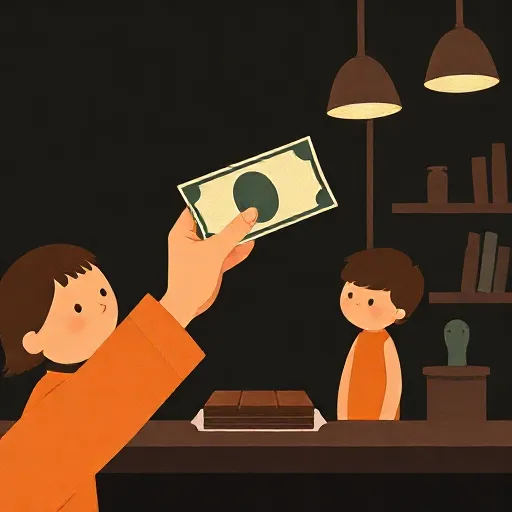
- A cashier looks at your crumpled dollar and says, “This is just paper. I refuse to treat it as money.” In that moment, does the bill stop being money? What would it take for everyone to stop believing?