What Is Money, Really? A Coin, a Promise, or a Shared Dream?
The Day Barter Broke Down

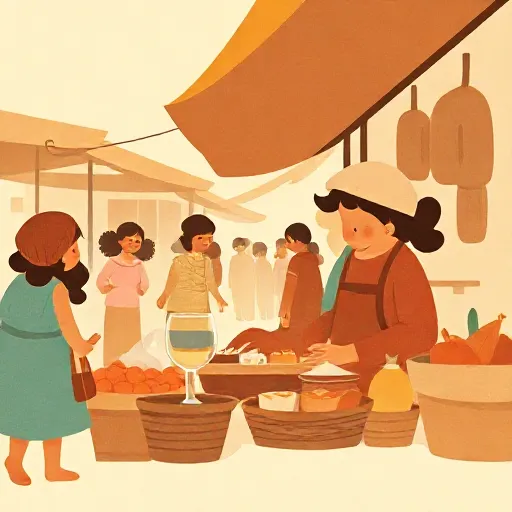
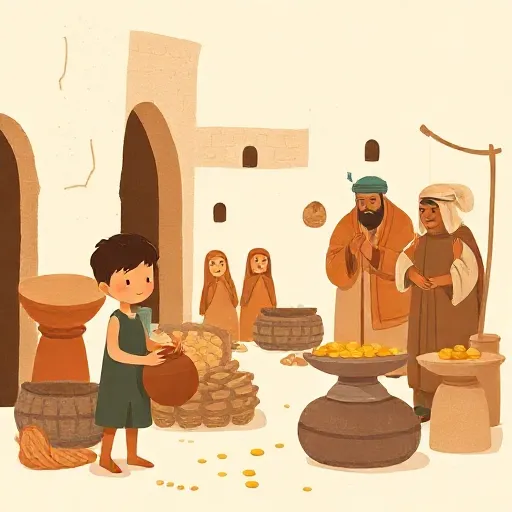
Imagine you have a pet chicken and you desperately want a new pair of sneakers. You walk to the market, but the sneaker seller only trades for grain. The farmer with grain only wants a shovel. And the blacksmith with shovels? He’s not interested in chickens at all. You’re stuck. This problem is what economists call the double coincidence of wants — two people both wanting exactly what the other offers at the same moment. Before money, trading was a slow, frustrating mess.
But then something clever happened: people started using an in-between item. Something everyone could agree on as a way to pay. That “something” is money. This raises a gigantic question that philosophers, economists, and anthropologists still fight about: what is money, really? Is it a real, physical thing like gold, or is it just a shared belief, a kind of promise we all pretend is valuable? Your answer changes how you understand your allowance, your parents’ bank account, and even why the price of a candy bar goes up over time.
Money as a Thing: The Gold in Your Pocket
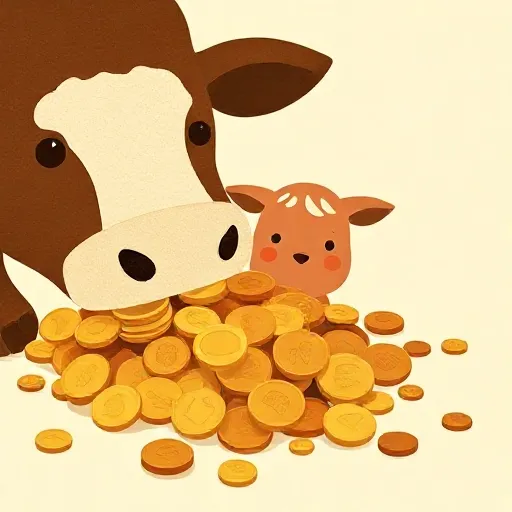
The oldest and most famous answer is the commodity theory of money. It goes back at least to Aristotle (384–322 BCE), who argued that money is itself a useful commodity — a real object with real value — that also happens to make trade easier. To work well, a commodity needs to fulfill three jobs: it must be a medium of exchange (people accept it for goods), a unit of account (you can measure the price of things in it), and a store of value (it doesn’t rot or vanish overnight).
Throughout history, societies have tried all sorts of commodities as money: cattle, grain, clamshells, and — most famously — precious metals like gold and silver. Because metal is durable, portable, and can be divided into small pieces, coinage became the superstar of the commodity theory. A gold coin had value because the gold itself was valuable. This view is sometimes called metallism. Even when paper banknotes appeared, they began as a receipt promising to pay the bearer a specific weight of silver. The British pound sterling still carries the echo of that promise in its name (“pound weight of sterling silver”).
Many economics textbooks still teach this story. But there’s a catch. If money is just a commodity, why does the same coin buy less bread this year than last year? Inflation — the slow loss of money’s buying power — is hard to explain if money’s value is tied only to its metal content. Moreover, many anthropologists now argue that the whole barter-to-money story is a historical myth. Early societies probably didn’t stumble from swapping chickens to counting coins. Instead, money likely emerged as a way of recording debts — a system of IOUs long before any gold changed hands.
Money as a Promise: The IOU That Rules the World

The rival is the credit theory of money. On this view, coins and banknotes are just tokens representing something far more abstract: a credit relationship, or a promise. When you hold a dollar bill, you’re holding a token that says someone, somewhere, owes a favor or a product to whoever holds that token. Money, then, isn’t a physical commodity at all. It’s a social construction — a set of agreements that work because people trust them.
A. Mitchell Innes (1864–1950) and other early credit theorists argued that what makes money real is the credibility of the issuer and the ability to pass the promise along to others. If you trust that a shopkeeper will accept this piece of paper, and she trusts that her supplier will too, then that paper functions as money. The state often acts as the most trustworthy issuer, which is why governments can mint coins and print notes that everyone accepts. This idea is called chartalism, or the state theory of money.
Today, almost all money is fiat money — currency that a government declares to be legal tender but that isn’t backed by gold or silver. Since 1971, when the United States stopped allowing dollars to be swapped for gold, the whole world has run on fiat money. But credit theory reveals a twist: most of the money in a modern economy isn’t printed by the government at all. Commercial banks create it whenever they give out a loan, typing new numbers into an account. The state merely underwrites that system, promising that bank deposits can be turned into physical cash. So the money in your pocket is, in a deep sense, a chain of promises all the way down.
Critics of the credit theory worry about what happens when promises multiply too fast. If banks and governments create too much money, prices can spiral upward, debts become crushing, and financial crises erupt. Some people even argue we should return to a gold standard to tie money back to something solid. Defenders reply that recognizing money as a social tool gives us the best chance to build a fairer, more stable system.
How Does a Promise Become Real? The Magic of “We All Agree”

If money is a social construction, how exactly does a piece of paper start acting like it has real power? This question belongs to social ontology, the branch of philosophy that studies how human institutions are built. The philosopher John Searle (born 1932) offers an influential answer: money works through collective intentionality. That’s a fancy way of saying that a group of people share a mental attitude — they all count a certain object as money.
Searle describes the process like this. First, someone makes a performative declaration: “This is money!” If others in the community accept that declaration, it becomes a standing social rule. The paper in your wallet has no magical physical property; its money-ness comes from the fact that we all agree to treat it as money. Crucially, Searle says money depends on our subjective attitudes but is not located solely in our minds — it’s a real, shared institution, much like a language or a soccer rulebook.
Another camp in the argument holds that money doesn’t require anyone to officially declare it. Instead, money emerges naturally as a solution to the problem of getting people to trade. On this functional account, something is money simply because it performs the jobs of money effectively in a particular community. The philosopher Francesco Guala (born 1964) likens money to a tool that sticks around because it works, not because an authority stamped it. So whether dollars, euros, or shiny shells, money is what money does.
Why It Still Matters: Your Allowance, Inflation, and Trust
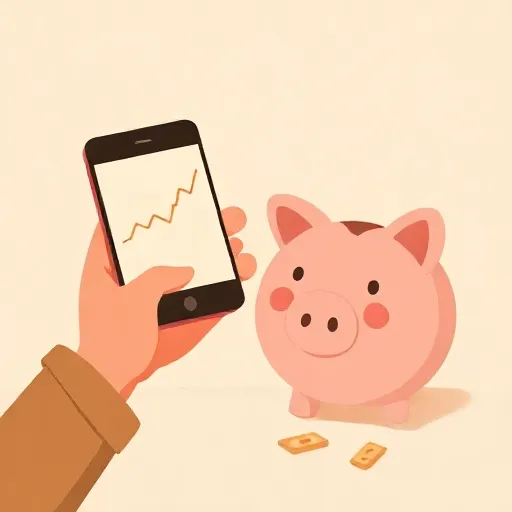
So what’s the point of this ancient wrestling match for a twelve-year-old today? Everything. The question of whether money is a thing or a promise directly shapes why your savings can shrink and why grown-ups worry about “the economy.”
If money is a commodity with fixed value, your ten dollars should always buy the same amount of stuff. But if money is a web of promises, its value hinges on trust. When too many promises (too much money) chase too few goods, prices rise — that’s inflation. The money in your piggy bank loses power, not because the coins got any lighter, but because the social agreement behind them wobbled. Understanding money as a shared promise explains why central banks work so hard to keep trust steady, and why losing that trust can lead to frightening collapses, like the global crisis in 2008.
On a smaller scale, this debate is in your pocket every day. When you tap a card or a phone to buy a snack, you’re not handing over gold; you’re transmitting a signed digital IOU through a system that millions of strangers believe in. The whole modern world runs on that shared belief. So the next time you receive your allowance, you’re holding more than just buying power — you’re holding a tiny, portable piece of an argument that has lasted for over two thousand years.
Think about it
- If your school suddenly decided to use acorns as money, would they count as real money? What conditions would need to be met for it to work?
- Suppose a government prints extra cash to give everyone a free bicycle, but then the price of everything else doubles. Is that fair? Who might win and who might lose?
- Imagine a future where all money is purely digital — just glowing numbers in a bank’s computer. Would that change what money fundamentally is, or would it still be the same kind of promise?