Should Everything Have a Price? The Great Market Debate
A school hallway where everything is for sale
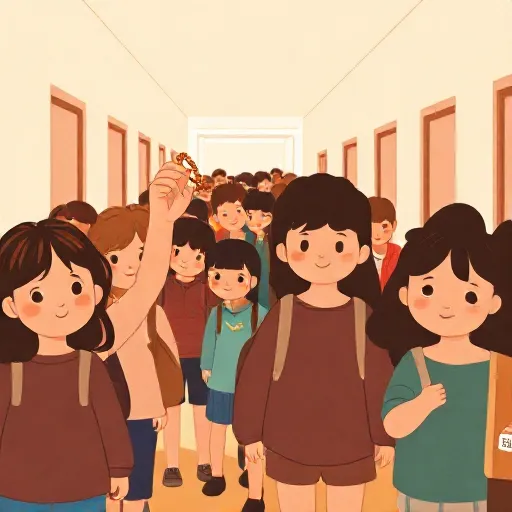
Imagine your school suddenly allowed students to trade anything for money. Not just snacks—also spots at the front of the lunch line, help with tomorrow’s test, even a seat next to your best friend. Some kids cheer: now they can get exactly what they want. Others feel uneasy. Does turning every exchange into a cash deal make friendships shallower? Does it take advantage of kids with less money?
You just stepped into a miniature version of one of the biggest questions in philosophy: Should markets decide what we get and keep, or should some things be off-limits to buying and selling? For over two hundred years, thinkers have battled about where to place the price tag—and where to hide it away.
What exactly is a market?
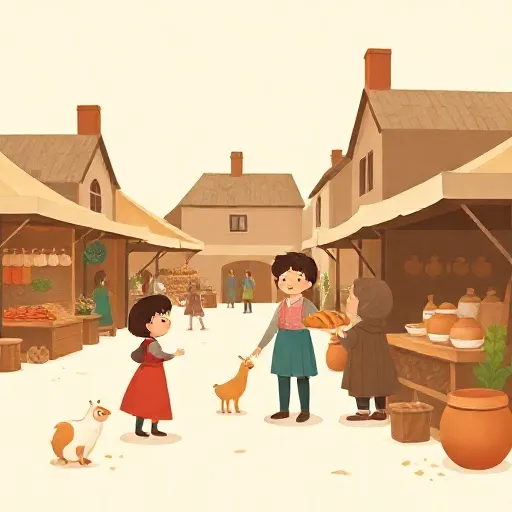
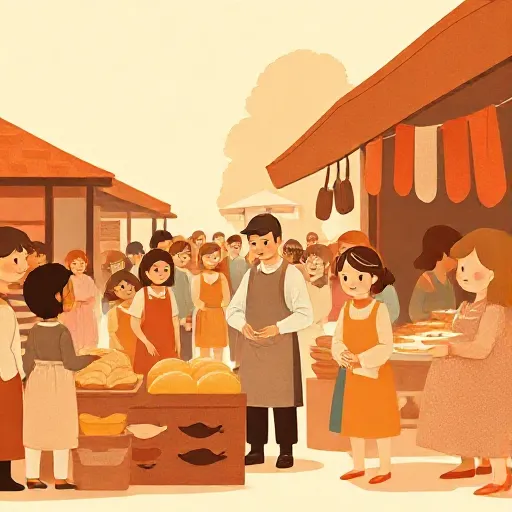
A market is any space where people exchange goods and services mainly for their own benefit. Usually, money is the go-between. A baker sells bread to feed their own family, not because they love you. You buy the loaf because you’re hungry. Both of you get something you want. That’s a market transaction.
Competition creeps in naturally: buyers hunt for the best deal, so sellers must offer something attractive. This push-pull is why people talk about market economies—societies that rely on market exchanges instead of on tradition, gifts, or a central planner to decide who gets what. The key idea isn’t greed; it’s that self-interest, when millions of strangers deal with each other, can spill over into enormous cooperation.
Yet there is a difference, as the thinker Karl Polanyi (1886–1964) pointed out, between a market economy and a market society. In a market society, the logic of buying and selling creeps into every corner of life—friendships, family, politics—until social bonds are shaped by the same cold calculations you’d use to pick a brand of sneakers. Much of the philosophical fight is about whether a market economy inevitably turns into a market society, and whether we ought to stop it.
The friends of markets: freedom and the invisible hand
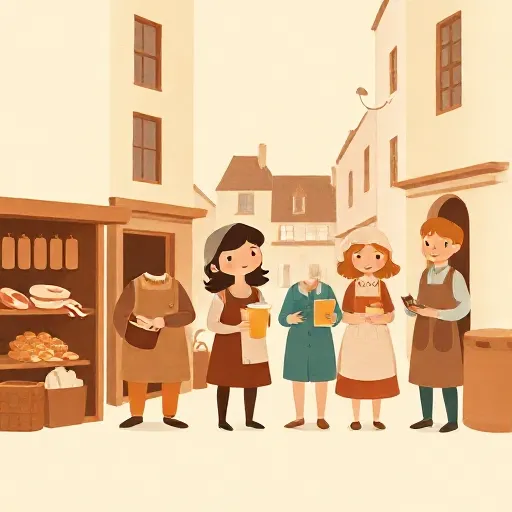
Many thinkers celebrate markets as engines of human freedom and wealth. The Scottish philosopher Adam Smith (1723–1790) gave the famous image of an invisible hand: when you work hard to get ahead, you unwittingly serve thousands of others. As Smith wrote, “It is not from the benevolence of the butcher, the brewer, or the baker, that we expect our dinner, but from their regard to their own interest.” Self-interest pushes people to invent, to save, to trade far beyond their tiny circle of family.
Later defenders like Friedrich Hayek (1899–1992) and Milton Friedman (1912–2006) added that markets handle information no government planner could ever grasp. Prices—rising or falling—signal what millions of people really want, so resources flow where they’re most valued without anyone needing a grand plan. Competition weeds out waste, making markets remarkably efficient at growing the total pie.
Freedom also sits at the heart of the pro-market case. If you own something, why shouldn’t you be free to swap it for whatever you prefer? Interfering, defenders say, treats you like a child. In a pure free-market picture, society becomes a web of voluntary contracts between equals—no bosses, no commands.
The foes: poverty, exploitation, and a world turned into a shop
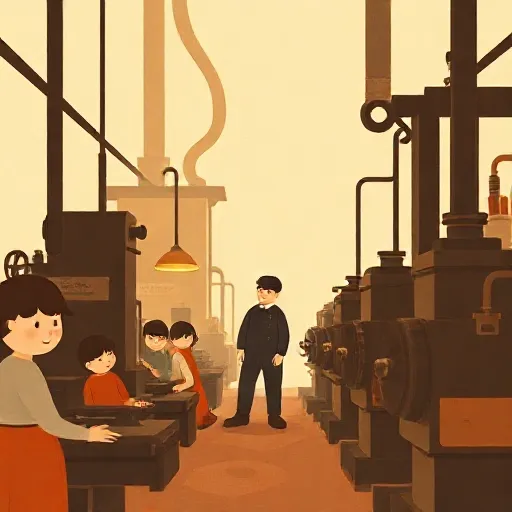
But the cheering section has always faced loud opponents. One of the loudest was Karl Marx (1818–1883), who with Friedrich Engels (1820–1895) looked at early industrial capitalism and saw something ugly. In theory, workers and employers meet freely. In reality, Marx argued, the worker who owns nothing but their own hands has almost no bargaining power. They must sell their labor for whatever wage the factory owner offers—or starve. That’s not exactly freedom.
Markets, critics point out, can lurch from boom to bust, throwing millions into poverty overnight. They don’t automatically spread the pie fairly. In fact, if you let markets run without rules, the rich often get richer while vulnerable people—migrants, people with little education, those who fall ill—can be left with crumbs.
Marx believed markets also alienate us: they cut us off from the products of our labor, from nature, and from each other. Instead of making a chair and feeling proud of it, you become a tiny replaceable cog in a giant machine. Human relationships get replaced with cold transactions. Back to our school hallway: if every favor has a price tag, what happens to simply being a good friend?
The critical friends: taming the beast
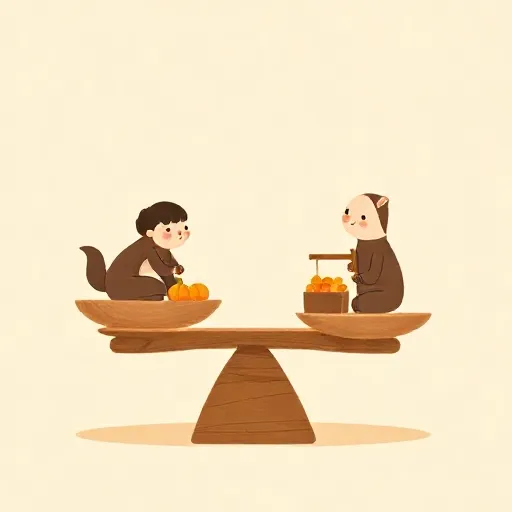
Between the high-fives of fans and the angry shouts of foes sits a third group. Thinkers like John Rawls (1921–2002) and John Maynard Keynes (1883–1946) saw both the genius and the danger of markets. Their answer? Don’t scrap markets; surround them with sturdy institutions that distribute the gains more fairly.
Rawls famously argued that inequalities in a society are only just if they end up helping the people at the very bottom—the worst-off. Markets might grow a giant pie, but a welfare state (public schools, unemployment insurance, healthcare) is needed to make sure that growth lifts everyone, not just the clever and the lucky. On this view, the government is not the enemy of markets; it’s the referee and the safety net.
Regulating markets to prevent abuse—banning child labor, safety rules, anti-pollution laws—also belongs in the toolkit of critical friends. Their guiding motto is that politics, not the stock exchange, should set the ultimate goals of a society. The point is to enjoy the racing engine while making sure the car has steering and brakes.
The limits: what just shouldn’t be sold
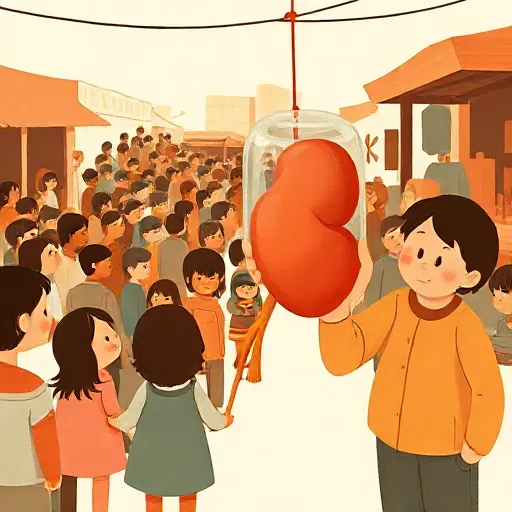
Some of the fiercest debates go a step further and ask: even if a market would operate pretty efficiently, should everything be up for sale? In the philosopher Michael Sandel’s terms, we live in an age where more and more things get treated as commodities—mere objects to buy and own, like a candy bar. But when you pay cash for a kidney, a vote, or a spot on a prestigious sports team, does something important get soiled?
Philosophers who worry about commodification say yes. Certain goods carry meanings that cash cannot properly touch: parental love, civic equality, bodily integrity. If the school allowed kids to purchase off homework, for instance, the whole idea of learning for its own sake shrivels up. In a society where everything becomes a market transaction, some argue, we risk becoming shallower, less trusting, even less human.
Still, others warn that banning such trades outright can backfire, driving them into dangerous black markets where no rules apply at all. The proper response might be to limit or reshape the market—banning advertising for organs, say, while ensuring desperate sellers aren’t exploited. The boundary lines are messy, and philosophers keep wrestling with them.
From the cafeteria to the planet
You may never have to debate the sale of a kidney in class, but you already face the market-versus-more-than-market question all the time. Do you stream music instead of buying an album because it’s cheaper, even though artists earn almost nothing? Do you buy the cheapest sweatshirt even if employees in another country worked in lousy conditions to make it? These aren’t just consumer choices; they’re tiny votes about what kind of world you want.
The tangle of markets, rules, and human decency spills into the biggest challenges of our era, too. Climate change, for example, shows what happens when factories’ pollution isn’t priced into their costs—it’s a classic market failure that demands collective rules. Yet once we put a price on carbon, markets can also become part of the cure. The philosophical question never goes away: when do we trust the invisible hand, and when do we reach out with our own?
Think about it
- If your school allowed anyone to buy and sell anything without rules—test answers, seats, even social invitations—what, if anything, would you say must remain off-limits? Try to explain why you draw the line there.
- Suppose a desperately poor person wants to sell one of their kidneys to feed their family. Some argue it’s their body, their choice; others say allowing it would exploit the most vulnerable. Which arguments strike you as stronger?
- Think of something you consider priceless. What makes it different from a phone or a candy bar? How would you defend its value to someone who insists it should be for sale?