Why Would Anyone Want Less Democracy? Meet the Neoliberals
When the Class Votes to Take Your Lunch
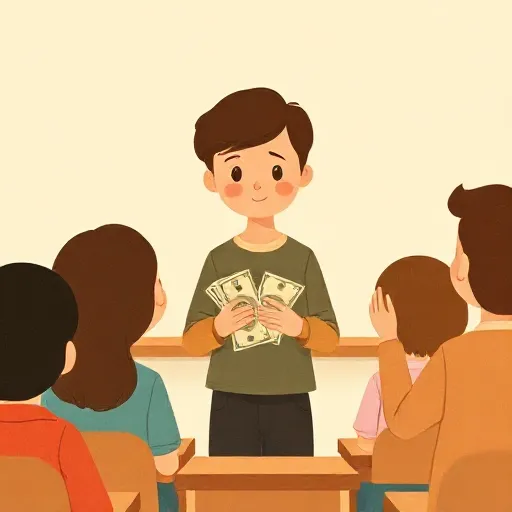
Imagine your class is deciding what to do for an end-of-year party. Someone proposes that everyone should give five dollars from their own pocket into a fund — but the majority can also vote to take that money from anyone who refuses. You object. “But it’s a vote,” the teacher says. “Isn’t that fair?”
Three thinkers — Friedrich Hayek (1899–1992), Milton Friedman (1912–2006), and James Buchanan (1919–2013) — would say no. They saw a danger in letting the majority do anything it wants. They called their alternative neoliberalism (say “nee-oh-lib-er-uh-lism”). At its heart is a balancing act: a society should have strong private property, free markets, a welfare state that catches people when they fall — and a democracy wrapped in tight rules. Without those rules, they believed, liberty itself is at risk.
The Market’s Secret Power: Knowledge No One Person Has
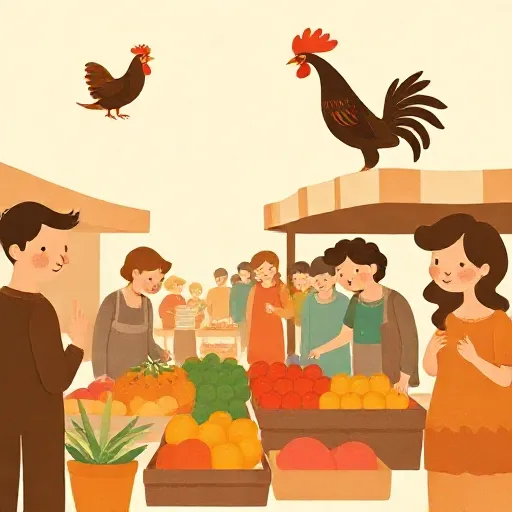
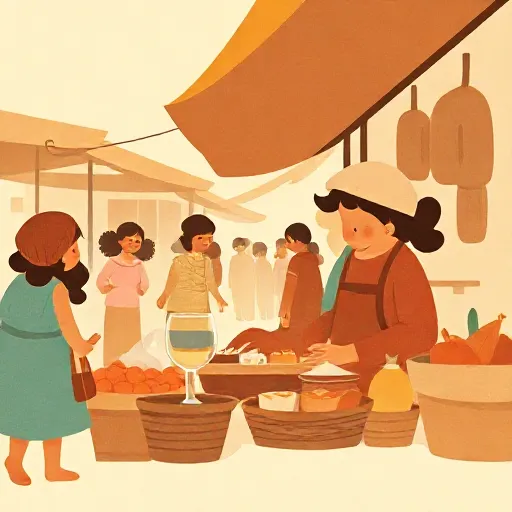
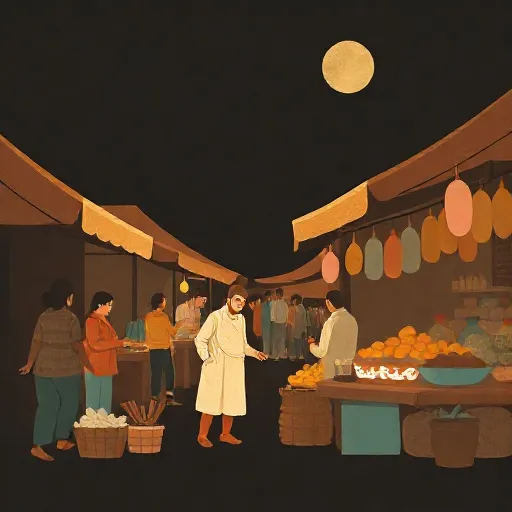
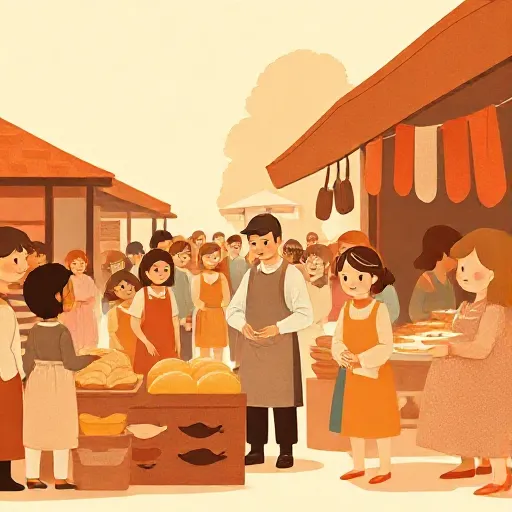
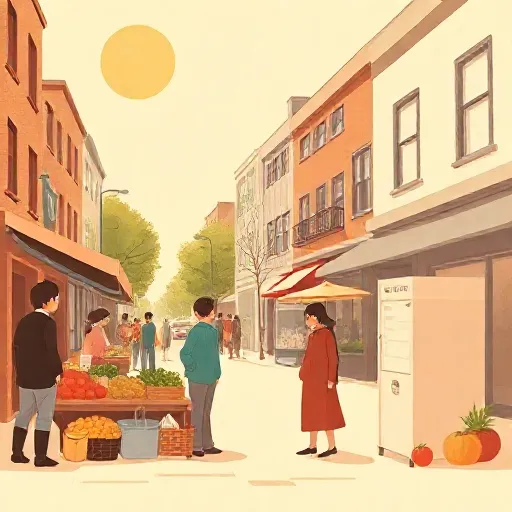
To see why these thinkers trusted markets so much, we have to understand a puzzle about shopping. Walk through a farmer’s market. Sellers call out prices for apples, eggs, and bread. Somehow, without anyone in charge, there are enough apples for everyone who wants them — and the apple-seller doesn’t even know how many people will show up. How does this work?
Hayek gave a famous answer. No single person, he argued, could ever know everything needed to plan an economy from the top down. Each of us holds tiny bits of knowledge — how much rain fell on our farm, which factory has a broken machine — that no central planner could collect fast enough. A price system solves this. When eggs become scarce, the price rises. Suddenly thousands of strangers, without a single order, start using fewer eggs and looking for alternatives. Hayek called this the “marvel” of the market: it coordinates millions of people using scattered knowledge that no one person ever sees.
For neoliberals, this wasn’t just about efficiency. It was about freedom. If a government tried to replace prices with a plan, it would have to command people’s choices. Markets, they said, let people cooperate peacefully even when they disagree about what’s truly good. Capitalism — a system where private owners control businesses and prices are set by trade, not by the government — became their engine of both prosperity and liberty.
“The Ideal Society Is Anarchy” — So Why Have a Government at All?
You might expect such market fans to want almost no government. Surprisingly, all three thinkers said a good society needs a visible hand, too. They supported public goods — things like clean air, roads, and national defense that markets tend to underproduce. They backed social insurance, a safety net for the sick, the old, and those hit by disaster. In fact, Hayek even defended a basic income — a guaranteed minimum payment to every person. Friedman designed a negative income tax that would send cash to people whose earnings fell below a certain level, paid for by taxes on the rich. Buchanan argued that fair rules could include a 100 percent inheritance tax to stop an aristocracy from forming.
Wait — how could they cheer for both markets and redistribution? The key was their starting point. They did not think about the best society as a utopian blueprint. Instead, they practiced what philosophers call non-ideal theory: they took human beings as we really are — sometimes greedy, often mistaken, and always limited in what we can know. Buchanan was a contractarian, meaning he thought fair institutions are the ones we would all agree to if we were negotiating behind a “veil of ignorance” about our own position. From that standpoint, we would want a productive market economy and a safety net to protect us if we landed at the bottom. We would also want rules that stop anyone in power from rigging the system.
Democracy in a Straitjacket
If neoliberals sound almost like social democrats so far, here is where they break away. They spent enormous energy arguing that democracy must be limited by a constitution that protects individual rights — even against the will of the majority. Why the fear of unlimited voting?
Hayek warned that when a legislature can do anything, it soon turns into a tool for special interests. Politicians buy votes with promises paid for by the minority, and the rule of law — the idea that everyone is equal before clear, stable rules — crumbles. Without the rule of law, you cannot plan your life, because you never know when a new law will snatch away what you own or how you worship. Friedman put it bluntly: the fundamental threat to freedom is coercion, whether it comes from a dictator or a momentary majority. Buchanan showed mathematically that simple majority rule can lead to a spiral where coalitions gang up to loot one another, leaving everyone worse off.
Their solution was to put democracy in a “straitjacket” — constitutional limits, supermajority requirements for big decisions, and federal systems that let people exit heavy-handed states. They also argued that keeping many parts of life (like schooling and healthcare) in the market would prevent political fights and break up concentrated power. Neoliberals loved “exit” over “voice”: if a school board makes a bad rule, a voucher system lets families leave rather than spend years campaigning.
Critics point to a dark side. Hayek once said positive things about Chile’s dictator Augusto Pinochet, thinking a temporary liberal dictatorship might be better than a socialist one. That gamble appalled many people — and it showed that when liberals prize markets over democratic consent, they can end up excusing tyranny. Even today, the tension remains: how many limits can you place on democracy before it stops being democracy at all?
Why This Argument Is Still Under Your Desk
You live in the world these three thinkers helped build. If your city debates whether to raise taxes to fix potholes or to cut spending to keep more money in people’s pockets, you are hearing neoliberal assumptions about what government should and shouldn’t do. School voucher programs — which let families use public money to pay private school tuition — come straight from Friedman’s playbook. When central banks (like the U.S. Federal Reserve) decide interest rates using a set rule rather than political guesswork, that’s Friedman’s monetarism in action.
Yet the doubts are just as alive. Does protecting market freedoms really enable a fair shot for everyone, or does it allow wealth to pile up in too few hands, drowning out the voices of ordinary citizens? Can a society cut government spending during a recession without hurting the people who need help most? And if you choke democracy with so many locks and chains, do you end up protecting liberty or silencing the people?
The neoliberals didn’t agree on all the answers — and they certainly didn’t settle the debate. But they left you a question you can ask whenever your class, your city, or your country makes a collective choice: just because the majority won, does that make it right? And what are the rules that should stand even when the crowd says no?
Think about it
- If your whole school voted to ban a club you love, would you think the vote was fair, or should some things be off-limits to a majority?
- Can you think of a situation where a market (like swapping snacks at lunch) worked better than a group vote to decide how to share things? What might be the downside?
- Hayek said no person is smart enough to plan an entire economy. Do you think any single person could plan a perfect school cafeteria menu that makes everyone happy? Why or why not?