
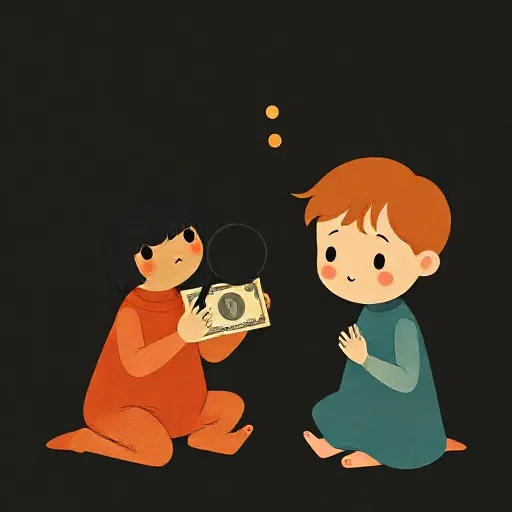
Why Is a Dollar Bill Worth a Dollar? The Puzzle of Institutions
The First Day of School

You walk into a new building. The bell rings. You find your assigned seat. A teacher gives instructions, and you write your name on a piece of paper. You are inside a social institution — your school. But what does that really mean? A school is not just a random crowd. It has a structure: roles like student, teacher, principal, each with different tasks and authority. It has rules, from raising your hand to completing homework. It has a culture, an invisible feel of how people treat one another. And it persists across time — when you graduate, new students will fill those seats.
Philosophers call these organised, rule‑guided groups social institutions. Governments, banks, law courts, and families are institutions too. They are the scaffolding of our lives. But how do they come to exist? Are they just habits we fall into, or are they made by a special kind of agreement? The answer matters because institutions shape what you are allowed to do, what you are owed, and even who you become.
Just a Handy Habit?

Imagine a road with no traffic rules. Everyone swerves wherever they like. Chaos. Now suppose everyone starts driving on the left. It works because you expect others to do the same, and you want to avoid a crash. The philosopher David Lewis (1941–2001) called such a practice a convention: a regularity in behavior that solves a coordination problem. Each person chooses an action (keep left) because they believe everyone else will choose it too, and everyone prefers that shared solution.
Some thinkers argue that all institutions are just bundles of conventions and rules. Francesco Guala, for instance, proposes a rules‑in‑equilibrium view. An institution is a set of rules that people are motivated to follow because of incentives and expectations. Take money. A dollar bill is just paper, but you use it to buy things because you expect others will accept it. You don’t need a grand ceremony or a magic declaration — you just need a shared habit of treating that paper as a medium of exchange. If everyone suddenly treated it as worthless, it would stop being money.
This atomistic picture is tidy. A school, on this view, is a huge pile of habits: students sit when the bell rings, teachers assign homework, the principal enforces discipline. But does that capture what feels special about a school? A mere bundle of habits doesn’t explain the web of duties and rights, the sense that a teacher’s role isn’t just a habit but something with real authority. Something seems to be missing.
When We All Agree It’s Real
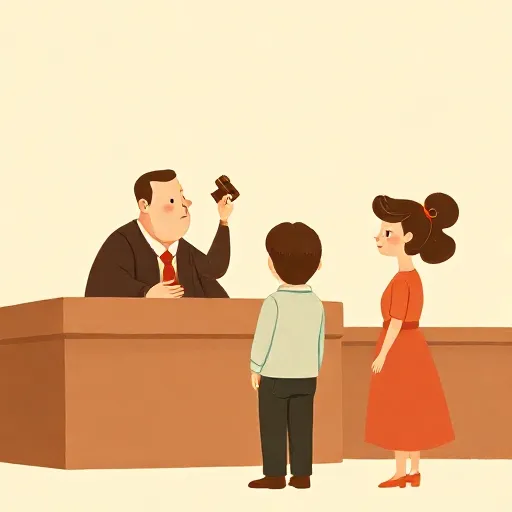
Imagine a wedding. Two people stand before an official. The official says, “I now pronounce you married.” Before those words, they were not married; after, they are. The philosopher John Searle (born 1932) argues that this isn’t just a habit — it’s a performative, a saying that is also a doing. Searle says many institutions are built on constitutive rules that have the form: X counts as Y in context C. A certain string of words in a courtroom counts as a guilty verdict; a piece of paper with a specific design counts as a twenty‑dollar bill. These rules don’t just regulate an activity that already exists; they create new kinds of facts — institutional facts.
Searle calls the result a status function. A surgeon, for example, has a status function: she possesses the right to perform operations and the duty not to do ones she isn’t trained for. These rights and duties, he argues, exist only because we collectively accept the constitutive rules that assign them. If a whole society stopped believing that a government had authority, that authority would vanish — just as the Soviet Union collapsed in 1989 when enough people withdrew their acceptance.
This collective‑acceptance story feels powerful. It explains why a dollar bill is worth more than the paper it’s printed on: we collectively treat it as money. But critics push back. A skilled surgeon could still heal patients even if no official accreditation existed. The activity of cutting and stitching bodies comes before the institutional raiments that wrap around it. So maybe some roles are built on real, pre‑institutional needs, not just on declarations. That leads to a different view.
Shared Goals, Moral Glue

Look again at that surgical team. Each member performs a different task — monitoring the heart, handing instruments, making incisions — but they all share a single aim: to heal the patient. Philosopher Seumas Miller calls this a joint action directed at a collective end. On his teleological account, institutions are organised systems of joint action. A school’s collective end is to educate; a police force’s is to keep the peace. These ends are not just private wishes; they are built into the roles themselves.
Crucially, many collective ends are also collective goods — things that meet basic human needs, like learning, health, or security. Miller argues that such goods generate moral obligations. If you and your fellow workers jointly produce something valuable, you may have a joint moral right to be compensated — not simply because a contract says so, but because of the work you did together. Likewise, a police officer’s duty to protect isn’t only a legal rule; it rests on the moral right of others to be safe. Institutions, on this view, have a moral backbone.
But what about the employee who just shows up for a paycheck? She might not personally share the institution’s grand purpose. Miller acknowledges this, but insists that the defining activity of a hospital is still healing — the collective end that gives the place its identity, even if not everyone in the building consciously aims at it every moment.
The Great Game of Rules
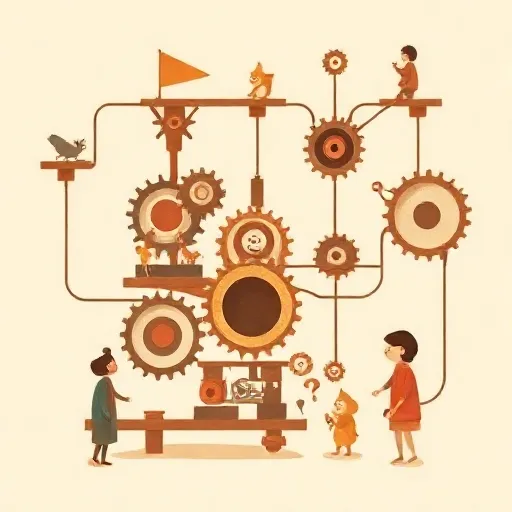
What holds all these roles and purposes together? Michael Bratman (born 1945) zooms in on the rulebooks. He proposes a procedural social rule model. An institution, he says, is a rich web of social rules — especially secondary rules, or rules about rules. Consider a legal system: the primary rule “don’t steal” is backed up by a secondary rule that says how laws are made. That secondary rule is a procedural rule, and it quietly organises everything.
Bratman borrows from the legal philosopher H. L. A. Hart (1907–1992). Hart noticed that in a complex society, a few key rules — like a constitution — unify thousands of other rules. Bratman adapts this idea: an institution is a network of social rules, understood as shared policies. A small “kernel” of people genuinely intend that everyone follow the rules; a wider “penumbra” goes along because they are motivated by the kernel’s pressure or by sanctions. Some procedural rules even create authority, giving certain role‑holders the power to make binding decisions — like a student council president who can call a meeting to order.
On this picture, the institution can even seem to have intentions of its own. Bratman argues that when an organisation like a pharmaceutical company decides to recall a medicine, that intention is the output of its procedural rules, not just the sum of what each employee privately wants. Not all philosophers agree; many insist that only individual human beings have minds. Still, the metaphor of a giant rule‑driven machine highlights how institutions can act in ways that surprise even the people inside them.
So, Can You Change the World?

Here is why this debate matters for you. Institutions can feel as solid as a mountain — you have to go to school, the government makes laws, money buys lunch. But these philosophers show that institutions are not like mountains. They are made by human choices, habits, beliefs, and shared goals. And if they are made, they can be remade.
Think about a rule at your school that you find unfair — maybe the lunch seating arrangements or the dress code. If institutions were just fixed facts of nature, you’d have no power. But they aren’t. When enough people understand how the rules work — and that those rules depend on collective acceptance, or on a shared purpose — they can work to change them. Student councils, petitions, and thoughtful argument are all ways of nudging the great machine. You are not just a cog; you are also a co‑author. The puzzle of institutions isn’t just about money or governments. It’s about how you can help build a fairer world, one rule at a time.
Think about it
- If everyone in the world suddenly forgot that a dollar bill was money, would it still be money? Why or why not?
- A secret club with three members has passwords, handshakes, and a rule about who can join. Is it an institution? What would make it one?
- When a school rule seems pointless to you, is it still your duty to follow it — and does your answer change if you think the rule was created only by an old habit nobody believes in anymore?