What a Wreath Above a Tavern Taught Philosophers About Signs
A Wreath and a Puzzle
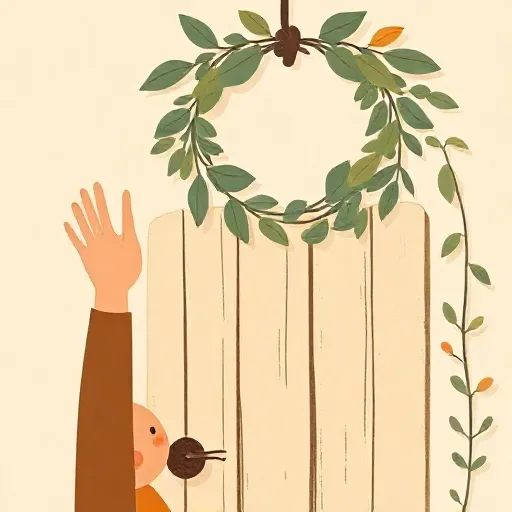
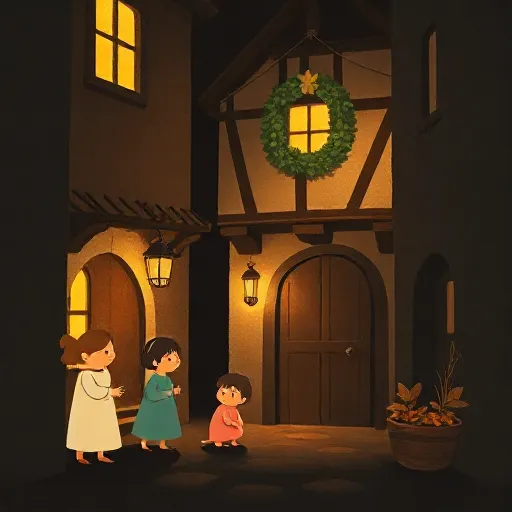
Imagine you’re walking down a cramped medieval street. Above a door you see a circle of woven leaves. You don’t wonder if it’s pretty; you know right away what it means: wine is sold here. But how does a leafy ring make you think of wine? That question — what makes something a sign? — kept philosophers busy for centuries. A sign can be a word, a footprint, a tolling bell, or that wreath. Figuring out how signs work was one of the biggest projects of medieval thought, and the answers they came up with still shape how we understand language, emoji, and even the voice inside your own head.
Augustine’s Big Idea: What All Signs Share
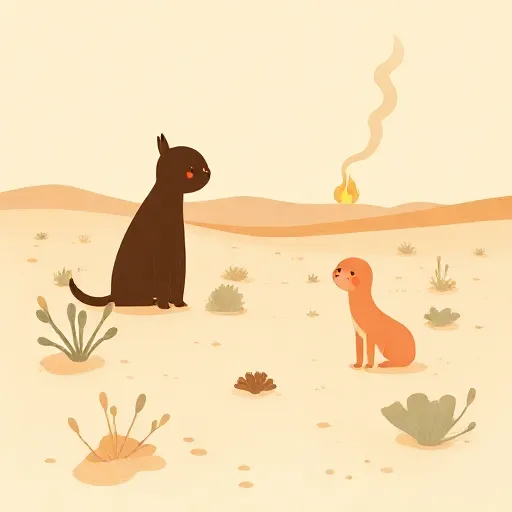
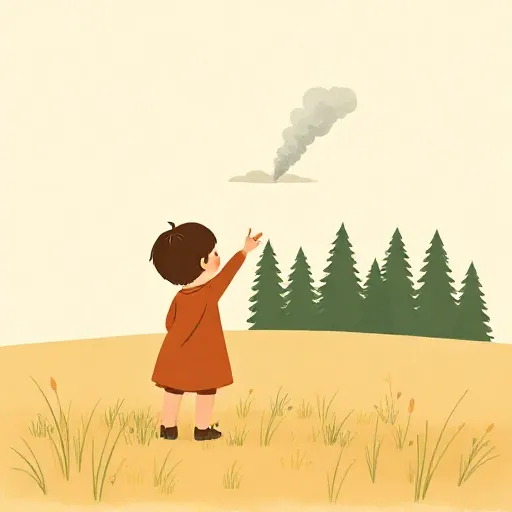
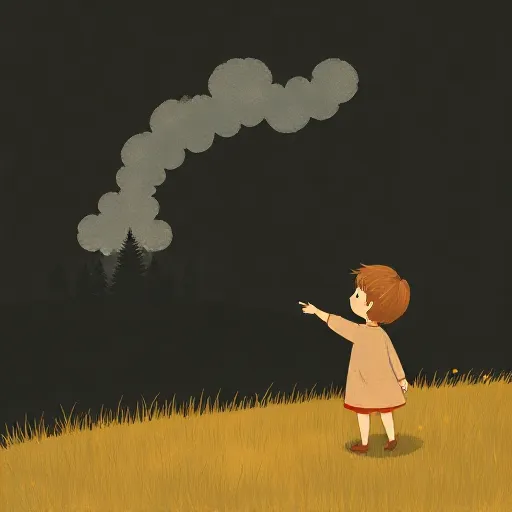
The story really begins with Augustine of Hippo (354–430), a North African bishop and philosopher. He made a bold claim: a sign is something you perceive with your senses that makes your mind think of something else. He put it like this — a sign shows itself to the senses, and shows something beyond itself to the mind. So when you see smoke, you think fire. When you hear a spoken word, you think of the thing it names. That’s a natural sign versus a given sign. Smoke is a natural sign: it wasn’t made on purpose to tell you about fire, but your mind still makes the connection. A word like “apple” is a given sign: humans invented it exactly so that hearing or seeing it would make you think of a round fruit.
Augustine also noticed that among given signs, words are special. You can use words to talk about anything — even about other signs. (Try explaining a wreath without words!) But he also warned that words themselves don’t put the thing directly into your mind; they nudge you to recall what you already know. That meant meaning wasn’t just in the sound or the squiggles on a page — it depended on the mind of the listener. This tension between a sign being a physical thing out in the world and a trigger inside someone’s head became the engine of medieval semiotics.
Roger Bacon’s Sign Zoo
Over time the conversation grew more precise. The English Franciscan Roger Bacon (about 1214–1293) wrote the longest medieval book all about signs, called De signis. Bacon drew up a gigantic map of every kind of sign he could think of.
First, natural signs. They signified without anyone intending it. Some worked by inference — if you regularly notice two things together, one becomes a sign of the other. A red morning sky signals rain, large hands signal strength, damp ground signals earlier rain. Some of these inferences were necessary (dawn always means the sun is about to rise), others only probable (a mother’s face might suggest love, but not with certainty). Signs could point to the present, the past, or the future. Other natural signs worked by likeness — a portrait looks like the person it represents. Still others worked by cause: an animal’s track is a sign of the animal because the animal made it.
Then came given signs, produced by a living being. A dog’s whimper is a sign of pain, but the dog doesn’t decide to make it — it’s an instinctual sign. Human words, by contrast, are given “with deliberation”: you choose them to share what’s in your mind. Bacon added that interjections like “ouch!” sit in between — half instinct, half choice.
Bacon also insisted on something crucial: a sign must actually make someone think. If a wreath hangs out of sight, or if there’s nobody around who knows what it means, it’s not functioning as a sign at all. A sign without an interpreter is, he said, “void and vain.” That emphasis on the interpreter was a big shift. And he made another bold move: he argued that words, when we first give them meaning in an act called imposition, don’t point mainly to concepts inside our heads — they point straight to the real things in the world. (The traditional triangle had been: word → concept → thing. Bacon rerouted it.) He also showed that meaning changes all the time without anyone announcing it. When you call a new gadget by a familiar word, you’re quietly shifting its meaning — a kind of invisible imposition.
When Thoughts Became Signs
Then came an even deeper turn. What if the thought itself is the real sign?
In the 14th century, thinkers like William of Ockham (about 1285–1347) and Peter of Ailly (1330–1421) argued exactly that. Ockham said logic is first of all a science of mental signs — the concepts you think with. The spoken or written words are signs only because they are linked to those mental ones. Your mental concept of an apple isn’t in English or Arabic or Latin; it’s the same for every human being. It’s a natural likeness of an apple, and it’s the primary sign. Spoken language is secondary.
Peter of Ailly went further: a concept isn’t just something that leads you to know a thing — it is the very act of knowing it. So a sign, in its strongest sense, is a living cognitive event. He added that for anything to be a sign, it must “vitally change” a mind — in other words, it must make a difference in what you’re thinking. If it doesn’t stir a thought, it’s not a sign for you. This turned the idea of a sign from a stable label into something more like an action: a sign happens to someone.
The World as a Signboard
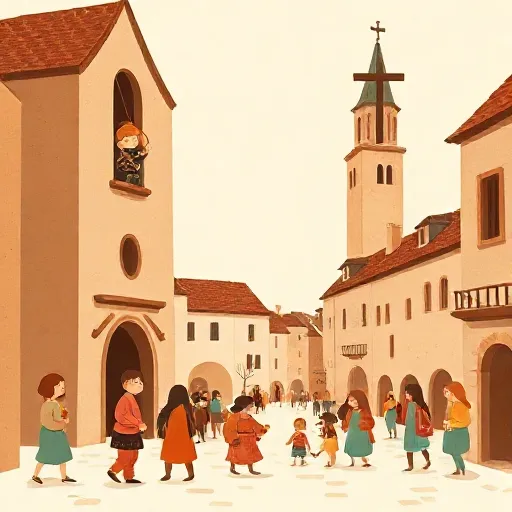
By the 1400s and early 1500s, the conversation had grown so wide that some logicians said: anything in the world can be a sign.
At the University of Paris, teachers like John Major (1469–1547) expanded the idea of a written term. It didn’t have to be letters on a page. A written term was simply “a term that can be perceived by a corporeal eye.” That wreath above the tavern? It’s a written term — you see it, and it means something. A crucifix in a church signifies adoration, but put the same object in a sculptor’s workshop and it loses that meaning. Context turns a thing into a sign. Bells, gestures, even smells and colors, could all serve as “words” in a broader language of the senses. One philosopher, Paul of Venice, remarked that you could even reason out a syllogism using sticks and stones — you’d just need to agree on what they stand for.
What made this work was the now-firm belief that the mental sign is the root of all signification. No external thing — not a wreath, not a word, not a bell — can signify anything unless it connects to a living thought. The outer sign is just a delivery system for the inner one.
Why It Still Matters: Signs All Around You

So why should a 12‑year‑old in the 21st century care about a wreath and a bunch of medieval arguments? Because you’re swimming in signs every waking moment.
When you send a thumbs-up emoji, you’re using a given sign that works only because someone on the other end has a mind that can interpret it — exactly as Bacon would have said. A red traffic light is a sign that tells you to stop; it isn’t a natural sign like smoke, but once you learn the convention, it becomes as automatic as one. And when you think silently — when you plan what to say, or picture a friend’s face — you’re using the mental signs that Ockham and Peter of Ailly put at the center of all meaning. The medieval insight is that a sign isn’t just a thing out in the world; it’s a mind in action, making a connection.
Medieval semiotics didn’t solve every puzzle about language and thought, but it turned the word “sign” from a simple label into a whole field of questions. It showed that meaning lives not in sounds, not in ink, but in the relationship between the world, your senses, and your mind. That’s why the wreath above the door still matters: it reminds us that the simplest gesture of communication is already a little miracle of mind meeting mind.
Think about it
- If you invent a secret handshake with a friend, does the handshake mean something even if nobody else knows it? What if you both forget it a year later — is it still a sign?
- An animal sees smoke and runs from fire but has no words. In what way is the smoke a sign to the animal? Does the animal need a concept of “fire” for the sign to work?
- Can a thought be a sign for itself? When you think of a friend, is that thought a sign pointing to the friend, or is the friend somehow already present in your mind?