Can You Conquer a Kingdom Just Because It's Not Christian?
A Shout in a Caribbean Church
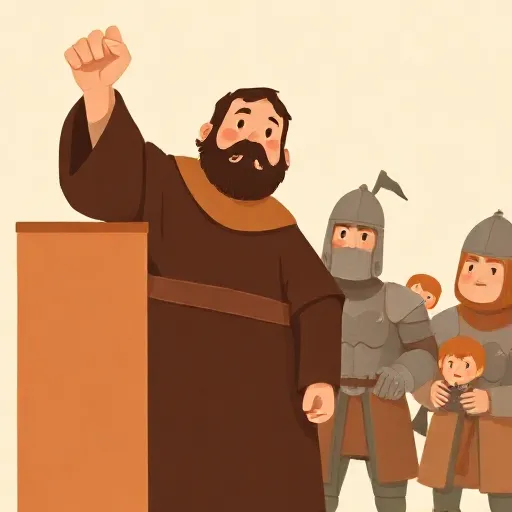
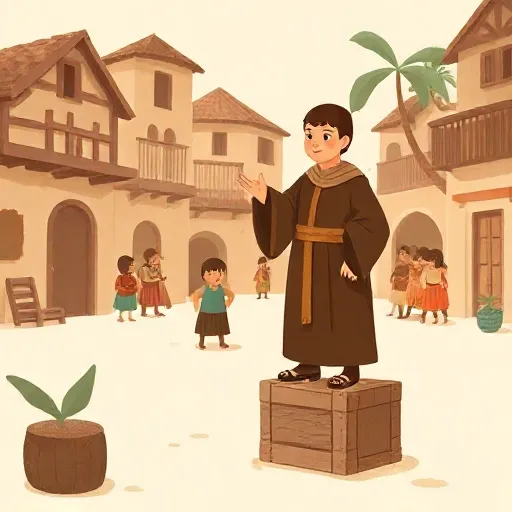
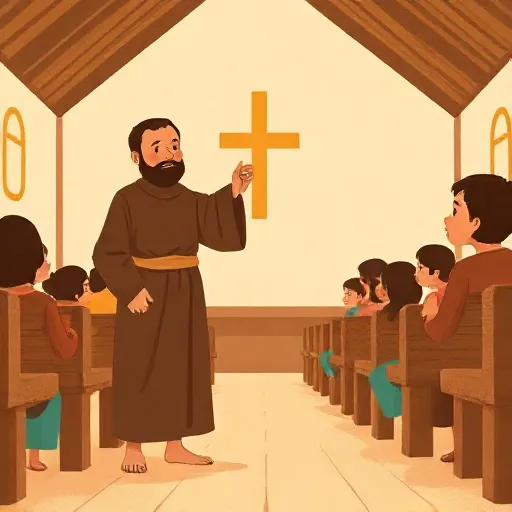
December 21, 1511, on the island of Hispaniola. The church is packed with Spanish settlers who have been forcing the native Taino people to work in mines and fields. A Dominican friar, Antonio de Montesinos, climbs into the pulpit and does something terrifying: he tells the congregation they are living in mortal sin. He cried out, asking if these were not men with rational souls. The conquistadors are stunned. One listener, a young colonist named Bartolomé de Las Casas, will soon abandon his slaves and become the fiercest defender of the Americas’ original peoples.
That sermon sparked a debate that traveled across the Atlantic. In the city of Salamanca, Spain, an old university had just become the most exciting philosophical workshop in Europe. The men who taught there — mostly Dominican and Jesuit friars — were not shut in dusty libraries. They were trying to answer the hardest real‑world questions imaginable. We now call them the School of Salamanca. And their arguments about rights, war, money, and freedom still surround you today.
Do People Who Never Heard of Jesus Have Rights?
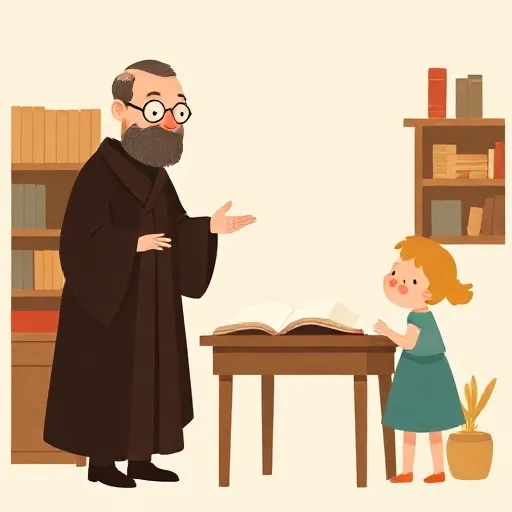
The star thinker who took up Montesinos’s challenge was Francisco de Vitoria (1486–1546) , a professor of theology at the University of Salamanca. Spain’s leaders claimed they had a right to conquer the “Indies.” Vitoria asked: by what law? He refused to accept that power alone could give a good answer. He needed a moral one.
Vitoria started with the idea of natural law — rules that all humans can discover by reason, without needing a sacred book. He argued that every person, Christian or not, is a veri domini, a “true owner” of their own belongings. Children, the mentally ill, even people living in mortal sin — they all still possess dominium, the right to control their property and lives. Sins against nature like cannibalism or human sacrifice, he said, do not erase that right. If they did, European sinners would be landless too.
Then Vitoria listed the “unjust titles” people were using to justify invasion. The emperor is not the master of the whole world. The pope has no power to give away non‑Christian lands. Discovery does not equal ownership, any more than finding a neighbor’s unlocked house makes it yours. And waging war just to spread the faith makes no sense — Jesus sent teachers, not soldiers.
But Vitoria did not say all war was wrong. He built a theory of just war: a prince may fight only to defend his people, to punish a grave wrong, or to protect innocent lives, and even then the harm must be in proportion to the goal. This was the seed of much later thinking about when nations may use force.
His younger colleague Domingo de Soto (1494–1560) pushed even harder. Soto reviewed every argument and concluded that Spain’s title to the Indies was almost impossible to justify. He rejected the idea that indigenous people were natural slaves and insisted that their lands and governments were legitimate ones, just like France or Castile.
Is Anyone a Slave by Nature?

In 1550, Emperor Charles V ordered the most famous debate in colonial history: the Junta of Valladolid. On one side sat Juan Ginés de Sepúlveda (1494–1573) , a brilliant humanist who admired Aristotle. He argued that the indigenous peoples were “barbarians” — slaves by nature, like animals that needed masters. On the other side sat Bartolomé de Las Casas , the former colonist turned Dominican friar. He shot back: every human being has the same basic dignity, and any simple‑minded people can be found in Spain too. Slavery, he said, is a human invention, not a fact of biology.
Domingo de Soto was there too, listening and later summarizing both positions. He drove home the same point: the ius gentium, or law of nations, permits slavery only as a human convention — a way to spare the lives of captives in a just war. Slavery is never a condition written into anyone’s nature. You are not born a slave; you are made one by war or desperate poverty. Even a slave, Soto noted, has rights. The law of nations is not natural law; it is a set of customs agreed upon by peoples, and it can change.
This was a huge shift. For centuries, thinkers had blurred the line between nature and human agreement. The Salamanca team separated them clearly. They could now say: whatever local custom says, no human being is a tool for another’s convenience.
God, Coins, and Your Next Decision

The School of Salamanca did not stop at war and conquest. They applied their moral lens to the pulsing confusion of a globalizing economy. Coins from the New World poured into Spain, prices soared, and moneylenders were still called sinners. Here it was the Jesuit Luis de Molina (1535–1600) who pushed into new territory.
Molina first tackled one of philosophy’s deepest puzzles: if God knows everything you will ever do, do you really choose freely? He proposed that God has scientia media — middle knowledge. God knows, without causing, what every free creature would do in every possible situation. You still face a real fork in the road. God just knows which path you’ll take before you do. So freedom and God’s foreknowledge can coexist.
That logic of free human decision spilled directly into Molina’s economics. He argued that the just price of something — bread, cloth, land — is not set by a ruler’s decree or by the cost of making it. It is set by the communis aestimatio, the common estimate of buyers and sellers. The market, in other words, is a conversation of free choices. A price moves within a range, not a fixed number. Molina even condemned monopolies because they strangle that free conversation.
Meanwhile, the jurist Martín de Azpilcueta (1491–1586) , also at Salamanca, explained why the influx of American silver caused prices to explode: when money is abundant, its buying power shrinks. That was the first clear statement of what economists today call the quantity theory of money. Suddenly, money itself was not a fixed divine unit but something whose value depended on human estimate and scarcity.
The Law That Outlived an Empire

In 1612, the Jesuit Francisco Suárez (1548–1617) wrote a massive book called On Law. He argued that no human law is valid if it contradicts natural law. A tyrant who attacks the common good can be resisted, even by force — a line that would influence later revolutions. Suárez also separated the law of nations into two parts: the rules that all peoples know by reason (ius naturale) and the agreements nations make among themselves (ius inter gentes). That second category is the direct ancestor of what we now call international law.
The Dutch lawyer Hugo Grotius, a Protestant, read Vitoria and Suárez carefully and built his own system on their foundations. The freedom of the seas, the rights of non‑combatants, the idea that torture and starvation are beyond the pale — these modern norms all carry the DNA of those old Salamanca debates.
Why should any of this matter to you? Because every time you hear a news story about a war and ask, “Is that really fair?” or every time you argue that a law treats some people as less than human, you are picking up the same thread. The friars in their worn robes did not just react to empire; they built a framework for questioning power. They insisted that right and wrong are not invented by the king who wins. That idea — that every human being has standing, that might does not make right — still forces open doors today.
Think about it
- If a country invades another because the invader believes its own government is better, can that ever be a just war? What else would need to be true?
- Imagine a law that says every person must sell their house for the price the government sets. Would that law be fair? Why or why not?
- Is there any situation where you would say a person “deserves” to be a slave? If not, what makes slavery different from other punishments?