Do You Have Rights the Law Can’t Take Away?
A Free Man’s Challenge: Rights Aren’t About Skin Color
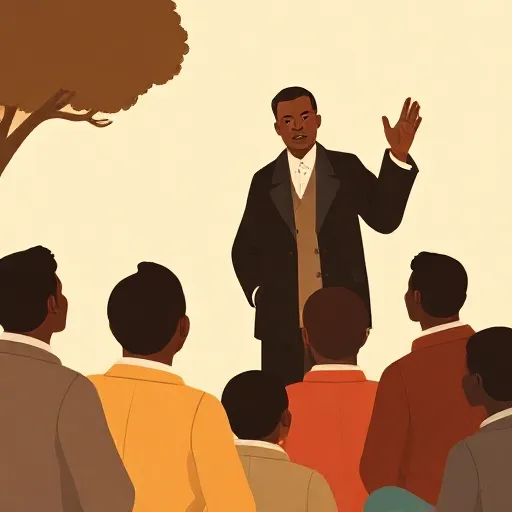
It’s August 1840. A room in Albany, New York, is packed with free Black men and women. At the front stands a young man named Alexander Crummell. He’s just 21, already a rising voice in the fight to end slavery. But instead of asking for sympathy or making a case based on all the hardships Black people have suffered, he says something sharper: “We object to others placing our rights upon complexion. We ourselves should not lay our claims to consideration on this or any similar ground.”
Crummell’s point was simple but bold. You don’t earn rights because others feel sorry for you. Rights aren’t a reward for good behavior or a thank-you for past service. He believed they have a deeper source—something that belongs to every human being simply because you are human.
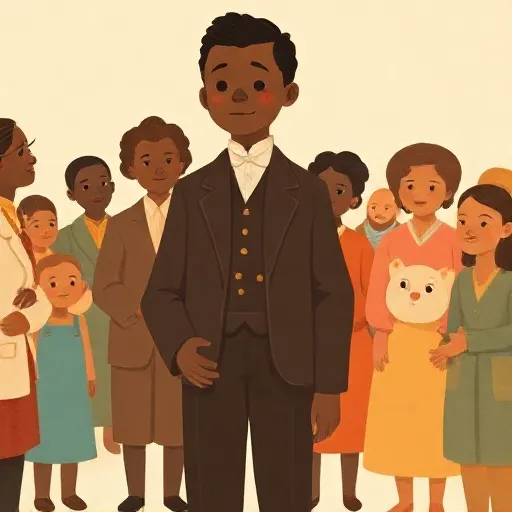
He was born free in New York City on March 3, 1819. His mother, Charity Hicks, was born free, while his father, Boston Crummell, had been captured in West Africa, sold into slavery, and eventually won his freedom. That family story made the question of rights anything but abstract. Crummell studied theology at Yale, then moral philosophy at Cambridge University in England, where he soaked up the idea that some moral truths are not invented by people but discovered by reason—the power of the mind to think clearly and recognize what is really right. He became an Episcopal priest, spent years in Liberia as a professor, and later helped found the American Negro Academy in Washington, DC, alongside thinkers like W. E. B. Du Bois.
But his most original philosophical work was forged long before that, in the brutal legal landscape of the United States before the Civil War.
The Big Problem: Are You a Person or Property?
In Crummell’s America, the Constitution did not treat enslaved Black people as citizens. It mentioned them as “persons owing service or labor”—as forced workers, not as rights-holders. Enslaved people were, in the eyes of the law at the time, a form of property.
This created a terrifying question. If the law says you are not a person with rights, do you actually have any? If the courts refuse to hear your case, can you ever be a citizen? The most extreme answer came from the Supreme Court in the Dred Scott decision of 1857. Chief Justice Roger B. Taney wrote that Black people, whether enslaved or free, could never be citizens of the United States. He declared, in words that still sting, that a Black person has “no rights which the white man is bound to respect.”
Notice what that claim does. It doesn’t just deny that Black people actually get rights; it says they are not the kind of being to whom rights could belong. That seemed to shut the door completely: no path from slavery to freedom could change it, because freedom itself wouldn’t grant them the status of a rights-bearing person.
This is the Problem of Civil Rights that Crummell faced. It isn’t just about unfairness. It’s about whether the concept of a “right” can exist before any government writes it down—or whether law can erase it entirely. Crummell thought the answer was life-or-death, for Blacks and for everyone.
Crummell’s Answer: Rights Live in Human Nature, Not in Laws
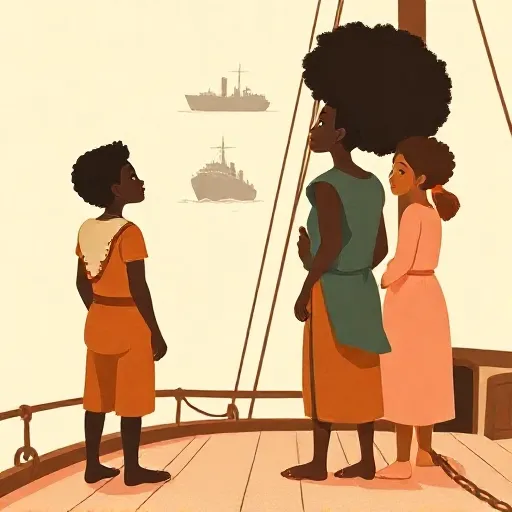
Crummell built what we can call the Natural Rights Argument. A natural right is a right that belongs to you simply because you are a person, not because a document or a ruler gives it to you. He offered a series of linked ideas.
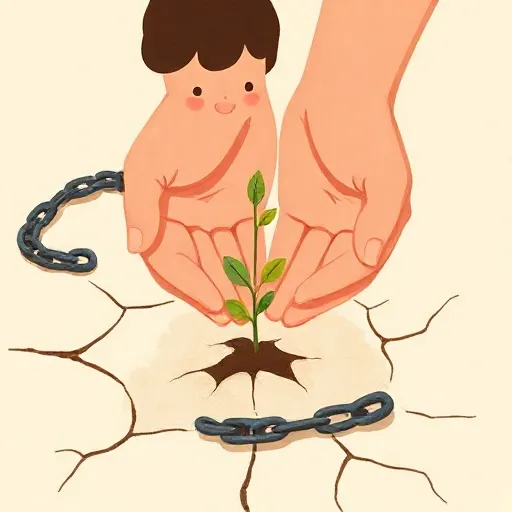
First, he claimed that rights really exist, and they exist before any legal system. Think of the 1839 rebellion on the slave ship Amistad. African captives broke their chains, killed several of the crew, and tried to sail home. When they reached the United States, they were put on trial. A view based only on sympathy might say: “We feel terrible for them, so we should treat them kindly.” But sympathy can flicker and fade. Crummell argued something stronger: the Africans’ right to defend themselves belonged to them as persons, not as an American citizen. The job of the law is not to grant that right, but to recognize it.
Second, he said we can discover natural rights by paying attention to the deep and settled feelings of human nature. When we see someone in a clearly wrong situation—kidnapped, beaten, silenced—we don’t just calculate consequences. Our immediate reaction of anger or horror is a clue. It points to something real: the wrongness isn’t just a matter of opinion; it’s a violation of a right. Sympathy, in Crummell’s view, is not the cause of the right; it’s the effect of sensing it.
Third, he argued that anyone who has the light of reason—the ability to think, reflect, and apply general moral principles to facts—has certain rights simply because of that nature. If you can understand that self-defense is a principle that applies to your case, you are the kind of being who has the right. This was an essential move. Crummell was saying that Black people are not less rational; they share the same common sympathies as any other group. When Black communities reacted to being denied the vote with frustration and longing, that was proof of exactly the same political desires any rational group would have. Their pain wasn’t just discomfort; it was a moral signal that a wrong was being committed.
That line of thought gave Crummell’s generation a powerful tool. It meant that when a judge or a Constitution denies rights, that doesn’t erase them. It means the law is out of alignment with reality.
Why Reason and Language Are the Engines of Freedom
For Crummell, the ability to reason morally wasn’t just academic. He believed that a person’s mind has three layers: instinct, passion, and reason. Reason ought to be in charge—a kind of inner compass that can intuit timeless moral truths, almost like seeing a fact you don’t have to prove. This was old-fashioned in the best sense: he drew on Plato’s idea that moral principles are real and unchanging, and also on Aristotle’s emphasis that good character means being able to act rightly without a long inner struggle.
But there was a catch. Crummell became convinced that the language you speak shapes how well you can do moral reasoning. He studied the Grebo language used in Liberia and described it, harshly and unfairly, as lacking the words for complex moral ideas. We now know his description was based on biased reports and was simply wrong. Grebo was a fully capable language. But the philosophical question he stumbled onto is still debated today: if a person lacks words for concepts like “justice” or “right,” can they think clearly about those ideas? Crummell thought not, and so he pressed Black people to master English, which he believed provided the richest vehicle for abstract moral argument.
Pulling back, you can see his larger worry. Enslavement and discrimination steal more than physical freedom. They can cut people off from the mental tools needed to argue for that freedom in a public square. That’s why Crummell insisted that education and clear language weren’t extras—they were part of the fight for rights.
Building a Civilization: What We Owe Tomorrow
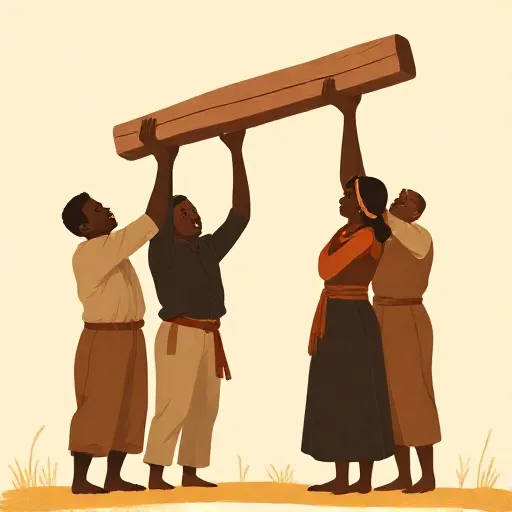
Crummell didn’t stop at individual rights. He was obsessed with posterity—the generations still to come. He argued that every generation has a duty to make the future better. That duty, he said, falls on whole peoples, not just lone heroes. He called this the Social Principle: human beings are built to live and work together, like parts of a single body. Great moral changes—ending slavery, raising a nation—don’t happen because one person decides it. They need what he called a “combination of men,” a whole community pulling in the same direction.
But he saw a painful problem right at the heart of this hope. How can an oppressed group lift itself up using the very resources that oppression has damaged? Crummell said that moral enlightenment can’t spring from nothing; it usually requires some influence from people who are already “enlightened.” Yet he also insisted that for change to stick, the enlightenment must become native—it must take root in people of the same blood, sentiment, and ancestry. The result is a tension: you need an outside spark, but only your own fire can light the future. His solution was that members of the race who had already gained knowledge and moral clarity had an urgent responsibility to teach and lead among their own.
That makes many people today uncomfortable, and it’s important to see the paternalism in some of his claims. But his core insight was that a people’s future is not something anyone else can hand them. They have to transform it themselves, using the tools of reason, language, and moral purpose.
This idea rippled forward. Crummell described Black Americans as “a nation within a nation”—thrown on their own resources, foreign to the rest of the country even while living inside it. Later, the great thinker W. E. B. Du Bois would turn that into the famous idea of “double consciousness”: the feeling of always seeing yourself through the eyes of another world while also knowing your own soul. When Crummell helped found the American Negro Academy in 1897, he was building an engine exactly for that kind of thinking.
Why Crummell’s Fight Still Matters

You live in a world with laws that declare human rights to be universal. But ask yourself: where do those rights actually come from? When a document like the Universal Declaration of Human Rights says “all human beings are born free and equal in dignity and rights,” is it creating something new, or is it merely pointing to what was already true?
Crummell’s answer was that rights are discovered, not invented. They exist before any courtroom, any president, any election. If tomorrow a government decided that people with your hair color don’t get to vote, you would feel that a deep wrong had occurred—and not just because the law changed. You’d feel that something existed before the rule, and the rule violated it.
That gut feeling is exactly what he was getting at. His arguments didn’t end racism or injustice. But they gave generations of thinkers a way to insist that justice isn’t a favor. It’s the shape reality is supposed to take.
Think about it
- If a country passed a law saying you don’t have the right to go to school, would that be wrong only because the law says it, or would it violate something deeper that belongs to you regardless of any law?
- Crummell worried that reliving past wrongs too much could hold a people back. Do you think studying history’s worst injustices is more helpful or more harmful for building a better future?
- He believed every generation owes something big to the ones that come after. What is one thing you think your generation should make sure the next generation will have—even if you never get to see it?