Art Doesn't Copy Nature — It Makes a World
A Question That Sounds Like a Riddle
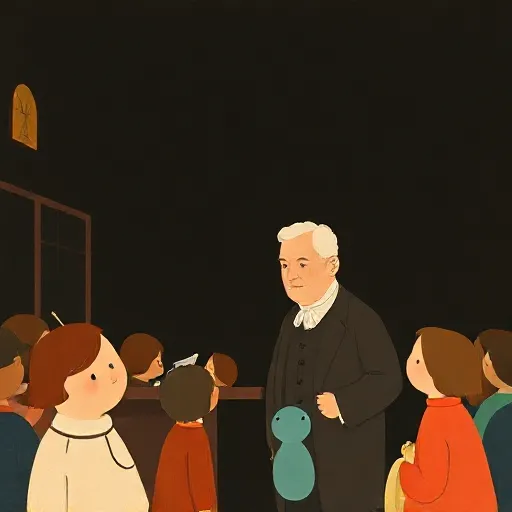
It’s 1798. In a packed lecture hall at the University of Jena, a young professor named August Wilhelm Schlegel (1767–1845) stands before his students. He asks them to think about a painting that copies a real landscape exactly — every leaf, every shadow. Is that great art? Then he points to a play they all know, where people wear masks and speak in verse. Why does the play feel more alive, even though it’s obviously not a copy of real life? Schlegel’s answer would shake the art world: the best art doesn’t imitate nature — it creates a whole new one.
Why “Art Imitates Nature” Wasn’t Enough
For centuries, the rule was simple: art imitates nature. That idea, called mimesis, went all the way back to Aristotle. Painters copied what they saw; poets described human actions. Art was like a faithful mirror. But Schlegel spotted a problem: if art only copies the surface of things, a perfect photograph would be the greatest artwork ever — and we know that’s not true. A poem can move you in ways no photograph can.
Schlegel dug deeper into what we mean by “nature.” Yes, nature is the world of trees, mountains, and weather. But, he argued, there’s another, more important side: nature is a living, creative force, constantly making and transforming everything. A flower doesn’t just sit there — it grows, unfolds, and produces something new. That’s the real “nature” great art should imitate. So when Schlegel said “art should imitate nature,” he meant art must tap into that creative energy and produce an organic whole — a work that feels as alive and complete as a tree, not like a pile of copied parts.
This explains why he prized style over mannerism. When you look at a painting by a master, it seems as if every brushstroke was guided by a power higher than the artist’s own moods. That’s style — the unconscious choice of just the right thing. But when an artist can’t get past their own quirks, the work feels cramped and self-conscious. That’s mannerism — a work that shows you the painter, not the world they made. For Schlegel, the mark of genius is that you forget the artist and get lost in the created universe.
The Secret Ingredient: The Poetical
What turns a play from entertainment into something that sticks with you? Schlegel called it the poetical. That’s not about rhyme or fancy language. A work has “poetical” power when it reaches beyond ordinary facts and presents an eternal idea — beauty, goodness, a vision of life that feels true in every age.
This is why Schlegel rejected Aristotle’s famous claim that tragedy’s job is to “purify” our emotions of pity and fear. For Schlegel, tragedy doesn’t just clean us out — it elevates us. After watching a great tragedy, you don’t feel emptied; you feel a taller, more dignified view of what it means to be human.
He also insisted that comedy wasn’t a lesser cousin of tragedy. Old Greek comedies — think of Aristophanes — did something wild: the chorus would stop the story, step out of character, and address the audience directly. Masks were put on and pulled off, actors winked at their own roles. The whole play became a game where the difference between reality and make-believe was the point. Schlegel loved that gap. When we watch such a play, we’re always aware we’re in a created world — and that awareness, he thought, is part of art’s deepest magic.
Your Words Are Poems You Don’t Notice
Schlegel didn’t stop at plays and paintings. He argued that language itself — the words coming out of your mouth right now — is essentially poetry. Not that every sentence rhymes, but that language isn’t just a code for labeling things. It’s a creative force. When you say “the sky is angry,” you aren’t describing a fact; you’re building a little world where a sky can feel.
He imagined the earliest human language: sounds of emotion, cries, singing, dancing. Rhythm came before grammar. Even today, he said, you can catch the emotion in someone’s voice without understanding the words. This means language never stops being a poem. Every time you speak, you’re shaping and coloring the world, not just pointing at it. “Language,” he wrote, “is an ongoing becoming and continually changing, never ending poem of humankind.”
For Schlegel, the only difference between ordinary speech and poetry is that poets know what they’re doing. They consciously decide to build a dream. The rest of us just do it without noticing — but the creative act is still there, in every metaphor, every joke, every bedtime story.
The Longing That Fuels Modern Art
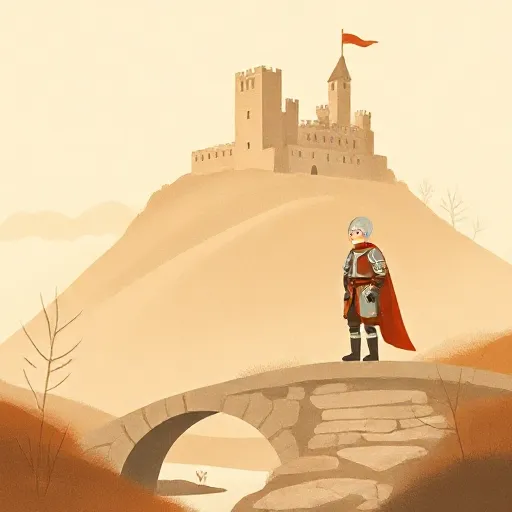
Schlegel believed the biggest shift in art history happened when the ancient world gave way to Christianity. In the old pagan view, people felt at home in nature, part of a full, harmonious world. After that came a sense of a crack: the finite and the infinite, the human and the divine, were split. That split, Schlegel thought, is the heart of modern, or Romantic, art.
He gave this longing a German name: Sehnsucht (pronounced zen-zookt). It’s a craving for a wholeness you can feel is lost — a mix of homesickness, desire, and dreaminess. Ancient poetry, he said, is a poetry of enjoyment — enjoying the present moment, the body, the sunlight. Romantic poetry is a poetry of desire and longing, always reaching backward to a golden past or forward to an unknown future, never quite at rest.
That’s why medieval legends of knights and quests felt so Romantic to him. A knight searching for the Holy Grail isn’t just looking for a cup — he’s chasing a feeling of infinite meaning, the same feeling Schlegel thought all true modern art carries.
Why It Still Matters: You’re a Romantic Every Day
You might never have heard of August Wilhelm Schlegel, but you live inside his ideas. Every time you get lost in a video game, where the rules create a world of their own that doesn’t just copy real life, you’re tasting what he meant by “a world within a world.” When you watch a movie that makes you cry but leaves you feeling stronger, you’re experiencing his version of tragedy — art that elevates, not just empties you.
Even your everyday language is Romantic. You don’t say “I’m sad by an amount equivalent to rain.” You say “I’m under a cloud.” That’s not a copy of a fact; it’s a small poetic act, building an image you can feel. Schlegel taught us to see that such creativity isn’t a special talent for artists — it’s built into being human.
His championing of difference also matters today. He insisted you can love a Greek tragedy and a Shakespearean comedy without declaring one better. Their differences aren’t flaws — they’re the whole point. When you argue with a friend that a comic book and a classic novel can both be great in their own way, you’re carrying forward Schlegel’s Romantic respect for many kinds of beauty.
Think about it
- Schlegel thought Old Comedy was great because it kept reminding the audience they were watching a fake world. Can breaking the “spell” of a story make it more powerful for you? Why would that be?
- If you invent a secret handshake with a friend, is that a tiny act of poetry — a made-up world only two people can enter? What makes it feel real even though it’s invented?
- Schlegel said tragedy should leave you feeling elevated, not just sad. Think of a sad movie that made you feel strangely hopeful. Do you agree that art’s job is to lift you up, or can it just be beautiful without a lesson?