Can a Work of Art Invent Its Own Rules?
A 125-Sheet Letter and the Boy Who Couldn’t Stop
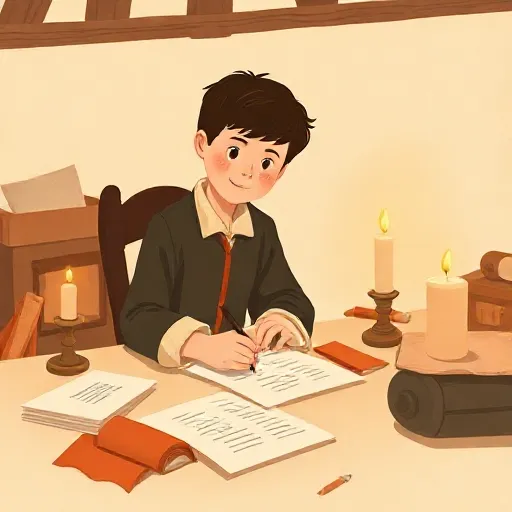
In 1793, a young German writer named Friedrich Schlegel (1772–1829) wrote a letter to his older brother August. August wanted a clear definition of a new buzzword the brothers kept throwing around: romantic. Friedrich replied that he couldn’t possibly send his explanation — it would stretch to a hundred and twenty-five sheets of paper. He was joking, but the joke hid a serious problem. The idea he was chasing was so big, so slippery, that no single definition could ever pin it down.
Schlegel grew up in a family where books and arguments were as common as furniture. His father was a pastor and a writer; his uncle wrote plays and theories about beauty; his brother August would become the greatest German translator of Shakespeare. Friedrich started out loving ancient Greek poetry above everything else. He thought Greek poems were calm, balanced, and “beautiful,” while modern poems were merely “interesting” — full of personal quirks and messy feelings. But his mind never sat still. By the mid-1790s he had moved to the city of Jena, where a circle of restless young thinkers were pulling philosophy and art into wild new shapes. Schlegel began to wonder: what if the messiness of modern art wasn’t a flaw, but a clue?
When Poetry Had to Be More Than a Kind
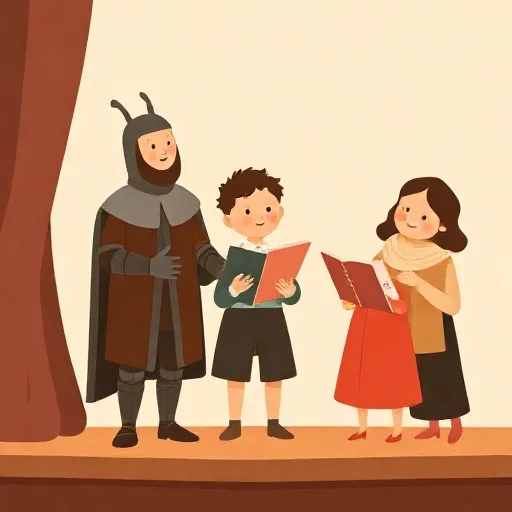
Schlegel stopped putting ancient art on a pedestal and began to celebrate what he called Romantic poetry. By “romantic” he didn’t mean love stories. He meant a way of making art that refused to stay inside a single box. Medieval literature, Shakespeare’s plays, Dante’s Divine Comedy — these works mixed tragedy and comedy, song and speech, the sacred and the silly. They were what Schlegel called Roman, a term that loosely meant “novel” but also anything that fused many forms into one.
In 1798, in a short, sparky piece published in the journal Athenaeum, Schlegel fired off one of his most famous claims. Romantic poetry, he said, is a progressive universal poetry. Its job is to “fuse poetry and prose, inspiration and criticism, the poetry of art and the poetry of nature; and make poetry lively and sociable, and life and society poetical.” A romantic poem doesn’t just sit on a page looking pretty. It talks, argues, laughs at itself, and mixes philosophy into the rhymes. In a way, Schlegel thought, all real poetry should be romantic — because if a poem isn’t trying to stretch its own boundaries, it’s already dead.
This was a big shift. Earlier, Schlegel had wanted poets to follow the ancient rules. Now he admired works that made their own rules as they went along. He even said that a true theory of poetry would actually be a theory of the novel — because the novel, more than any other form, eats up diaries, letters, essays, and songs without asking permission.
The Judge Who Didn’t Bring a Rulebook
If artworks invent their own rules, how can anyone judge them fairly? Schlegel’s answer quietly overturned most of what people thought about criticism. In one notebook, he wrote that criticism “is not to judge works by a general ideal, but is to search out the individual ideal of every work.” The word individual ideal became the heartbeat of his aesthetics.
Imagine a friend cooks you a strange dish. If you taste a single spoonful and complain that it doesn’t taste like pizza, you’ve missed the point. A good critic, Schlegel would say, first has to ask, “What was my friend trying to do?” Maybe the dish is meant to be sour, grainy, and shocking. Once you understand its goal, you can ask whether it succeeds on its own terms. Schlegel applied exactly this approach to the writers of his time. When he reviewed Goethe’s novel Wilhelm Meister, he insisted that the novel “not only judges itself but describes itself.” The book already carries its own standard inside it; the critic just has to listen.
This didn’t mean anything goes. It meant that understanding a work takes real patience and deep attention. A lazy critic applies the same checklist to every story. A Schlegelian critic pays attention to what a specific story asks of its readers — and then decides whether the story delivers.
Hedgehogs, Irony, and the Art of Never Finishing

Schlegel and his friends loved the fragment. A fragment is a tiny piece of writing, often just a paragraph, that states a sharp idea and stops. It never explains everything. Schlegel compared a fragment to a hedgehog — it must be “entirely isolated from the surrounding world and be complete in itself like a hedgehog,” yet it also has to make you sense a much larger, invisible whole. A good fragment is a universe you can hold in one hand, but it makes you wonder about all the other universes you can’t see.
That brings us to irony, which for Schlegel was far more than sarcasm. Irony is the moment when a work of art winks at you and shows that it knows it’s just one possible version of the story. It might mean a character suddenly talking to the audience, a narrator who mocks her own plot, or a joke that is completely serious and completely playful at the same time. Schlegel called irony a “clear consciousness of eternal agility, of an infinitely teeming chaos.” In other words, irony proves that no single viewpoint can capture everything. Whenever we think we’ve nailed the final truth, irony taps us on the shoulder and says, “Maybe, but also maybe not.”
This vision fits with Schlegel’s deeper philosophical hunch: we can never start from a rock-solid first principle. Every proof can be questioned; every chain of reasons circles back on itself. Philosophy, he said, “like an epic poem, must start in the middle.” There’s no absolute beginning, only an endless, lively back-and-forth. Fragments and ironic jokes aren’t just literary tricks; they’re honest attempts to show what thinking really feels like.
From Revolution to the Emperor’s Court — and Back to You
Schlegel’s own life was as hard to pin down as his ideas. As a young man he cheered for democratic revolutions, argued that people had the right to rise up against unjust rulers, and wrote a scandalous novel called Lucinde that treated love between equals as the highest form of art. Yet a couple of decades later he converted to Catholicism, served the Austrian emperor, and attacked the very political ideals he had once praised. Friends and critics have argued ever since: which Schlegel was the real one?
The philosopher Maurice Blanchot once asked that question sharply: “Where is romanticism? In Jena or Vienna?” Schlegel might have answered that a human being is also a kind of fragment — never finished, always in motion, containing opposites that don’t cancel out. The same thinker who believed in infinite perspectives eventually chose one. That doesn’t make his earlier self a lie; it makes his whole life a romantic work in progress.
And that is why Schlegel still matters whenever you argue about art. The next time you watch a film that breaks all the genre rules, listen to a song that mixes hip-hop with a string quartet, or play a video game that refuses to tell you whether you’re winning or losing, you’re holding a fragment of the Romantic revolution. Schlegel would tell you not to ask, “Is this good by the usual standards?” but “What is this work trying to be, and how well does it pull that off?” You don’t need a 125-sheet letter. You just need to stay curious.
Think about it
- Think of a story, movie, or game you love that doesn’t fit neatly into one category. What would Schlegel’s idea of an “individual ideal” help you say about it that a one-size-fits-all review would miss?
- If a poet purposely writes something confusing because she wants to show that no single meaning is final, can you still say the poem is a success? How would you decide?
- Schlegel’s life changed dramatically over the years. If a person can hold opposite beliefs at different times, are they still the same person? Does it matter?