Who Decides What’s Beautiful? The 1700s French Feud That Still Echoes
A Poem That Started a War
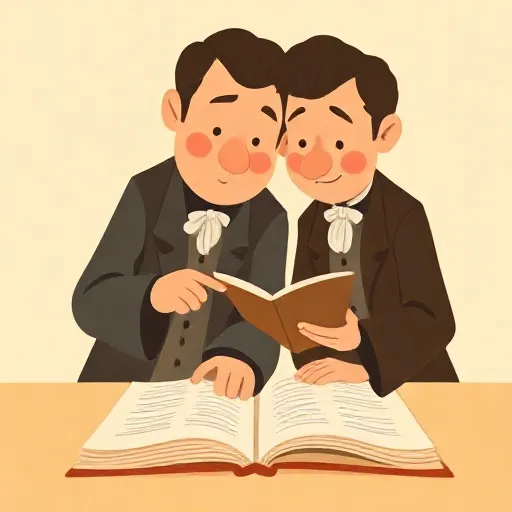
In the 1650s, a handful of French poets tried something bold. They wanted to give France its own great epic — a poem as grand as Virgil’s Aeneid. One chose the story of Joan of Arc; another wrote about the first French king’s conversion to Christianity. To many readers today, these are perfectly fine subjects. But to the most powerful critic of the time, the poet Nicolas Boileau (1636–1711), they were a joke.
Boileau and his allies believed that real art had to follow the models left by ancient Greece and Rome. A poem should obey the same rules Homer and Virgil used: the right kind of hero, the right way to open, the right tone. Anything else was a mistake — and Boileau’s satires crushed those Christian epics so thoroughly that the poems have been forgotten.
This was the opening shot of the Quarrel of the Ancients and the Moderns, a debate that would rumble through France for seventy years. The Ancients argued that Greek and Roman culture was a golden age, and that later history was just a long, slow slide downhill. The Moderns pointed to new inventions, recent scientific discoveries, and the refined politeness of French court life and said: look around you — we are improving. We can make things the ancients never dreamed of.
The next flash point came from Charles Perrault (1628–1703), now famous for his fairy tales. In his Parallel of the Ancients and the Moderns (1688–97), he put the two sides into dialogue. Perrault’s Modern spokesman complained that in Homer’s Iliad, the god Zeus threatens to beat his wife Hera. That kind of behavior, he said, was outrageous in polite French society — it belonged to peasants, not heroes. For the Moderns, better manners meant better people and better art. For the Ancients, the raw heroism of Homer’s world was exactly what made it great.
A final round erupted in the 1710s over how to translate Homer. The great scholar Anne Dacier (1645–1720) published a careful prose translation of the Iliad in 1711. Three years later, the abbé Houdar de la Motte (1672–1731), who knew almost no Greek, released a radically shortened verse version. He cut out anything he thought was boring, repetitive, or uncouth — including the long description of Achilles’s shield. Dacier fired back with a book called On the Corruption of Taste (1714), scorning the “effeminate” morals of her own era. Both sides agreed that antiquity should be admired; they just couldn’t agree on what that meant.
The Mysterious “I Don’t Know What”
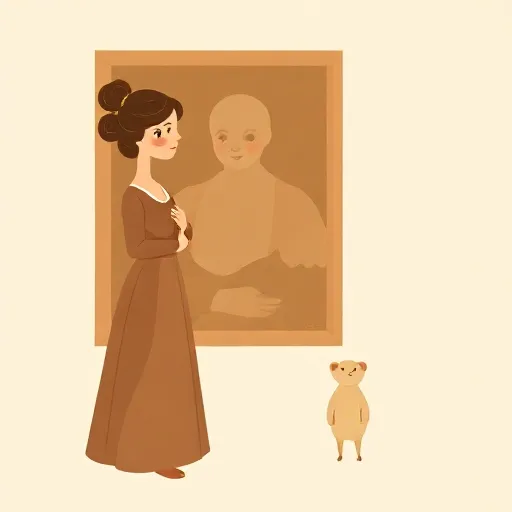
While the poets argued about rules, a different conversation was happening in the salons — private gatherings where aristocrats, writers, and thinkers met to talk about art, language, and manners. These were not official institutions. They were run by upper-class women and men who wanted to refine taste outside the stuffy academy.
One of the most influential salon thinkers was a Jesuit priest named Dominique Bouhours (1628–1702). In his dialogues Entretiens d’Ariste et d’Eugène, he gave a name to a strange idea that would echo for centuries: the je ne sais quoi — literally, “I don’t know what.” A work of art could follow every rule ever written and still leave you cold. There was some extra quality, something you couldn’t define, that made it actually please you. Bouhours compared it to the ineffable feeling you might have looking at nature or thinking about the divine.
This way of thinking turned taste into a kind of sixth sense. The abbé Jean-Baptiste Dubos (1670–1742), in his Critical Reflections on Poetry, Painting, and Music (1719), described taste as a sentiment — a feeling that happens in your body. When you watch a tragedy, you tremble, cry, or feel a sudden jolt. That is not reason; that is your nerves reacting. Dubos even argued that climate affects whole nations, making some peoples more likely to produce great artists simply because their bodies are wired differently.
But there was a catch. When Dubos said the “public” could judge art, he did not mean everyone. He meant le beau monde — high society. The marquise de Lambert (1647–1733) put it bluntly: good taste is something nature gives you. You cannot learn it, and only the most refined people ever possess it in perfection. She threw out the whole idea of “beauty” based on rules and preferred the agreeable — whatever simply gave you delicate pleasure. One person’s agreeable, she admitted, might not be yours.
This was a deeply elitist view. Taste, for the salon thinkers, was not available to just anyone with training. It was an instinct that belonged to a select few who had been surrounded by luxury and good manners their whole lives.
Can You Measure Beauty Like a Math Problem?
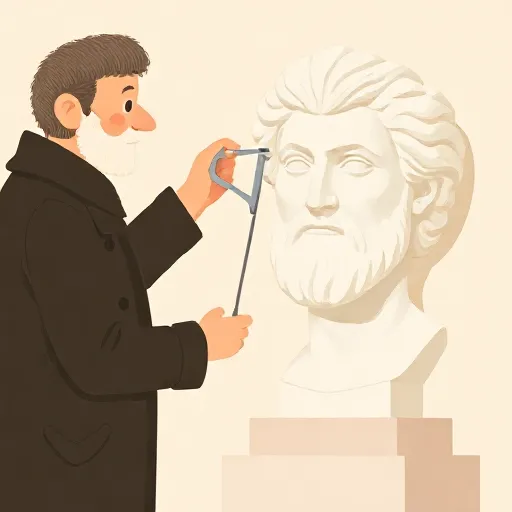
Not everyone was comfortable leaving beauty up to a mysterious feeling. The philosopher René Descartes (1596–1650) had shown that clear, rational rules could bring certainty to science and knowledge — why not art?
Jean-Pierre de Crousaz (1663–1750), a Swiss professor of logic and mathematics, took up the challenge in his Treatise on Beauty (1715). He argued that beauty is an objective mix of unity and variety, a balance of order and proportion that keeps things from being boring or chaotic. The problem is that human beings have two faculties — reason and feeling — and sometimes they fight. You might feel something is beautiful even though your mind, “coolly” thinking, says it isn’t. Crousaz believed you had a responsibility to resolve that fight, because true beauty is what reason would approve if it had time to weigh everything. Taste, in his view, was just a quick preview of what reason would eventually figure out.
The priest Yves-Marie André (1675–1764) pushed this even further in his Essay on Beauty (1741). He divided beauty into levels. Essential beauty was universal and eternal — the kind of perfect order that even God would recognize. Natural beauty was the harmony you see in creation, the way everything fits together. The lowest level was arbitrary beauty, the kind that depends on human whim and changes with fashion. André’s motto: “I call beautiful not what pleases at first glance, but what has a right to please reason and reflection by its own excellence.” For him, beauty and truth were the same thing.
A slightly different approach came from Charles Batteux (1713–1780), who tried to unite all the arts under one principle: mimesis, the imitation of nature. But he did not mean slavishly copying. The artist’s job was to imitate beautiful nature — the ideal version of things, chosen by reason. It was like the ancient story of the painter Zeuxis, who combined the best features of several women to create a portrait of Helen of Troy. The problem, of course, was how to decide which parts of nature are the beautiful ones. Without a rule for that, you were back to taste.
Diderot’s Detective Work
By the mid-18th century, the old salons were giving way to a new kind of critic: the Enlightenment philosophe. Men like Voltaire (1694–1778) and Denis Diderot (1713–1784) wanted to be serious thinkers who also lived in society. They claimed the authority to judge art more reliably than either the old aristocracy or the casual public.
Diderot, the engine behind the great Encyclopédie, tried to solve the taste puzzle in a new way. In his article “Beau” (Beautiful), he found a problem with all previous theories. If you say beauty is unity, ask why unity pleases. Because it is beautiful. Why is it beautiful? Because it has unity. It was a perfect circle that explained nothing.
Diderot’s own answer involved rapports — connections. Take a famous line from the 1640 tragedy Horace by Pierre Corneille: Qu’il mourût! (“That he had died!”). Said on its own, it’s neither beautiful nor ugly. But when you know the context — a father is asked what he would want his son to do in battle, and this is his only surviving son, facing three enemies alone, fighting for his country’s honor — the line becomes electrifying. The more connections you see, the more beautiful the work becomes. The best critic is the one who can detect the largest number of these hidden layers.
There was a catch here too. Diderot never fully explained how someone learns to see all those connections. He admitted that a great painter’s technique could seem like magic — you cannot understand how it works, even though you can feel its power. In 1737, the Royal Academy had started a public exhibition called the Salon, where anyone could walk in and judge the paintings. Soon writers like Diderot were producing “salon reviews,” trying to capture in words what the paintings did in color and form. They helped invent the job of the art critic, a role that still exists every time someone writes a review of a movie or an album.
Why It Still Matters: Your Taste or Everybody’s?
The French quarrel about taste didn’t end with a winner. The salon aristocrats insisted that taste was an inborn gift, something your body and breeding gave you. The Cartesian thinkers wanted a ruler and a formula that would silence all arguments. The philosophes tried to bridge the gap with science, looking for the right balance of sentiment and reason.
What all of them left us is the question itself. When you and your friend disagree about a song, a movie, or a painting, are you just reporting your feelings — or are you making a claim that could, in principle, be right or wrong? If beauty is purely personal, then no one can ever be mistaken. If it follows rules, then maybe some people really do have better taste.
The 18th-century French thinkers never settled it. But they gave us the language and the arguments we still use every time we try to explain why something moves us. Next time you say “I don’t know, I just like it,” you are echoing a salon aristocrat. And when you try to point to specific details — that chord change, that one line, that perfect symmetry — you are following the lead of Diderot, looking for the secret connections that turn sound and color into something that feels true.
Think about it
- If you love a song and your friend hates it, can one of you be “wrong” about its beauty — or is it all just opinion?
- Could an artificial intelligence that perfectly followed every known rule of composition ever create a masterpiece? Why or why not?
- Think of something you find beautiful but can’t explain why. What do you think that “something” really is?